
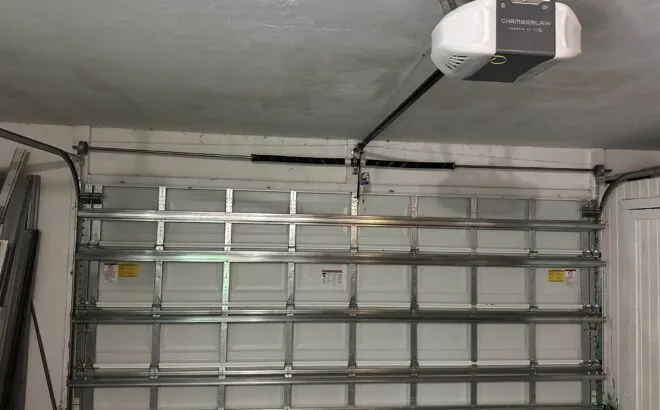
Springs in Roslindale’s old single-car garages
Behind most single- and two-family houses around Roslindale Village stands a small detached garage, reached by a long driveway, and somewhere above or beside its door sit the springs that do nearly all the lifting. Garage door spring repair Roslindale MA homeowners ask for is mostly about those springs giving up: a coil that has cracked through, a stretched spring that no longer holds the door, or a pair so fatigued that the opener is grinding away to make up the shortfall.
These garages date mostly from the 1920s and 1930s and were framed around single-car openings with modest headroom. That shapes which kind of spring a door carries, how much room there is to fit a replacement, and how the work has to be done.
If you suspect a spring, three things can be checked by eye from the floor, hands in pockets:
- A visible break somewhere along the coil over the door, with a gap where the wire has parted.
- A spring beside either ceiling track that dangles slack, has lengthened noticeably, or lies in two pieces.
- A door that leans, or that slams down fast when it is let go, instead of drifting gently.
Spring problems on these doors
A coil that has cracked through
Torsion springs usually part with a single report like a firecracker, and from then on the door will not rise. Both halves remain threaded on the tube above the opening.
Stretched or broken extension springs
On plenty of older single-car doors, a long spring hangs alongside each overhead track. One may snap cleanly, or quietly lose its pull until lifting the door feels like hard work.
Springs spent by constant use
Each trip up and down draws a little more from the steel. A garage shared by two households burns through that allowance faster.
A mismatched pair
Where one spring was changed by itself at some point, the two can pull unequally, and the door rides crooked.
Room to fit a spring
Low headers and close rafters limit what fits above an old opening. The replacement has to suit the space as well as the door.
What springs actually do
A sectional door is heavy, far beyond what an opener could hoist unaided, and more than most people can raise comfortably with their arms. The springs carry that weight. Set correctly, they leave the door feeling close to weightless halfway up, and the opener has little to do beyond steering it.
A torsion spring stores its energy in twist. It is threaded on a steel tube running across the head of the opening; as the door descends, cables pay off a drum fixed at either end of that tube and wind the coil tighter. On the way up, the coil relaxes and returns the effort. Extension springs store energy by being pulled longer. Hung parallel to the ceiling tracks, they lengthen as the door shuts and contract to help draw it open, working through a pulley and cable on each side.
Both kinds wear out. Steel that is twisted or pulled over and over eventually fatigues, and the spring fails at its weakest point. At that moment the counterbalance disappears, and the door’s whole mass now hangs from the cables, the opener and the hands of whoever tries to raise it.
Why a torsion spring is never a DIY job
A wound torsion spring holds a great deal of energy, and it holds it all the time the door is down. Adjusting or removing one means letting that energy out in small, controlled turns using purpose-made steel rods, and a rod that slips or a set screw that gives can whip round hard enough to cause a serious injury in an instant. That same stored force loads the lowest brackets, where each cable is tied on.
So the advice is plain. Leave the set screws on the winding cone alone, leave the bottom brackets bolted, and do not attempt to wind a replacement coil. Online clips make it look quick; they rarely show the injuries. Garage door spring repair Roslindale MA households should expect involves proper winding rods, a spring matched to the door, and someone who has done it enough times to know the order of every step.
Extension springs are less violent but not harmless. When one breaks with nothing threaded through its middle, the loose ends can lash across the garage. Some older single-car doors were never given containment cables, which is one more reason to keep away from the spring until it can be dealt with properly.
Extension springs on the older single-car doors
Many doors in garages of this vintage still run on extension springs, or were set up with them when the original swing-out doors came off. They suit a low opening, because they hang along the tracks instead of needing room above the header. They are also the type most likely to be ignored until one goes, since they sit up near the ceiling where nobody looks.
A broken extension spring is easy to see once you glance up: a limp coil, a gap, or a spring hanging from its pulley. A stretched one is harder to judge. The door feels heavier than before, shuts faster, or sinks when released halfway. The pair is renewed together, because they have aged together, and the pulleys and cables get a careful look too, since a frayed cable or a split sheave tends to accompany a tired spring.
A containment cable belongs inside every extension spring, tied off at the front bracket and at the back hanger. Where one is missing, it is added as part of the job.
Wooden doors and heavier loads
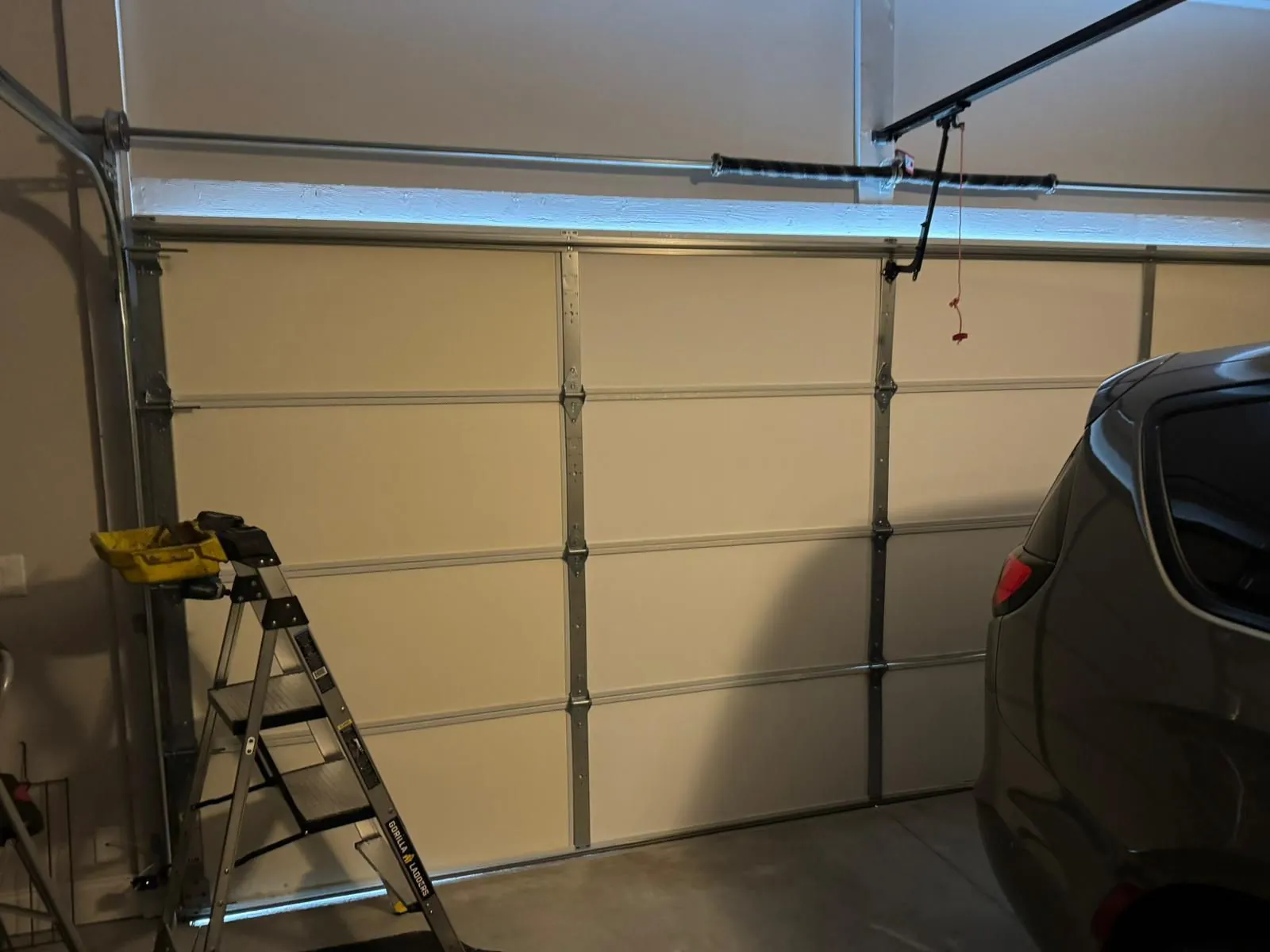
Some of the older garages here still carry timber doors, or doors that were insulated or reinforced at some point after they went up. A heavier door needs a stronger spring, and a door that has absorbed moisture over the years can end up heavier than the springs on it were chosen for. What follows is a door forever slightly out of balance: it creeps down when left halfway, or the opener grunts on every lift.
Matching the spring to the door means knowing what the door weighs now, not what it weighed when it was hung. During a visit the balance is felt by hand at several heights before anything is ordered or wound, and the new springs are chosen for the door as it is today. That weighing-up is the heart of garage door spring repair Roslindale MA garages with old timber doors call for, because a spring sized from a catalogue guess will leave the door drifting or the opener straining within a season. Insulation panels glued on later, a replaced section of a different material, or extra hardware bolted on over the years all change the figure the spring has to meet. Where a door has grown so heavy that no sensible spring will balance it, you are told so, because that is a sign the door rather than the spring is the real issue.
Warning signs before the coil parts
A spring seldom breaks with no hint beforehand. In the weeks before a break, raising the door by hand may take more effort than it used to. The opener may labour on the way up or make a new straining sound. The door may land with a thud where it once settled softly. On a torsion system, a small opening or a patch of rust may appear at one spot along the coil. On an extension system, one spring may hang lower or look longer than its partner.
Each of these signals justifies a call before the break, all the more so for a garage set well back down the drive, where a jammed door leaves the car stranded far from the road. A spring changed in good time spares the opener, the cables and the sections from the jolt of a sudden failure.
What a spring visit involves
To begin, the opener’s trolley is unhooked and the door is worked by hand, so the technician can feel how much of its weight the springs still hold. That shows which spring has failed and how near its partner is to failing.
Next, the right spring is worked out from the door in front of us: its weight, its height and the drums or pulleys already in place. The garage counts as well, because the space over an old header decides how a torsion spring can be mounted. Old springs are let down in the correct sequence, never cut under load, and the new pair is fitted and tensioned to suit. Cables and drums get inspected while the spring is off, since there is no better moment to change them.
With the new springs on, balance is tested with the door stopped low, midway and high, the opener is reattached with its force setting lowered to match the easier lift, and the safety reverse is checked by lowering the door onto a block on the slab. You see the old parts and hear why they were changed before the tools go back in the van.
Cables, drums and pulleys after a break
A spring failure is rarely kind to its neighbours. On a torsion door, the abrupt loss of tension can let a cable leap off its drum or kink where it coils. On an extension door, the pulley carrying the cable may crack, and the cable can fray where it rubs the bracket.
These parts are checked every time a spring is replaced, and worn ones are changed in the same visit. Putting a fresh spring alongside a frayed cable only delays the next breakdown. Cables and drums are always done as a left-and-right pair, so the door lifts square.
Fitting springs in low garages
Single-car garages from the twenties and thirties often have very little headroom, with rafters or joists starting not far above the head of the opening. An ordinary torsion setup needs a band of clear space above the door for its tube, drums and end brackets. Where that band is missing, the door may run on extension springs, or a low-headroom track kit may place the torsion tube differently.
Replacing like with like is usually right, but sometimes a garage is better served by changing spring type: for instance, where an extension setup lacks containment cables and has nowhere sensible to add them, or where switching to torsion would give a smoother, steadier run. That choice is made on site, measured against the room the garage really has, and explained before work begins.
Cold mornings and broken springs
With no shared wall to borrow warmth from the house, a standalone garage leaves its springs at the outdoor temperature. Steel loses some of its give in hard frost, and a spring that has been weakening for months often chooses an icy morning to let go. The first lift after a bitter night puts the most strain on it.
That is one reason spring calls cluster in the coldest weeks of the year. Nothing can keep a spring going forever, but one that is properly sized and tensioned for its door, with clean, lightly oiled coils, copes with a New England winter better than one that is undersized or dry.
Doors that open many times a day
In a garage that serves both floors of a two-family house, the door can rack up several times the trips of a single household’s door. Springs are made to last a certain number of cycles, and heavy use spends that allowance faster. A door working for two households may need fresh springs well before the door next door, even with identical hardware.
For those garages, a longer-cycle spring can be worth considering when the old ones come out, provided it fits the space and suits the door. That is talked through with you at the visit, not assumed.
What you can do safely while you wait
With a broken spring, the safest door is a door left exactly where it is. Unplug the opener from its ceiling socket so nobody presses the button out of habit, because an opener trying to lift a door with no counterbalance can strip its gears or bend the top section. Keep youngsters and animals well away from the door. If the door is stuck open, do not pull the emergency release cord, since the door may then drop under its own weight.
It also helps to look, from a safe distance, at what kind of spring the door has and roughly where the break is. That detail, passed on when you call, means the right parts can be planned for.
Replacing the pair
Where a door hangs on two springs, both are changed at once even if only one has broken. They went in together and have shared every lift since; the survivor is rarely far from its own break. Replacing just one also leaves the door with springs of unequal strength, which tug unevenly and wear the cables and drums faster.
If the door itself is in poor condition, with rotten or rusted sections, it is fair to ask whether the springs are the only problem. A new set of springs on a door near the end of its useful life is not always the wisest spend, and you are told straight if that is so. For the wider range of work on these garages, the Roslindale garage door repair page covers cables, tracks, panels and more, and new garage doors in Roslindale are worth a look if the door is beyond saving.
Getting a broken spring replaced
A spring that breaks overnight or just before the commute leaves the car penned behind a door nobody should lift. We pick up at any hour, including weekends. With the door jammed open or the car shut in, the Roslindale emergency repair page sets out sensible first steps, and if the opener also misbehaves after a break, the Roslindale opener repair page explains how it is reset. Our citywide spring work is described on the garage door spring repair service page, and the Roslindale page lists everything we do nearby.
For garage door spring repair Roslindale MA owners want sorted, mention whether the coil sits over the opening or runs alongside the ceiling tracks, whether the door is resting open or shut, and whether a vehicle is inside. Once you have that, call us or book online, day or night, and the spring can be dealt with properly.
Questions from Roslindale
Something went bang in the garage and the door now refuses to open. A spring?
Very likely. A breaking torsion coil is startlingly loud. Unplug the opener and look up at the coil over the opening for a break. Do not try to lift the door.
Is winding a replacement torsion spring something I could do?
No. A wound torsion spring stores enough energy to cause a serious injury if a rod slips or a screw gives way. Garage door spring repair Roslindale MA homeowners can rely on is done with proper winding rods, in the correct order, by someone who handles springs daily.
Just one spring out of two snapped. Must the other go too?
Yes. The pair has carried the door together for the same span, and the remaining one is usually close to its own break. Changing both keeps the door balanced and the cables wearing evenly.
The rafters sit right over our door opening. Is a torsion spring still possible?
Sometimes. It depends on the space above the opening. Where it is too tight, extension springs or a low-headroom arrangement are used instead.
Is there a way to get the car out while the spring is broken?
Not by heaving the door up. Without its spring the door bears its entire weight and can come crashing down. Leave it down, disconnect the opener at the socket, and give us a ring.