
Why openers have a hard time in Roslindale’s back-lot garages
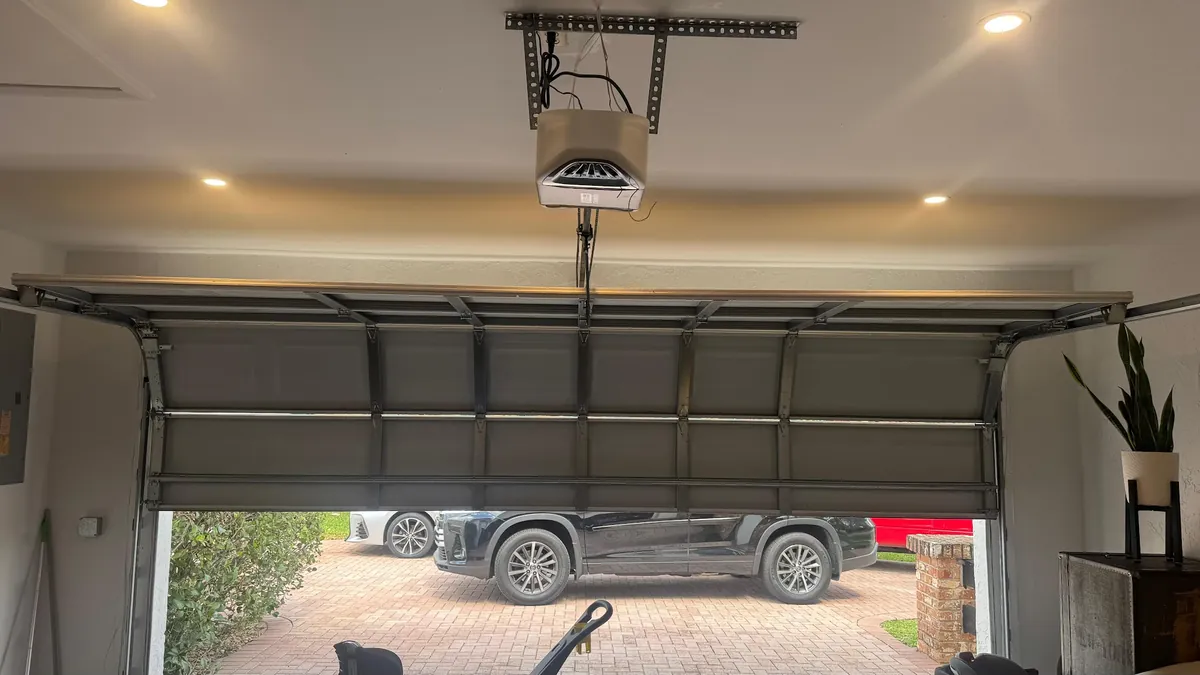
Around Roslindale Village, the opener usually lives in a garage that is a building in its own right: a single-car structure where a long driveway peters out behind a single- or two-family house, put up in the 1920s or 1930s and given an overhead door and a motor decades afterwards. Most garage door opener repair Roslindale MA owners need traces back to that setting. The motor dangles from old rafters, draws its electricity down a feed strung out from the house, and hauls a door through an opening nobody ever framed with a motor in mind.
None of that stops an opener from doing its job for years. It does mean that when the door misbehaves, the motor is only one suspect. The wiring, the mounting, the door’s own balance and the line of the sensors all deserve a look before anyone writes the opener off.
Before you call, a few things are worth noticing:
- Whether pressing the button wakes the opener at all: a lamp, a click, a whine, or silence.
- Whether the button by the side door gets a response that the handset in the car does not, or whether both are ignored.
- Whether the tiny indicator on each photo eye glows steadily, flickers, or stays dark.
Opener faults that turn up most
A whine with no movement
The motor sings away and the door sits there, or creeps upward a hand’s width and quits. Common causes: a gear worn smooth, a trolley that has let go of its carriage, or a door turned into dead weight by a snapped spring.
Handsets that lose their reach
A handset that only answers when you are nearly at the garage, or not at all. Tired batteries, a crumpled antenna lead and radio noise account for most of these.
A button on the wall that does nothing
Press it and the garage stays silent. The trouble may sit in the button, in the hair-thin wire stapled to the studs, or on the opener’s logic board.
A door that changes its mind
It sets off downward and then rises again. Photo eyes are the prime suspect, then the force setting, then something underfoot or a slab that has sunk at one corner.
Opener no longer worth fixing
An elderly unit with several worn parts, no auto-reverse, or spares nobody stocks any more. Then a new one, sized for the door and the space, is the sensible way forward.
How an opener and a door share the work
Inside the housing sits a motor. Its power goes into a drive, whether chain, belt or long threaded rod, stretched along a rail, and a carriage on that rail is coupled by a curved arm to the uppermost section of the door. As the motor turns, the carriage tows the door open or shoves it shut. Travel settings mark the two end points, and a separate sensitivity setting decides how much resistance the motor will tolerate before it backs off.
Hoisting the door’s dead weight was never the opener’s job; that belongs to the springs. Paired with a properly counterbalanced door, a motor has an easy life and a long one. Paired with a door whose spring is tired or broken, it is hauling a load it was not designed for, and it strains, heats up and chews its gears. That is why every opener call starts with a look at the door’s balance, and why a spring fault so often gets mistaken for a motor fault.
We repair and replace LiftMaster openers among the units we work on.
Low rafters and the space an opener needs
Single-car garages of this era rarely have room to spare overhead. The rafters or ceiling joists may sit just above the door when it is raised, and the band between them and the head of the opening is often narrow. A conventional ceiling unit wants its rail running above the open door and its motor hung well back into the bay.
In a short or low garage that arrangement can be a squeeze. The motor may end up exactly where a car roof or a stored stepladder lands, the rail may need a fabricated hanger to reach solid timber, or the door may already run on a low-headroom track kit that moves the point where the opener’s arm grips. Some garages suit a jackshaft unit bolted to the wall beside the opening, driving the spring tube directly and leaving the ceiling clear, though that only works with the right spring setup on the door.
When an opener has to be replaced, the new one is chosen for the room the garage actually offers. That is the stage of garage door opener repair Roslindale MA owners ask for where a tape measure counts for as much as horsepower.
Remotes and the long walk from the street
A garage set well back from the road asks a lot of a handset. The button is pressed from a car still nosing in off the street, and the signal has to carry the length of the driveway, past the house, and into a building that may have aluminium siding, a steel door or a tin roof. A battery that would still do in an attached garage simply runs out of reach at that distance.
The cure is often modest: a new coin cell, the opener’s antenna lead uncoiled so it hangs straight down from the housing, or a fresh pairing after the opener’s memory is wiped. Now and then a handset has simply died, or radio noise from something close by is swamping it. Where a garage serves two households, a whole drawerful of handsets may be paired to the opener, some of them long since lost. Wiping the memory and pairing only the handsets still in use is sensible housekeeping, and it is part of the visit.
An outdoor keypad helps on a garage that stands a long way from the back door. Fixed to the frame beside the opening, it lets someone in without a handset, and it is fitted and coded during opener work on request.
Wall controls and the wiring behind them
The button inside connects to the opener by a slender low-voltage lead, usually stapled along a stud or a rafter. In an old timber garage that lead may have been pierced by a staple, gnawed, soaked by a roof leak, or tugged loose when something was hung from the same rafter. A button that never works, or works only now and then, nearly always points to that lead or its terminals.
The check is quick. The opener is triggered by bridging its own terminals; if the motor responds, the unit itself is healthy and the break is somewhere between button and motor. A fresh run of wire or a new button usually settles it. Where a fancier lit console was fitted, the console itself can fail, and swapping it is straightforward.
The photo eyes at ankle height
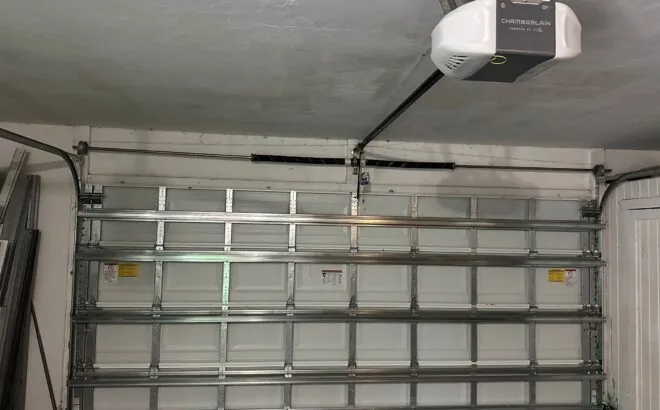
Modern openers are fitted with a pair of photo eyes, bolted low on either jamb. One projects an infrared line across the doorway to its twin, and if that line is interrupted during the descent, the motor reverses. Once an eye is nudged off target, filmed with grime or beaded with rain, the opener won’t finish closing, or it turns back halfway, and the eyes’ indicator lamps usually blink or go out.
In a narrow single-car garage, the photo eyes share their patch of wall with whatever leans there: bicycles, recycling bins, a rake, a stack of patio slabs. A gentle bump is enough to twist one. Wiping the lenses and bringing the two back into line clears up most of these complaints. Where the lead running up to the opener has been damaged, it is replaced, and where an eye itself has failed, a new pair goes in.
An uneven slab can join in too. If the floor dips at one side, the bottom edge reaches concrete late on that side, and the opener reads the hesitation as an obstruction. The cure is to set travel and sensitivity to suit that floor, sometimes with a fresh bottom seal thick enough to fill the low corner.
What a visit involves
The door gets attention first. The opener is unhooked using its release cord, and the technician hefts the door halfway up and lets go, to see whether it hovers, sinks or climbs. If the door is heavy, lopsided or binding, that is dealt with before anyone points at the motor.
Next the opener is put through its paces on its own: power at the outlet, how the motor responds, the drive and carriage, the travel and sensitivity settings. Every handset and the button by the side door are tried. The photo eyes are checked for line-up, power and wiring. Where the fault lies in a replaceable part, such as a gear, a logic board, a carriage or an eye, you hear about it before any work starts, together with an opinion on whether the rest of the unit deserves keeping.
To finish, the arm is coupled back to the door and the door is cycled up and down repeatedly, the travel is adjusted so the bottom edge seals snugly on the slab, the sensitivity is set so the door backs off when it meets resistance, and that backing-off is demonstrated with a short plank on the floor that the descending door must not crush.
A detached garage and its power supply
An attached garage draws on a socket a few steps from the kitchen. A detached garage at the bottom of a long drive often relies on one cable run out from the house, sometimes underground, sometimes strung overhead, sometimes added long after the garage went up. The opener plugs into a socket on that cable, and anything that sags the supply shows up as odd behaviour: a motor that dithers, a board that reboots, lights that dim as the door starts.
Before an opener is condemned, the socket and the supply are checked. If the fault is electrical rather than mechanical, you are told so, because a new opener on a failing circuit behaves no better. Repairs to the house wiring belong with an electrician; the opener side is ours.
When the fault is really in the door
Plenty of calls that arrive as opener trouble end up being door trouble. A snapped spring leaves the motor trying to hoist dead weight. A frayed cable, or one unspooled from its drum, makes the door bind and twist. A seized roller or a kinked track makes it drag. A door left out of balance for months grinds the opener’s gears down long before their time.
So the door is always checked before the opener. If a spring has gone, the Roslindale spring repair page explains what that involves; if the door needs wider work on its cables, rollers or tracks, the Roslindale garage door repair page covers it. Fixing the door first protects whatever opener ends up running it.
Cold weather and an unheated garage
In a standalone garage the opener spends the winter at outdoor temperature. Grease in the drive turns stiff, the door’s rollers drag, and the rubber along the bottom edge can glue itself to the concrete with ice overnight. The opener then meets extra resistance on its first run of the morning and, if its sensitivity is set fine, it stops or reverses.
Chipping ice off the bottom edge and keeping the tracks and rollers lightly oiled helps. If the opener struggles every frosty morning, check that the door is balanced and that the sensitivity suits the season. Cranking up the force to bully the door through is not a fix; it masks a fault and blunts the safety reverse.
Two households, one opener
A two-family house sharing one garage puts an opener through a busier life than most. The door may cycle many times a day, handsets multiply, and the wall button gets pressed by people who each assume someone else will report the odd noise. All of that shortens the life of gears and carriages and lets small faults ride.
A few habits help. Keep a note of which handsets are paired, so a lost one can be wiped from the opener’s memory. Tell everyone where the release cord hangs and how to unplug the motor if the door starts doing something strange. And agree that the first person to hear a grind or see a stutter makes the call. Faults caught at that stage are usually the simpler ones to put right, and the opener lasts longer for it. Garage door opener repair Roslindale MA homes with shared garages need is often just that kind of early catch.
Repair or replace the opener
An opener is frequently worth mending. Gears, carriages, photo eyes, logic boards and handsets can each be changed on their own, and a unit with a healthy motor can carry on for years after a repair.
Replacement starts to win when the old one is worn in several places at the same time, when nobody makes its spares any more, or when it predates photo eyes and auto-reverse. A new opener is matched to the door’s size and weight and to the room above it, then fitted with its rail, photo eyes, wall control and handsets set up and tested. Part of honest garage door opener repair Roslindale MA homeowners should expect is a clear recommendation either way, with the reasons. If the door is tired as well, read the new garage doors in Roslindale page first, so door and opener can be planned as one job.
Booking an opener visit
A motor that quits mid-winter with the door shut can strand the car, and one that quits with the door raised leaves the garage wide open overnight. You can reach us by phone at three in the morning just as on a Tuesday afternoon. If the door is jammed open and you cannot lower it, the Roslindale emergency repair page lists what to do before we get there. Our citywide opener work is described on our garage door opener repair and replacement service page, and the Roslindale page gathers everything we do locally.
Before you phone about garage door opener repair Roslindale MA garages need, note whether the opener’s lamp lights, whether the motor makes any noise, whether the wall button and the handsets act differently, and what the photo-eye lights are doing. Armed with that, call us or book online, and the technician arrives already knowing half the story.
Questions from Roslindale
The motor whirs yet the door will not budge. Why?
Most often the door has become too heavy for it, usually through a snapped spring, or a gear inside has worn smooth. Stop pressing, unplug the opener, and look for a broken spring over the door or along the tracks.
My handset only works from a few steps away. Is that fixable?
Nearly always. A new battery, straightening the antenna lead on the motor, or re-pairing the handset usually restores the range. If the handset has died, it is replaced.
The door heads down, then climbs back up. Why?
The photo eyes are the likeliest cause: one is twisted, grimy or wet. Make sure nothing sits between them and wipe both lenses. If it still turns back, the sensitivity or travel settings may need adjusting.
Our rafters are very low. Can a new opener go in?
Usually. The unit is picked to suit the space, and where a ceiling opener will not fit, a jackshaft unit mounted beside the door may work, depending on the door’s springs.
There is a power cut. How do I get the door open?
Pull the red release cord to uncouple the door from the opener, then raise it by hand, but only if it rises easily. If it feels like a dead weight, a spring may have gone; leave it down and ring us.