
Why the rear garages behind Roxbury’s three-deckers wear out the way they do
Around Nubian Square and up on Fort Hill, the houses are mostly three-deckers and Victorians, and where there is a garage at all it usually stands at the back of the lot. Plenty of the row houses nearby have no garage, so the ones that exist tend to be busy, and reaching them usually means climbing or descending a steep grade along a driveway that two or more households share. Garage door repair Roxbury MA owners ask us about nearly always starts with that combination: a door on a slope, used by more than one family, at the far end of a narrow approach.
A grade changes how a door sits and closes. A shared driveway changes how often the door moves and how often it gets clipped. Between them they explain most of the faults we see on these garages, from a bottom section that never seals to a track pushed out of line by a bumper.
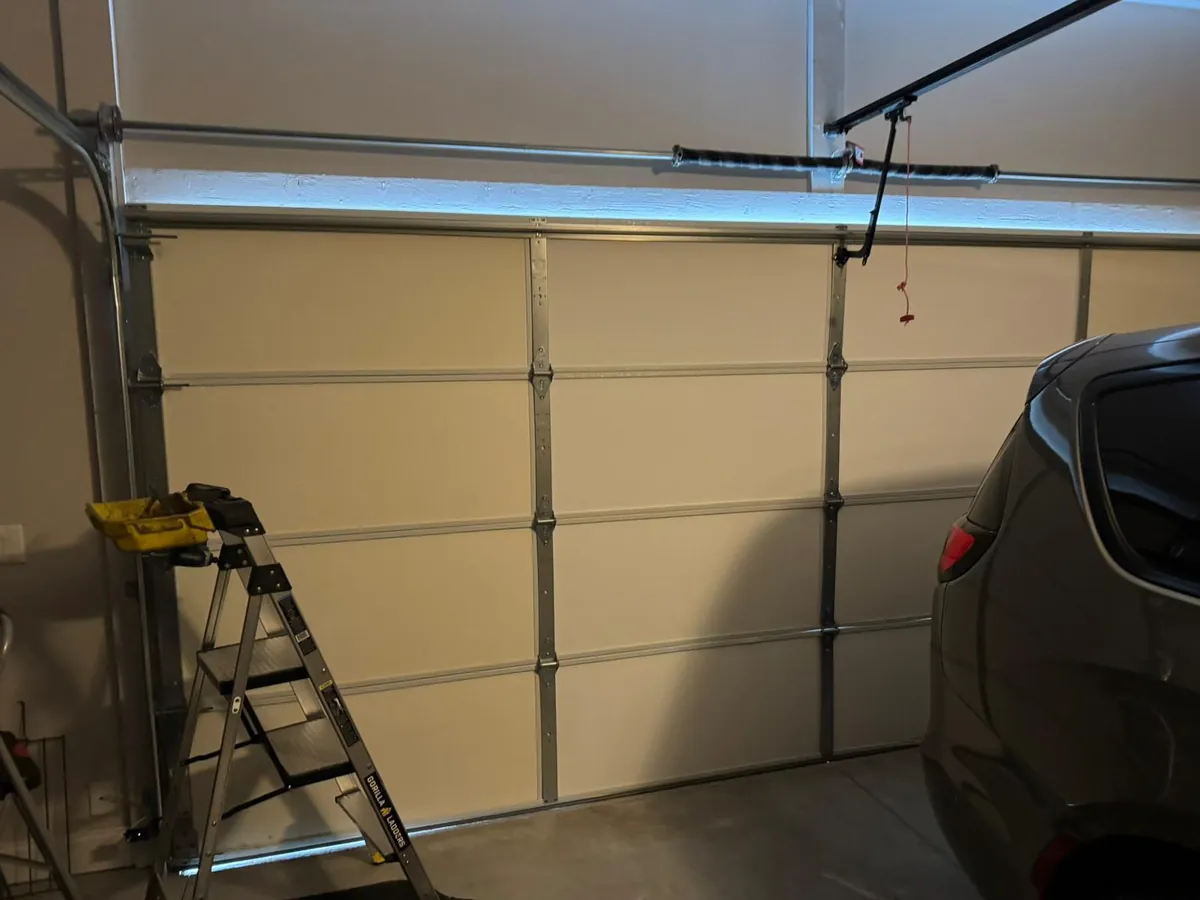
From the bottom of the drive, without touching anything, look for three things:
- Whether the door hangs evenly in the opening or one bottom corner sits higher than the other.
- Whether the coiled spring across the header, or either long spring running beside the overhead rails, has snapped apart.
- Whether either lift cable at the bottom corners has gone slack or come off.
Parts a Roxbury repair covers
Springs, torsion or extension
These are what make a heavy door feel light. Lose one and the door turns into a slab the opener cannot shift for long. Spring work has its own page for Roxbury spring repair.
Cables and the drums they wind on
Thin steel lines carry the lift down to each bottom corner. Where the slab tilts, the low-side line slackens first and can unspool from its drum.
Sections, hinges and seals
Bumpers turning on a cramped shared drive find the bottom panels. The rubber seal fights an uneven floor and gives out early.
Openers, remotes and buttons
Motors that hum and go nowhere, clickers that only work from a few feet away, buttons that have gone dead. See Roxbury opener repair for that side of the work.
Tracks and rollers
Wheels flatten or freeze, brackets work loose in old framing, and a rail that has taken a knock makes the door crab sideways.
Safety sensors
A pair of small photo eyes near the floor turn a closing door around. Where the slab slopes, a rolled bin is enough to tip one off aim.
A garage door on a hill
Most overhead doors are designed on the assumption that the floor under them is flat and the opening is square. On the steep lots around Fort Hill that assumption often does not hold. The garage slab may follow the fall of the land, so the floor at one jamb is lower than at the other. Or the driveway may run downhill straight into the opening, so that the door closes onto a lip where the paving meets the slab.
With a tilted floor, the high side of the door lands first. The opener keeps driving until it senses resistance, the high corner takes the load, and the cable on the low side goes slack. Do that hundreds of times and the slack cable starts to sit loosely on its drum, the bottom section flexes along its length, and the seal on the high side flattens while the low side never touches the floor at all. Water, leaves and grit then run down the driveway and in under the gap.
None of that means a door cannot work well on a hill. It means the repair has to account for the slope. The bottom seal can be chosen and trimmed to fill an uneven gap. Cable tension is set so that both sides stay taut when the door is closed, not only when it is moving. The opener’s down limit is set so the door stops when it meets the floor rather than pressing on until one corner gives. And where the slab itself has a lip, the bottom section is checked for damage from landing on it.
The shared driveway and the door everyone uses
Shared driveways are the normal arrangement here, and they bring their own wear. A rear garage behind a three-decker can be used by several units, or one household may park inside while the next uses it for storage, so the door can run far more often than one on a single-family house. Every cycle wears the rollers, the hinges, the springs and the opener’s drive a little more, and a fault that would be noticed at once by a single owner can go on for weeks when nobody is sure whose door it is.
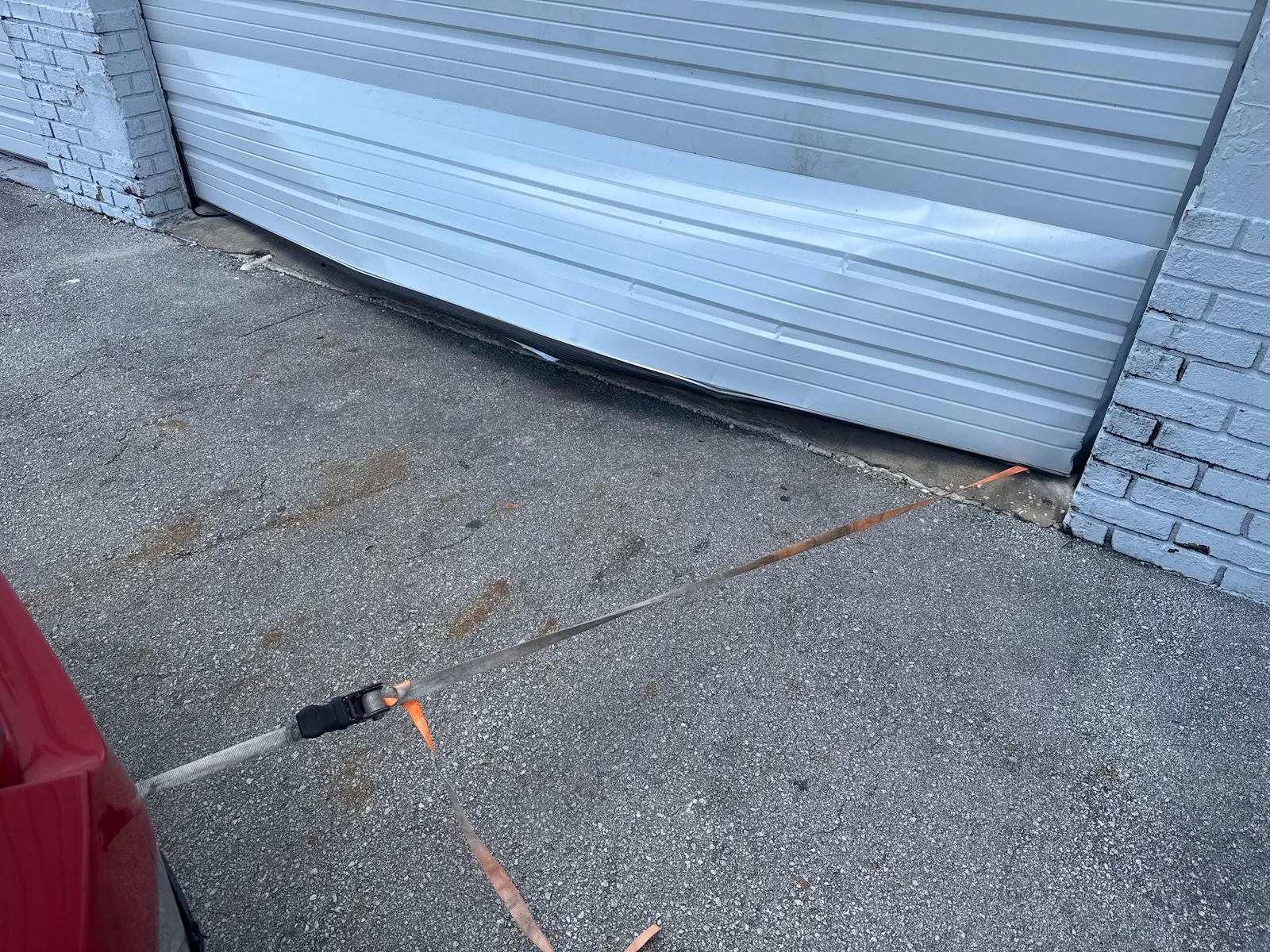
A driveway shared between two lots is also a driveway where cars are turning in tight space. Bumpers clip the bottom section and the vertical tracks beside the opening. A track that has been struck may look straight from the driveway yet be pushed back a fraction at one bracket, enough to make the rollers bind on that side. Over time the door starts to rack, one side leading the other, and from there it is a short step to a roller jumping out of the rail.
If you look after a building where the garage is shared, a few habits pay off. Make sure every household knows where the opener plugs in, so anyone can kill the power to it. Keep a list of the remotes that are programmed to it. And when someone mentions a new grinding sound, a shudder halfway up or a door that drops faster than it used to, ring then rather than waiting for it to quit.
Garage door repair Roxbury MA: where each fault starts
A failure in one part usually shows up as a symptom in another, which is why garage door repair Roxbury MA homeowners book is mostly a matter of tracing the symptom back to where it began.
Start with the springs, because everything else leans on them. On most doors here a torsion spring is wound around a bar running across the header, tightening as the door lowers; older and lighter doors often use a pair of extension springs stretched alongside the overhead rails instead. With healthy springs, a door can be lifted with a couple of fingers. With one broken, the opener is suddenly being asked to raise the whole weight, and it labours, stalls or chews its drive gear.
The cables hand the springs’ pull down to the bottom brackets, winding up on the two drums that cap the ends of the bar as the door rises. Wear usually begins where a cable rubs a sharp edge, and a door that lands hard on a lip in a sloping slab can jerk one off its drum.
Rollers and rails steer the door through its curve. A wobbling wheel scrapes, a frozen one drags, a split one can wedge the door halfway. Where a rail bracket is screwed into framing that has shrunk or split, the whole rail shifts a little every time the door goes past.
Last come the opener and its photo eyes. The motor is only meant to nudge a door the springs have already balanced, and the eyes stop it lowering onto a child, a bike or a bumper. Every trip a lopsided door makes leans harder on the motor, and sooner or later the motor or the door gives out first.
What a visit involves
We start by disconnecting the opener: the release cord is pulled, and the door is worked up and down by hand. That one test says more about the springs than anything else, because a door in balance will hover at waist height when you let go.
Next comes a hands-on survey of the hardware, top to bottom: springs and the plates holding them, cables and drums, every roller and hinge, both rails end to end, and each bracket where it is fixed to the frame. Behind an older three-decker or Victorian that last item gets real attention, since a bracket lagged into tired wood will wander again whatever new parts go on it. On a sloping lot the floor gets measured at both jambs as well, so the door is set for the slab it actually closes on.
If the motor is one of the things playing up, we run it with the door unhooked, the wall control and every remote get a turn, and the eyes are tested. Before any part is changed, you hear what has broken, the likely cause, and anything else that looks near its end, and the work waits for your yes. Once it is done the door is rebalanced, the opener’s open and closed stopping points are reset along with its force setting, and the reversing system is proved against a block of wood laid on the slab.
Carrying a ladder, a spring and a length of rail up a steep shared driveway is part of the job here, so moving cars out of the way beforehand helps, and so does a word to whoever shares the drive.
What you can safely do before we get there
Some checks are harmless and can save time on the visit:
- With a door that has stalled partway, unplug the opener so a neighbour does not hit the wall switch out of habit.
- Look at the two photo eyes. On a sloping floor, a bin rolling against one or a car door brushing it is enough to tilt it out of line. If the little lights on the two eyes do not match, one glowing and one out or flashing, they have lost sight of each other.
- If only a single remote has failed, try the wall button. When the door answers the button, the remote’s battery is the first suspect.
- Run your eye down both rails for a stone, a toy or a twig lodged in them, keeping your fingers well away from the rollers.
Some things should be left alone entirely. The torsion spring, the cones and screws at its ends, the cables and the bottom brackets they hook onto are all loaded with the spring’s energy, open or closed. Loosened in the wrong order, any one of them can whip round or fly off with real force, so nobody should treat spring or cable work as a DIY repair. And if a spring is broken, leave the door where it is: hauling it up by hand or tapping the button again puts all that weight on you or on the opener.
Bottom sections, seals and the run-off from a sloping drive
On a lot where the driveway falls toward the garage, the door is the first thing every rainstorm meets. A worn or torn seal lets water run in under the door, and on many of these garages it sits against the bottom section long enough to rot wood or rust steel from the inside edge upward. Through the winter, the snow shovelled off a sloping drive tends to end up banked against the door’s lowest panel, which adds weight and wet to the same place.
A seal that has flattened or split is a modest repair and one of the most useful on a sloping site. Where the bottom section has already started to go, it can often be replaced on its own if a matching section can be found, which keeps the rest of the door in service. The hinges joining the sections get a look while we are there, because one that has cracked lets the door bend at that joint, which shows as a sag through the middle on the way up.
Doors that jump their rails
On a shared drive a bumper can catch the bottom corner, and on a tilted slab one side can be driven down harder than the other; both are classic ways for rollers to climb out of a rail. The door then hangs crooked in the opening, and nothing reliably keeps it up there. Trying the opener again, or shoving the panel back in by hand, tends to bend more track.
Setting it right means clamping the door so its weight comes off the wheels, easing each roller back into place, replacing or truing any rail that has bent, and evening up both cables before the door travels again. The off-track garage door repair page goes into how that is done. If a crooked door is blocking a shared driveway in the middle of the night, our Roxbury emergency repair page explains how to keep it safe until help arrives.
Repair or replace
On most of the garages behind Roxbury’s three-deckers and Victorians, fixing what is there usually wins. Every moving part, from the springs down to the rubber seal, gets swapped out more than once in the life of a door, and panels that are still healthy carry on happily after each round of new hardware. An older opening that has settled out of square has often had its door fettled to suit it over time, and a sound door that already fits its crooked frame is worth keeping.
The sums change when the panels are the problem: steel eaten through at the bottom edge, wood gone spongy from run-off, a door struck so many times on a cramped drive that it no longer runs true, or an old timber door so soaked it can no longer be balanced at all. Part of any honest garage door repair Roxbury MA homes receive is saying which of those applies. When a new door is the better use of money, new garage doors in Roxbury covers how one is fitted to an older or sloping opening.
Booking the repair
Doors tend to fail at the worst moment, with a car shut in or a door stuck open after dark. Our phone gets picked up whatever the hour, so a Fort Hill door that quits at midnight on a Sunday can be reported that same minute. Our approach citywide sits on the main garage door repair page, while the Roxbury page brings every local service into one place.
When you ring about garage door repair Roxbury MA properties need, it speeds things up to know whether the garage sits up or down a shared drive, how the door is behaving, what you can see that has broken, and whether a car is stuck in the garage. Jot those down, and from anywhere in Roxbury, call us or book online.
Questions from Roxbury
The door closes but leaves a gap on one side. Is that a repair?
Usually, yes. On a sloping floor a gap at one corner often means the bottom seal is worn, the cable on that side has stretched, or the opener’s down limit is set for a level floor. Each can be put right once the cause is found.
Our garage is reached by a steep shared driveway. Does that affect a visit?
It affects how parts and ladders get to the door, not whether the door can be repaired. Clearing the shared driveway of cars beforehand, and telling the neighbours, makes the visit go more smoothly.
Several units use the same garage. Is that why the door keeps wearing out?
It is a big part of it. Every trip wears the rollers, hinges, springs and opener. A door that several households use reaches the end of those parts sooner, so they are worth checking whenever any one of them is replaced.
The door bangs when it lands. What causes that?
Often a worn bottom seal or a door landing unevenly on a sloped slab, but it can also be a spring losing tension so the door comes down heavier than it should. It is worth having looked at before it damages the bottom section.
Can I push a door back onto its track myself?
Please do not. A door hanging out of its rails can drop, and its springs and cables are still loaded. Keep the drive clear around it, pull the opener’s plug, and phone us.