
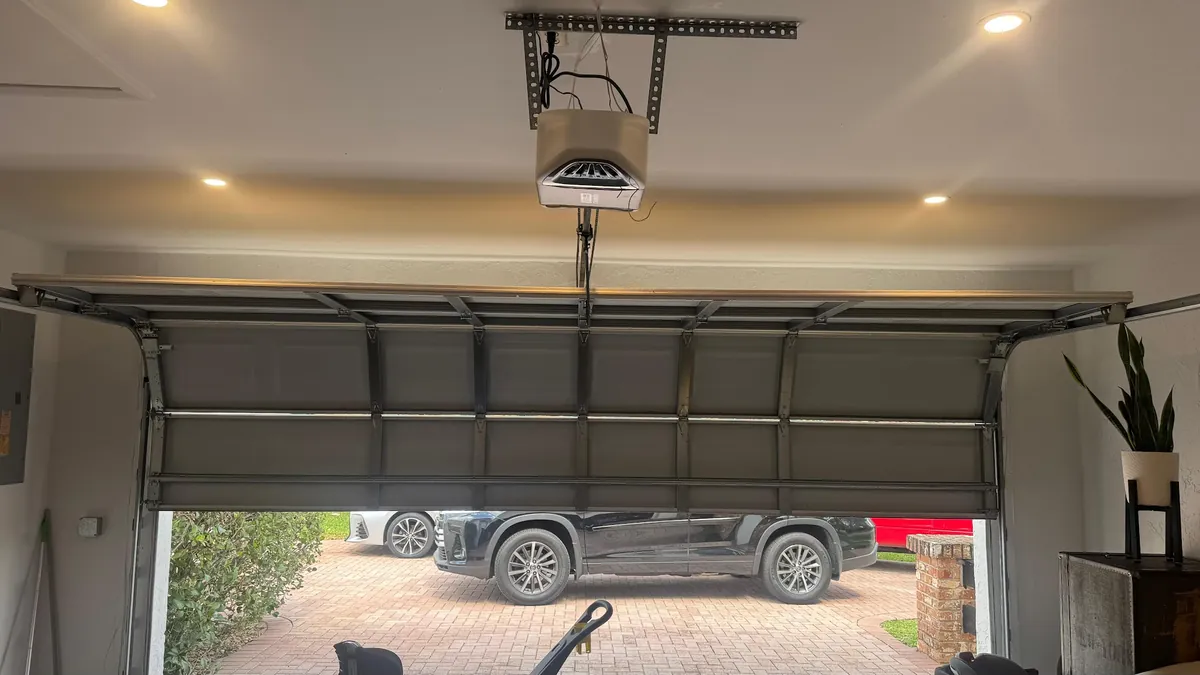
Why openers in South Boston garages work so hard
Garage door opener repair in South Boston MA usually begins with a building that asks a lot of its opener. In the small rear garages behind triple-deckers and row houses, the motor hangs from a low ceiling with the raised door almost touching it, and a shared garage may be opened by several households, each with its own remote. In the newer townhouse garages near the water, the garage doubles as the household’s everyday entrance, so its opener barely gets a rest.
Openers rarely fail all at once. A gear wears, a remote drifts out of range, a sensor gets knocked a little further out of line each week. By the time the door will not move, the warning signs have often been there for a while.
Three quick checks before you call:
- Press the button: does the unit on the ceiling light up, click, hum or stay dead?
- Crouch by the door frame: is there a steady glow on each of the two photo eyes?
- With the opener released, does the door lift easily by hand, or is it very heavy?
The opener problems we fix
Motors that hum or stall
The motor whines while the door sits still, quits halfway, or turns back on its own. Sometimes the motor is at fault; sometimes the door is too stiff or heavy for it.
Remotes and handsets
Handsets that only respond from a few feet away, have died, or have gone missing and need to be cleared from the opener’s memory.
Wall buttons
A wall control that does nothing, works only sometimes, or needs to be held down. Often a wiring or contact fault rather than the motor.
Safety sensors
Misaligned, grimy, cracked or poorly wired eyes, and a door that will not shut as a result.
Replacement openers
When an old opener is beyond repair, a new one is fitted to suit the door and the ceiling height of the garage.
First, make sure it is the opener
An opener is a steering motor, not a crane. The springs counterbalance almost all of the door’s weight, leaving the motor to guide a load that should feel light. So when the button stops working, the first question is whether the motor has failed or whether it is fighting a door that has suddenly become a dead weight.
The test is simple. Only with the door shut all the way down, tug the red cord to unhook it from the trolley, then raise it a little with both hands. If it glides up and stays put about halfway, the door is balanced and the trouble is almost certainly in the opener, the controls or the sensors. If it feels like a slab, a spring has probably broken, and the opener is doing exactly what it should by refusing to lift it. Leave that cord alone on a door stuck halfway, since the opener may be all that is holding it up. A door stuck like that usually points to a spring, and spring repair in South Boston is where to look.
Sensors in a narrow garage
Low on each side of the frame, a pair of photo eyes watches the doorway. Interrupt their beam during a close and the opener sends the door back to the top. In a wide suburban garage, nobody walks past the sensors much. In a small rear garage, where bikes, bins and recycling are lined up along the walls and a car squeezes in with very little to spare, the sensors take knocks all the time.
A sensor that has been nudged even slightly stops seeing its partner, and the opener will then refuse to close the door, or close it only while the wall button is held down. Signs to look for:
- One sensor’s light is off or blinking while the other is steady.
- A sensor bracket is bent, loose or pointing at the floor.
- The lens is covered in dust, cobwebs or road grime.
- A wire along the wall has been pinched or pulled loose.
Wiping the lenses and gently lining a loose sensor back up with its partner is fine to try. A bent bracket or a damaged wire is part of the opener visit.
Remotes in a shared building
In a triple-decker with a shared garage, the opener may be programmed to several remotes over several years, some of which belong to people who have long since moved out. Each one is a way into the garage. A remote that has gone missing, or a tenant who has left with one, is a good reason to wipe its stored codes and pair up again just the handsets that are accounted for.
Remotes also fail on their own. As a battery fades, the handset has to be held closer and closer to the garage before it does anything. A dropped remote can crack its board. Where a remote is beyond saving, a compatible replacement is programmed to the opener. Garage door opener repair in South Boston for a shared building often includes tidying up exactly this: how many remotes there are, who has them, and whether they all still work.
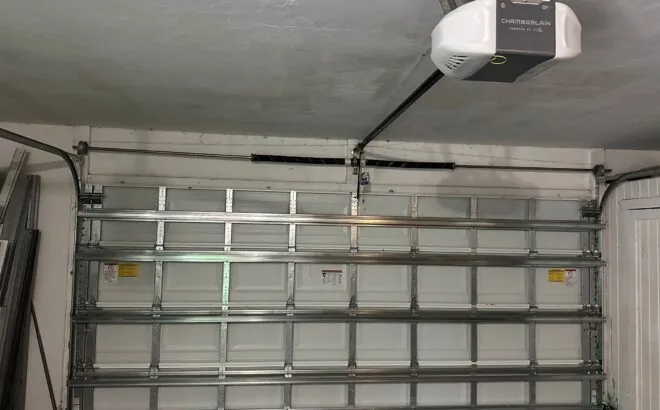
What an opener visit involves
Getting a van near the garage is often the first puzzle here. Kerb space on the numbered streets is scarce, and a garage tucked behind the house can be a fair walk from the closest legal spot. Tell us on the phone how the garage is reached and where a van might pull in.
At the garage, we work through the system in order:
- We uncouple the trolley and test the door’s balance by hand, so we know the door itself is sound.
- Next comes the unit itself: the supply, the motor and gear, whatever drives the trolley along the rail, and the travel settings.
- Controls are checked: the wall button, its wiring, and every remote in use.
- The safety sensors are checked for alignment, wiring and response, and the door’s reversing function is tested.
- You are told what we found and whether repair or replacement makes more sense, and the work goes ahead with your agreement.
- Once the trolley is latched back on, we open and close the door repeatedly, finishing with one more reversal test.
Common faults and what they usually mean
A whine from the motor, but no movement. Worn teeth on the main gear or a motor that has locked up are common culprits, yet a snapped spring looks identical from the button. The hand-lift test separates them.
The door reverses just before it closes. Usually the sensors, or the opener’s close force or travel limit set wrong. Sometimes it is a door binding in its track near the bottom.
The door stops partway up. The opener may be sensing too much resistance from a stiff door, a dry roller or a failing spring. Or the up limit may have drifted.
Total silence. Look at the ceiling outlet first: is the plug seated, and does a lamp work in that socket? With power confirmed, the fault may lie in the control board or the wall control.
The opener is very loud. A worn chain, a loose rail or dry rollers on the door. In a small garage, noise carries straight into the house, and a noisy opener is often an opener that is wearing out.
Openers in low-ceiling garages
Low ceilings are common in the older garages behind the houses, and that limits what kind of opener fits. The rail must clear the door at the top of its travel, the motor unit must hang below the joists, and the whole assembly must stay clear of the spring shaft. When an opener is replaced in a garage like that, the new one has to suit the space, not just the door.
The same space limit affects repairs. A rail that has been mounted too close to the door can let the door catch it at the top of each lift. A motor bracket fixed into old timber can work loose and let the whole opener sag. Garage door opener repair in South Boston often involves re-hanging an opener properly as much as fixing the opener itself.
Shared garages and the busy opener
In a triple-decker, one garage can be used by people in every unit, each coming and going at different hours. The opener in a garage like that may run early in the morning, late at night and several times in between. That workload does not change how an opener is repaired, but it does change what is worth checking. Drive gears, trolleys and travel limits wear faster; remotes multiply; and a fault noticed by one household may not be mentioned to the others until the door stops for everyone.
For an owner or manager, the useful step is to agree who reports problems and how. One person keeping a list of the remotes in use, and a habit of calling at the first odd noise, saves a great deal of trouble later.
Busy townhouse garages near the water
Where the garage is the everyday entrance to a townhouse, the opener may run more in a week than a rarely used garage runs in months. That wears drive gears, chains, belts and trolleys faster, and it makes a reliable opener more important, since a failure means the front door to the house is effectively out of action.
Damp air near the waterfront adds its own wear. Exposed metal on the rail and chain can rust, connections at the sensors can corrode, and moisture can find its way into older wall buttons. If the garage is near the water and the opener has become noisy or erratic, mention it when you call. For a townhouse, garage door opener repair in South Boston is often as much about the rail, chain and sensor connections as the motor itself.
When the power goes out
A detached rear garage is usually fed by a single circuit from the house, and when that circuit trips or the street loses power, the opener stops with it. The door is then held shut by the opener’s trolley, and the only way to move it is by hand.
With the door shut all the way and the springs intact, pulling the release cord lets you lift it by hand, and it should feel light and stay where you leave it. Lower it the same way once the car is out, and keep in mind that a door released from its opener is not locked. When power returns, run the opener once and the trolley will usually re-engage on its own; if it does not, the release lever may need pushing back by hand. If the door feels heavy after release, stop and call: a spring may have gone at the same time.
An opener that trips the circuit every time it starts is a fault, not bad luck. It may be a failing motor, a damaged cord or damp in an outlet, and the unit should stay unplugged until someone has looked at it.
Wall buttons and wiring in older garages
In many older garages, the wire from the wall button to the opener was run along the framing with staples, sometimes years before the current opener went in. Staples driven too tight cut into the insulation, wires get chewed by mice or crushed when shelving goes up, and damp in an unheated garage corrodes the terminals. Any of these can make a wall button work only some of the time, or not at all.
A button that has to be held down to close the door is a different symptom. That usually means the opener cannot see the safety sensors and is only closing under constant pressure, so the sensors are the place to look first. Where the button itself has failed, it is replaced and the run of wire is checked from end to end, not just at the two terminals.
Simple care that keeps an opener running
None of these habits involves the springs, and all of them help:
- Once a month, lay a short piece of timber flat on the floor where the door lands and close the door on it. The door should touch it and go straight back up. If it does not, stop using the opener and call.
- Keep the lenses on the photo eyes clean and the space between them clear of bins, bikes and boxes.
- Listen for changes. A new rattle, a slower lift or a jerk at the start of travel is easier to fix before it becomes a failure.
- Keep remotes out of hot cars in summer and replace their batteries when the range starts to shrink.
- Leave the rail, trolley and travel settings alone unless you know exactly what you are changing.
On a door that serves a whole building, a short note by the wall button asking people to report odd noises does more than any lubricant.
Fix the old opener or fit a new one?
Plenty of opener trouble is fixable on the spot, from a chewed-up gear or tired trolley to a dead photo eye, a sticky wall control or a handset that has lost its pairing. An opener that has had a long working life and now has several of these at once, or one whose logic board has failed, is often better replaced.
A new opener is picked for your door and your garage, including the ceiling height and how much the door is used. We repair and fit LiftMaster openers, along with others. Where the door is tired too, it is worth thinking about the door at the same time, and our page on new doors for South Boston garages covers that side.
Getting your opener looked at
An opener that fails at night leaves either the car trapped or the garage stuck open. Our phone line is answered at any time, including weekends, so you can report it as soon as it happens. If the garage cannot be shut and secured, our South Boston emergency service page explains what to do next. For other faults on the door itself, see our South Boston garage door repairs page. How opener work runs across Boston is on garage door opener services, and all our local work is on the South Boston page.
To speed up a booking for garage door opener repair in South Boston, describe the sound or movement you get from the button, the state of the little sensor lights and the route in to the garage. After that, call us today or book online.
Questions from South Boston
Our opener just hums now. Does it need replacing?
Not always. If a spring has snapped, the door is suddenly too much for the motor, which hums against the load. With the door all the way down, unhook it from the opener and test the weight; a door that will barely move points to the spring.
The door goes down, then straight back up. What causes that?
Most often the safety sensors. Check that both lights are on, move whatever sits between the eyes and give each lens a gentle wipe. If the door still bounces back, the sensors, the wiring or the opener’s settings need looking at.
A former tenant still has a remote for our shared garage. Can that be fixed?
Yes. We wipe the stored codes and add back just the handsets you still hold, so the missing remote no longer opens the door.
Will a new opener fit in our low-ceiling garage?
In most cases, yes. The opener is chosen and mounted to suit the space above the door, and we check the headroom before recommending one.
Can you fix a LiftMaster unit?
Yes, we handle LiftMaster repairs and replacements, as well as other openers.