
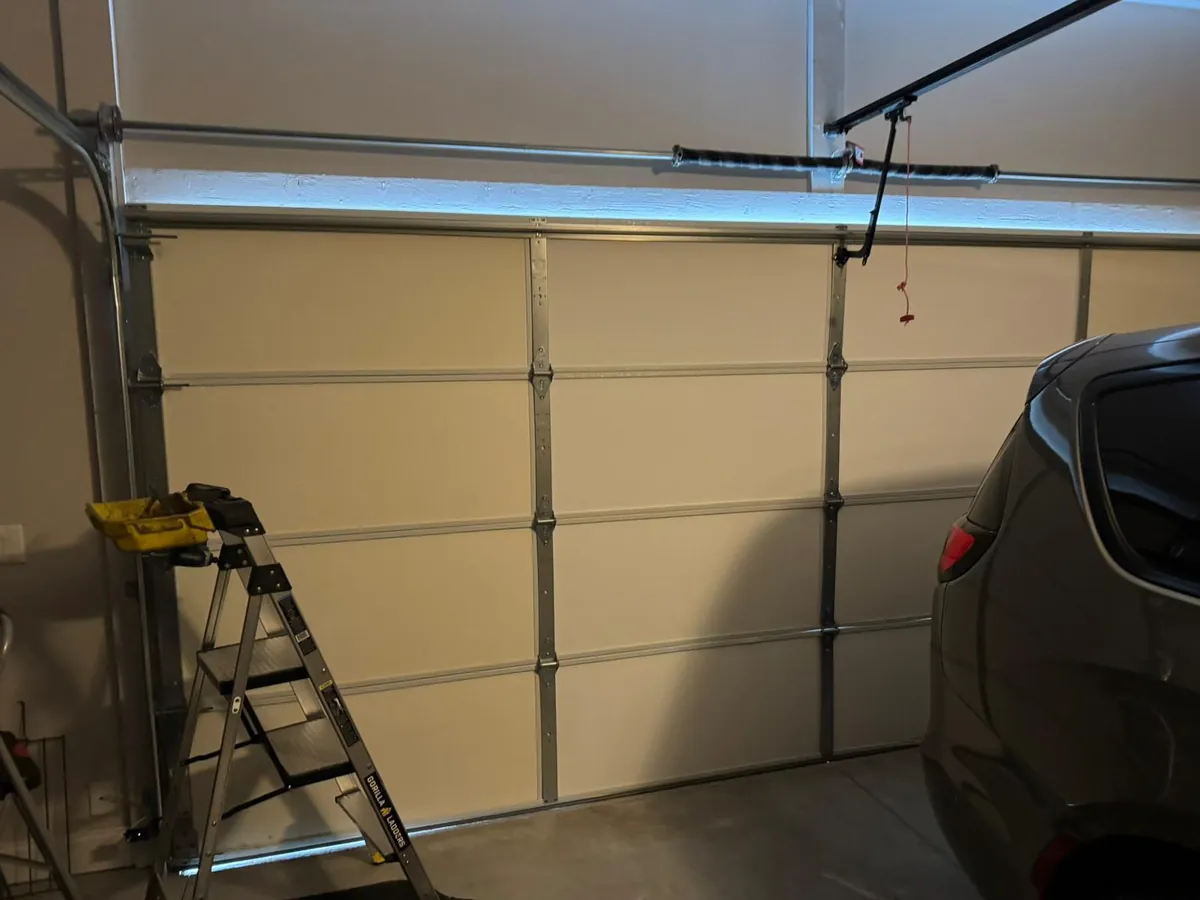
Why shared garages in the West End wear out their doors
The West End is almost entirely post-renewal towers, and the cars that belong to those towers sit in shared garages rather than private ones. So the door that needs attention is rarely a single household’s door. It is a building roll-up across a ramp, or a gate system in front of one, and every resident who parks underneath depends on it. So garage door repair in the West End usually means fixing a door that a whole building is waiting on.
A shared door cycles far more often than a house door, and it is opened by fobs, remotes, wall stations and timers rather than one person’s button. That traffic, plus the weight of a wide steel curtain, decides which parts give out first.
Building management arranges access to these garages, so the first conversation is normally with them. Before calling, it helps to have three things noted:
- Where the door has come to rest: closed, open, or stalled partway with the curtain or sections hanging unevenly.
- Whether the motor makes any noise at all when the door is called, from any control.
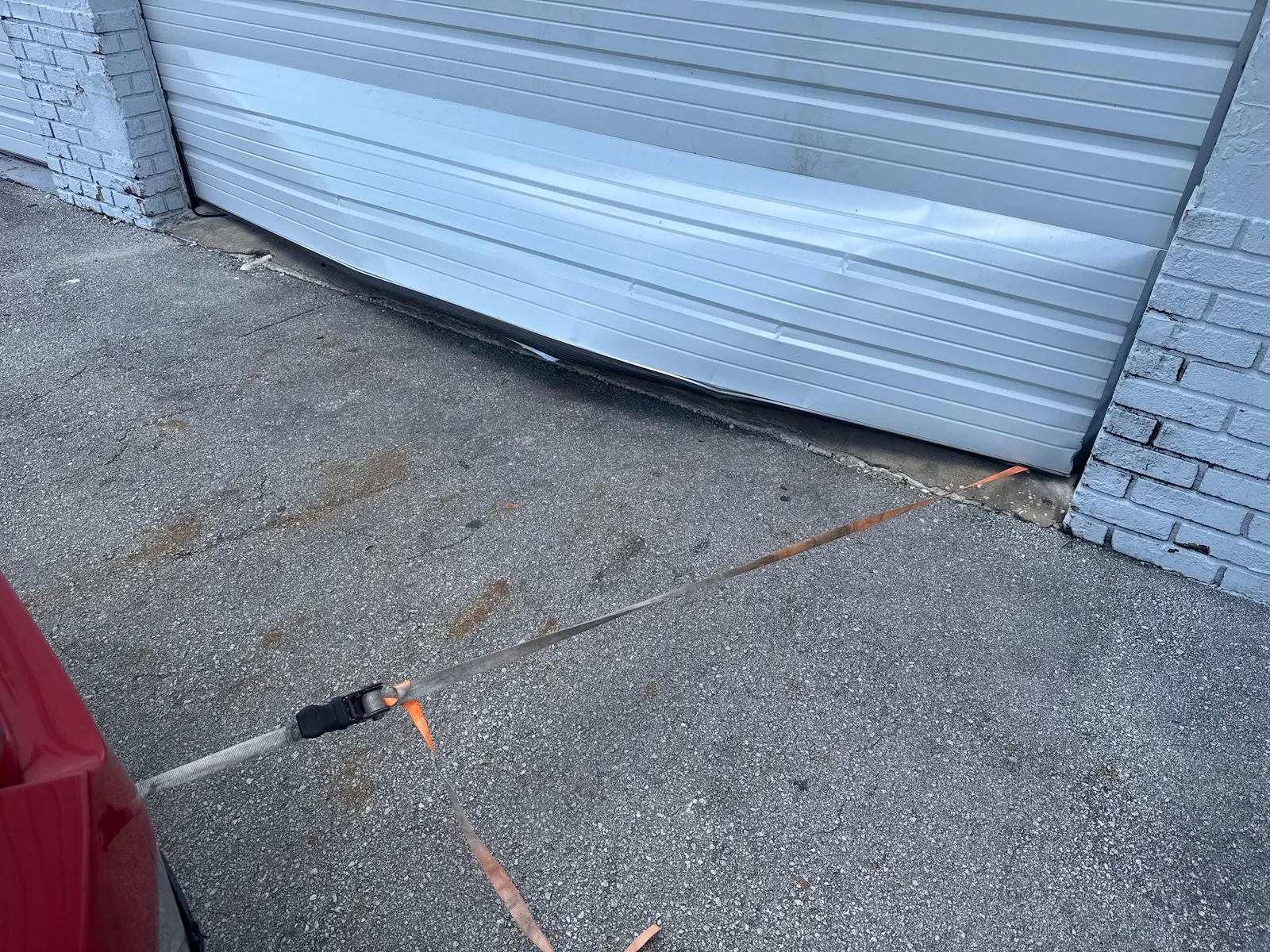
- Whether a vehicle has struck the door, its guides or the bottom bar recently.
Parts a West End repair visit can cover
Springs and counterbalance
A roll-up curtain is balanced by springs inside the barrel it coils around; a sectional door by torsion springs on a shaft over the opening. A broken spring leaves the operator trying to lift dead weight. More on the West End spring repair page.
Cables, drums and the barrel
On sectional doors, a lift cable winds onto a grooved drum at either side. Once one frays or jumps its groove, that corner sags and the panels skew in the rails.
Curtain slats and door sections
Interlocking slats on a roll-up kink when a car clips them and then refuse to coil. Dented or cracked sections on a sectional door can often be replaced singly.
Operators, remotes and wall stations
Motor units that hum but do not turn, limits that have drifted, remotes that no longer register. The West End opener repair page goes further.
Guides, tracks and rollers
Bent guide rails, loose wall brackets, cracked rollers and doors that have left their tracks after a knock from a reversing vehicle.
Safety sensors and edges
The photo eyes across the opening and the reversing edge along the bottom bar, which a busy ramp coats in grime and road salt.
How a tower’s garage door is built
Our garage door repair in the West End starts with knowing what kind of door is in front of us, because the shared garages here do not use the light, single-car doors found at the end of a suburban driveway. Most use one of two designs.
The first is the roll-up. Its curtain is made of narrow steel slats that lock into one another along their length. When the door opens, the curtain winds around a barrel mounted above the opening, much like a window shade, and its ends run up and down in guide rails fixed to the wall on each side. Inside that barrel sit the counterbalance springs, wound so that they carry most of the curtain’s weight. The operator drives the barrel, by chain or directly, and the springs do the heavy lifting.
The second is a commercial sectional door. Its panels are hinged together and ride on rollers inside tracks that curve from the wall up toward the ceiling. Torsion springs wound around a cross-shaft over the opening turn cable drums at either end, and the cables pull the bottom panel upward evenly. The operator is usually mounted beside the door on the shaft rather than hung from the ceiling on a rail.
Either way, the principle is the same as on any garage door: the springs balance the door, the operator only steers it, and the sensors stop it when something is in the way. When one part fails, the others are pushed beyond what they were built to do.
What heavy daily use does to a shared door
A family’s door may open a few times between breakfast and bedtime. A door serving a residential tower opens for every resident who drives, every visitor who is let in and every service vehicle allowed underneath. That count changes how long the moving parts last.
Every spring has a working life counted in lifts, and a shared door uses that allowance up far sooner than a household door would. Rollers flatten on one side, hinges and slat ends loosen, and cables wear thin at the points where they wrap around the drums. The operator’s motor and gears carry the same heavy duty. None of that is a fault in the door; it is simply what a busy door does, and the repair is to replace what has worn before it takes something else with it.
The ramp adds to the load. Cars brake and turn close to the opening, so bottom bars, guide rails and the lowest sections are the parts most often struck. A bumper that only nudges a guide rail can push it out of line enough for the curtain to bind every time it passes that point, and the operator will strain against that bind until something gives.
Early signs a shared door is heading for a breakdown
Shared doors rarely fail without warning, and the people who use them every day are well placed to notice. A building manager who hears about any of these is worth a call before the door stops altogether:
- The door hesitates at the start of its travel, or the operator sounds as if it is labouring.
- One end of a roll-up curtain rises ahead of the other, or a sectional door sits slightly crooked when closed.
- A new clatter or squeal that repeats at one spot on each trip.
- The door reverses for no visible reason, more than once in a day.
- Daylight showing along one side where the curtain or seal used to sit tight.
Each of these points to a part that is wearing faster than the rest. Caught early, garage door repair in a West End tower is usually a matter of replacing that one part. Left alone, a dragging roller can wear a guide, a slipping cable can bend a section, and a weakening spring hands its work to an operator that was never built to carry it.
Working around residents, deliveries and moves
A shared garage keeps working while it is being repaired, at least as far as it safely can. Residents still need to leave for work, deliveries still arrive, and on some days a moving truck needs the ramp. Before a repair starts, it helps if management can tell us when the garage is busiest and whether any vehicles must get in or out during the work. Where a door has to stay closed or stay open for a while, we will say so plainly at the start, so the building can put up notices or arrange for someone to manage the entrance. That planning matters more in a tower garage than at any house, because one door’s downtime reaches every household that parks below.
Gates, access controls and where the door ends
The LOCAL NOTES for the West End describe gate systems alongside the roll-ups, and many towers have both: a gate at the street or the top of a ramp, and a door further in. The door, its springs, cables, tracks or guides, its operator and its sensors are the parts we work on. A gate, and the card readers, fob receivers or ground loops that tell a door or gate a car is waiting, are often a separate system with its own supplier. When a door will not respond, part of the visit is working out whether the fault is in the door and its operator or further back in that access chain, so the building’s manager knows who to call for each piece.
Safe checks, and parts nobody should touch
A shared garage has more people around it than a private one, so the first step is to keep everyone clear of a door that has stopped behaving normally. A few checks are safe for a building manager or concierge to make:
- Stop calling the door from every control, so the operator does not keep driving against a fault.
- Look at both photo eyes across the opening for anything blocking the beam, and wipe the lenses if they are coated.
- Try a second control, such as the wall station after a remote, to see whether one control or the whole operator has stopped.
- Check that nothing is leaning against a guide rail or parked in the door’s path.
Everything to do with tension should be left alone. The springs in a roll-up barrel and the torsion springs above a sectional door hold dangerous tension even with the curtain resting on the floor. That load runs through the cables, drums and lower brackets too. Undoing a single fixing on that hardware can let the stored energy go all at once, faster than anyone can step back. None of it is a DIY repair, and with a door this heavy the danger exceeds anything on a house door.
What a repair visit involves
Because everything in these buildings goes through building management, a visit usually begins with them: who has keys or fobs, where a van can stop, and whether residents need to be told the garage is affected. Once on site, the door is checked as a whole rather than only at the part named on the phone.
- Power to the operator is cut, so no remote or fob can set the door moving during the inspection.
- The springs, cables or barrel are checked for breaks and for how well the door is balanced.
- Rollers, hinges, slat ends and guides are looked over along their full length for wear, bends and loose fixings.
- The operator, its limits and its controls are run and tested on their own.
- The photo eyes and any reversing edge are tested against an obstruction.
You, or the building’s manager, are told which part has failed, and what caused it, before a tool goes near it. After the fix, the counterbalance is reset, the operator’s open and close limits and its force are adjusted to the repaired door, and the reversing function is tried against a solid object on the threshold.
Repair or replace a shared door
Most shared garage doors are worth repairing. A spring, a set of rollers, a bent guide or a handful of damaged slats gives a sound door plenty more service. Replacement is worth discussing if several parts are going at once, if the curtain has been struck so often that slats will not stay locked, when sections have rusted through at the bottom where salt and slush collect, or if the building’s use of the garage has outgrown the door. If a building reaches that point, the West End new garage doors page describes what fitting a successor door to a shared garage involves. Whether a door is worth keeping is something you will be told straight, on every visit.
Winter, salt and the bottom of the door
Cold weather is hard on springs: steel grows more brittle as it chills, and breaks cluster on the first hard mornings of winter. Inside a ramped garage the bottom of the door takes the worst of the season. Slush and salt carried in on tyres collect along the threshold, attack the bottom bar and seal, and creep up the lowest slats or sections. A door that freezes to the floor overnight and is then called by a resident’s remote can strain its operator or tear its bottom seal. Keeping the threshold clear of ice helps, and a door that has started to rust at the base is worth looking at before it cracks.
The bottom bar and its astragal
The strip of rubber along the foot of the door, held in a channel on the bottom bar, does more work than it looks. On a ramp it is dragged across grit, soaked in meltwater, pinched by ice and occasionally driven over by a tyre that stopped too close. Once it splits or flattens, the gap it leaves lets in cold air, leaves and slush, and the bar above it starts to corrode. Renewing the seal is a small job, but on a shared door it is worth doing before the damage spreads into the lowest slat or section, where a repair becomes far larger.
Noise inside a tower
In a shared garage under homes, a loud door is heard upstairs, and noise is one of the commonest reasons a building asks for garage door repair in the West End. Grinding usually means dry or worn rollers, a chain on the operator that has stretched, or a slat end rubbing a guide. Banging at the end of travel points to limits that need setting. A shudder partway up can be a door out of balance. Most of that noise is cured by replacing worn parts and resetting the operator, and it is worth doing before the wear spreads.
How the work fits the rest of the West End
Repair is one of five services we cover here. A door that has failed outright at night belongs on the West End emergency repair page. The broader picture of the neighbourhood’s garages is on the West End garage doors page, while the way we handle repairs across Greater Boston is set out under garage door repair for the whole city.
Booking the work
Our line is staffed through every night and every weekend, which means a fault spotted by a concierge late in the evening or by an early driver at dawn can be reported straight away. For garage door repair in the West End, tell us which building and garage it is, what the door is doing, which controls you have tried, and whether vehicles are shut inside or the garage is standing open. Our 5.0 rating on Google comes from doing exactly that kind of work. Whenever that door gives trouble, call us or book online.
Questions from West End
Who should call when the garage door in our tower fails?
Usually the building’s manager or concierge, because they control access, keys and fobs, and can tell residents what is happening. A resident can phone too, and we will coordinate the visit with management.
The door opens a little and then reverses. What does that mean?
On a door that has worked normally until now, it often points to a broken spring or a bind in the guides. The operator senses too much resistance and backs off. Stop using the door, keep people clear of it and call us rather than trying it again.
Can the door be raised by hand to let cars out?
Some roll-up and sectional doors have a manual release or a hand chain. If the springs are intact the door can often be moved that way, but if a spring or cable has failed the door is far too heavy and should be left where it is.
A car clipped the door. Is it safe to keep using it?
Not until it has been looked at. A bent guide or a kinked slat can make the door bind or come out of its rails, and running the operator against that damage tends to spread it.
Do you fix the gate on our ramp as well?
The door and its operator, springs, cables, tracks and sensors are what we repair. Ramp gates and access readers are often separate systems; ask when you call and we will tell you what we can look at.