
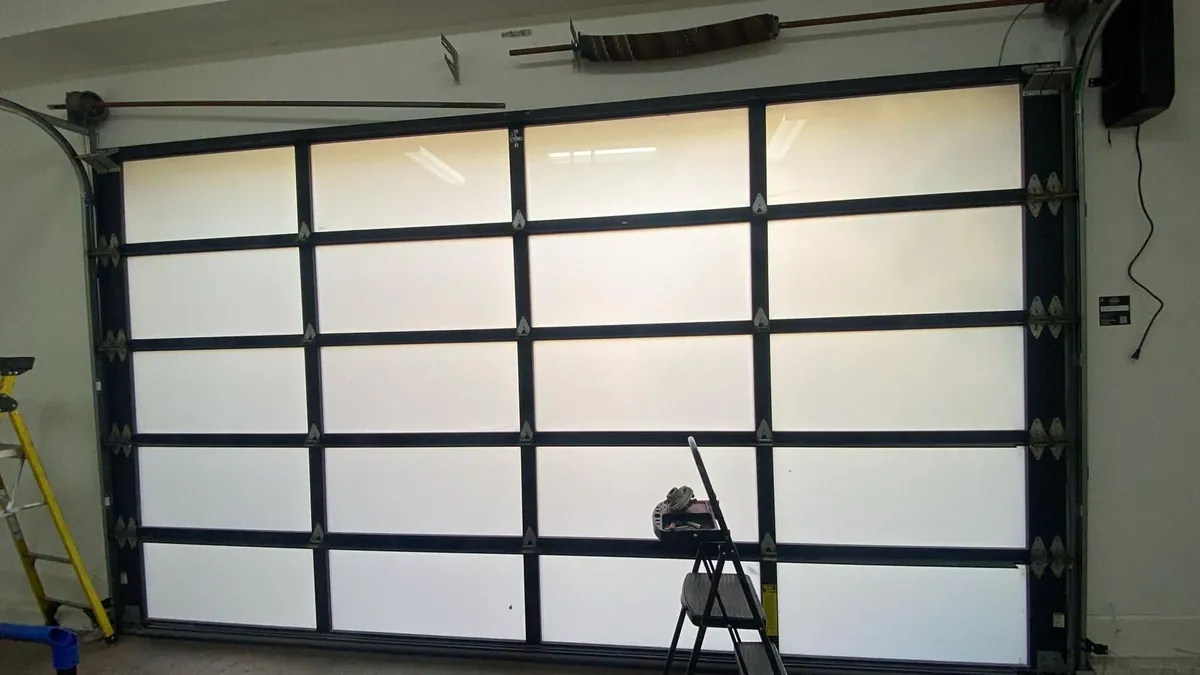
Replacing the door a whole tower depends on
The West End is built almost entirely of post-renewal towers whose cars share a garage, so the doors here are building roll-ups and gate systems rather than one family’s door at the end of a drive. Choosing new garage doors in the West End therefore means choosing for a whole building: a door that opens for every resident’s car, that keeps the garage secure at night, and that suits the opening it has to fill.
A replacement usually comes up for one of a few reasons. The old door has been struck so often that its slats or sections no longer sit true. Rust has eaten through the bottom where salt gathers each winter. Repairs have become so frequent that they disrupt the garage more than a new door would. Or the building has changed how it uses the garage and the door no longer fits that use.
Because everything here goes through building management, a new door is planned with them from the start. Three things to have in mind before that first conversation:
- How many cars, and what kinds of vehicles, use the entrance on a normal day.
- Whether the door has to stay closed between cars, or can stand open at busy times.
- Which faults the present door keeps suffering, and roughly how frequently.
Doors and parts a replacement covers
Roll-up doors
Linked steel slats that wind up onto a drum-like barrel housed over the entrance. It takes almost no ceiling space, which suits garages tucked under a tower.
Sectional doors
Hinged panels running on rollers in tracks up toward the ceiling. Useful where there is overhead room and a smoother, quieter door is wanted.
Springs and counterbalance
Every new door is fitted with springs sized for its own weight and height, so that it balances properly from the first day.
Operator and controls
The new door has to work with an operator, remotes, wall stations and safety sensors. Where the old operator is a good match it may be kept; where it is not, it is replaced too.
Roll-up or sectional for a tower garage
Most new garage doors in the West End are one of two designs, each with its own strengths, and the right choice depends on the opening and on how the garage is used.
A roll-up is compact. Its curtain wraps into a coil only slightly deeper than the barrel it winds around, so it needs little room above the opening and none across the ceiling. That matters in garages under towers, where structure, ducts, sprinkler pipes and lighting often crowd the space just inside the entrance. Roll-ups are also tough: individual slats can be replaced after a knock without changing the whole curtain. They are a natural fit for ramps where the door sits under a deep slab or a beam.
A sectional door rides back into the garage along tracks, so it needs clear headroom above the opening and a run of ceiling behind it. In return it is often quieter, it can carry insulation in its panels, and its rollers and hinges spread wear over many parts. Where the garage sits directly beneath homes and noise is a concern, or where the entrance has the space, a sectional door can be the better choice.
Picking between them for new garage doors in the West End comes down to the measurements and to what the building wants the door to do. Both are supplied and installed.
Measuring a shared garage entrance
Fitting a door to a tower garage takes more than the width and height of the opening. Before any door is chosen, the entrance is measured and looked over:
- The clear opening, at several points, because concrete and steel openings are not always square.
- Headroom above the opening, and what sits there: beams, pipes, lighting, signage.
- Clearance beside the opening, left and right, for the guides or tracks and the motor.
- The depth of ceiling available behind the opening, for a sectional door’s tracks.
- How sound the concrete or steel is where the frame will be anchored.
- The slope of the ramp at the threshold, which affects how the bottom of the door seals.
Those measurements decide which designs will fit, how big the door’s springs must be, where the operator can be mounted and how the photo eyes will sit. A door chosen without them can bind, leave gaps, or leave the operator mounted where it is hard to reach.
Built for the number of cycles a tower door sees
A door serving a residential tower opens and closes vastly more often than any house door. That shapes the choice of door far more than appearance does. Springs, hinges, rollers, slats and the operator all have a working life counted in cycles, and on a busy ramp that life is spent quickly.
When a new door is specified, its expected use is part of the brief: roughly how many cars, whether delivery vans need extra height, and whether the door is closed after each car or left open at peak times. That information guides the choice of springs and operator so that the new door is not undersized for its job from the start. It is also the reason a new door for a shared garage is a different purchase from one for a single house.
What happens to the old door
Every new door begins with taking the old one out safely. On a roll-up, the spring tension inside the barrel is released under control before the curtain and barrel are lowered. On a sectional door, the torsion springs are unwound with the proper bars before the cables, sections and tracks come down. Those springs hold dangerous tension, which is one of several reasons door removal is not a DIY job, least of all on a heavy commercial door.
Old guide rails, tracks and brackets are taken off, and the opening is checked for any damage hidden behind them. Fixings in the concrete or steel are made good so the new door has a sound frame to bolt to.
How an installation is planned with management
Replacing a shared garage door affects every driver in the building for as long as the work takes, so the timing is agreed with management well ahead. Useful points to settle:
- When the garage is quietest, and whether the work can fall in that window.
- How residents’ vehicles will come and go while the opening is unprotected or obstructed.
- Who will tell residents, and how far in advance.
- Where the delivery vehicle and the old door can be parked and loaded.
- Whether the access system, readers or gate supplier needs to be present to reconnect their equipment.
On the day, the old door is removed, the new guides or tracks are fixed, the curtain or sections are hung, the springs are fitted and tensioned, and the operator, controls and sensors are connected. Before the door is handed over, it is balanced, its limits and force are set, its reversing function is tested, and management is shown how the manual release or hand chain works.
Repair before you replace
Not every tired door needs replacing. A door that has lost a spring, frayed a cable or bent a guide is often better repaired, and the West End garage door repair page explains that work. If springs alone are the problem, the West End spring repair page goes into detail. A new door makes sense when the curtain or sections themselves are failing, when corrosion has reached the structure, or when the door can no longer cope with the building’s traffic. Expect a straight answer about which category your door falls into.
The operator and the new door
Fresh slats or panels achieve little if the motor behind them is past its best. If the existing operator is sized for the new door and in sound condition, it may be reconnected and reset. If it is old, underpowered or not suited to the new design, it is worth replacing at the same time, so that door and operator are set up together. The West End opener repair page covers operators, remotes, wall stations and sensors in more detail. We also fit LiftMaster openers and repair them.
The gate systems on some West End ramps, and the readers or fob systems that call the door, are often supplied separately. They need to be reconnected to the new door’s operator, and that is easier when the supplier is part of the plan.
Signs a shared door is due for replacement
Management often senses that a door is near its end before anyone says so out loud. The repair log tells the story: the same door called in again and again, each visit fixing one part while another starts to go. Some clearer signs that money is better spent on a new door than on another round of repairs:
- Slats on a roll-up that have been replaced so many times the curtain is a patchwork, and new kinks keep appearing.
- Sections on a panelled door that are cracked along their hinges, or have rusted through where they meet the slab.
- Rails or guides bearing the kinks of several past collisions, still catching after each straightening.
- A door that has grown heavier over the years through added reinforcing and replacement parts, so that its springs can no longer keep it balanced.
- An operator and door from different eras that have never quite worked well together.
None of these is a reason to panic, and a door showing one of them may still have useful life. Two or three together usually mean a replacement will cost the building less disruption over the coming years than continuing to patch the old one.
Height, vans and the hood
A residential tower’s garage is used by more than residents’ cars. Delivery vans, contractors’ trucks and the occasional removal vehicle all try the entrance, and the hood of a roll-up or the bottom section of a raised sectional door is the first thing a tall roof meets. When a new door is planned, it is worth agreeing what height the building wants vehicles to clear and marking it clearly at the top of the ramp. A door that opens to its full height reliably, with limits set so it does not stop short, takes far fewer knocks than one that stalls a little below the top of its travel. Where the opening itself is low, a roll-up that coils tightly above the head of the opening can give the most clearance the structure allows.
Security and the shared entrance
For a tower, the garage door is part of the building’s security line. A new door is a chance to think about how well it closes and locks, how close the bottom sits to the slab, and how quickly the gap shrinks once a car has passed. Gaps under or beside an old, worn door are an invitation for anyone on foot to slip in behind a vehicle. A properly fitted new door, with straight guides, a good bottom seal and a close timer suited to the traffic, narrows that opportunity.
The door is one layer of that security; the gate systems on some West End ramps, the readers that call the door, and any cameras are others. Where those are run by separate companies, it helps to bring them into the plan early, so the new door and the existing access equipment work as a single system on the day it is handed over.
Noise for the homes above
Garages under towers sit directly below living space, and an old door can be a constant source of complaints: grinding as it rises, a bang at the top of travel, a clatter as the curtain coils. A new door will not be silent, but choosing the design and the operator with noise in mind makes a real difference. A sectional door on nylon rollers, or a roll-up with well-fitted guides and a smooth drive, is far quieter than a worn door of either type. Mounting the operator on a sound base and setting its limits so the door does not slam at either end helps further.
Appearance at the street
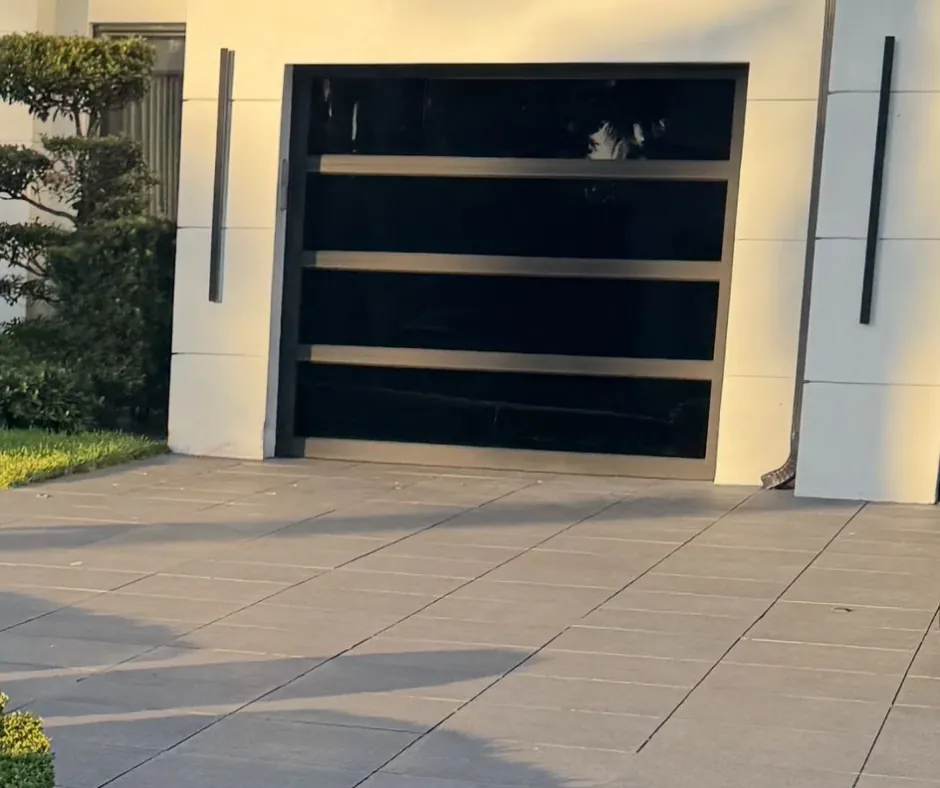
A garage entrance is part of the building’s face to the street, and a new door is a chance to tidy it. Roll-up curtains and hoods can be finished in a colour that suits the facade, and sectional doors offer a choice of panel styles. Where an entrance faces a lobby or a public walkway, some buildings choose a door with glazing; the full view glass garage doors page explains those aluminium-and-glass doors. Whatever the look, the door’s strength and the way it handles traffic come first.
The threshold on a sloping ramp
Few garage entrances under towers sit on perfectly level ground. The slab often falls away toward the street, or rises toward the garage, so the bottom of the door meets a surface that is not square to it. An old door may have been sealing badly for years because of this, with a wedge of daylight at one end. When a new door is fitted, the bottom bar and seal are chosen and set to follow the slab as closely as the design allows, and the close limit is adjusted so the whole length meets the ground. That small detail decides whether the new door keeps out the weather from the first winter.
Winter and the new door’s seal
Salt and slush travel down every ramp in winter and settle against the bottom of the door. A new door is a chance to fit a bottom seal and bar suited to that exposure, and to set the close limit so the seal meets the slab evenly without the door pressing hard into it. A well-sealed door keeps slush, leaves and draughts out of the garage, and is less likely to freeze to the ground on a cold night.
Getting started
Choosing new garage doors in the West End starts with a visit to measure the entrance and talk through how the garage is used. For the wider view of how new doors are supplied across Boston, see the main new garage doors page, and for everything we cover in the neighbourhood, the West End garage doors page. If the current door has failed outright and needs attention first, the West End emergency repair page explains what to do. Owners and managers have rated the shop 5.0 on Google. To arrange a visit to measure up for new garage doors in the West End, call us or book online.
Questions from West End
Coiling curtain or panelled door: which suits our garage?
It depends on the space and how the garage is used. A roll-up suits entrances with little room above or behind the opening; a sectional door can be quieter and suits entrances with clear headroom and ceiling space. The measurements taken on the first visit decide which will fit.
Is our present motor reusable on the replacement?
Possibly. Provided it has the muscle for the incoming door and is mechanically sound, it gets rewired and set up afresh. Otherwise the two are best changed together.
How will residents get their cars out while the door is replaced?
That is agreed with building management before the work is booked. The timing, how cars get in and out, and how residents are told are all settled in advance.
And the door we have now?
It comes out safely, with the spring tension released under control before anything else comes off, and the opening is prepared for the new door.
Will the replacement suit our facade?
Roll-up curtains and hoods can be finished in a chosen colour, and sectional doors come in different panel styles. Glazed full view doors are another option for some entrances.