
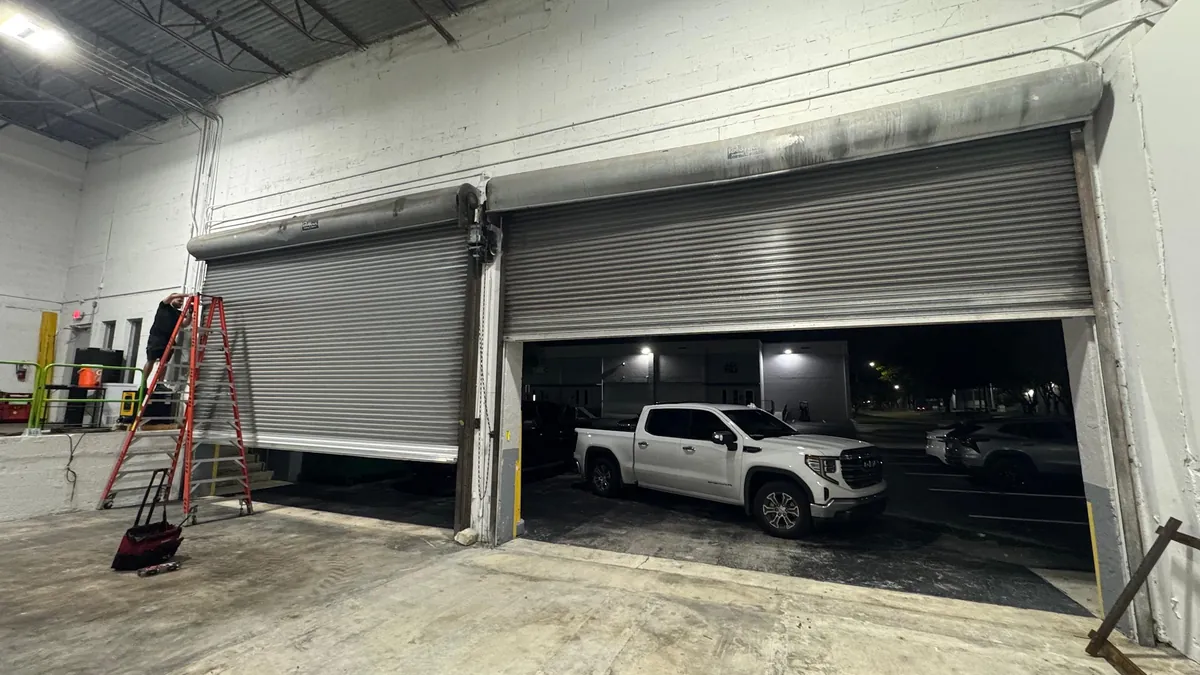
One bay under the building: how Fenway garages are laid out
Around the Fens the streets are lined with apartment buildings and brownstones, and most people who live in them park in a shared lot or on the street. Private garages are few. When one does turn up, it is typically one bay cut into the street level of an apartment block or brownstone, with the rooms and flats stacked directly over it. That one fact shapes nearly everything about garage doors Fenway MA residents ask us to look at: the door is boxed in by a structure that was not drawn around it, and the route to it often runs through someone else’s front door.
You will not always walk straight up to these doors from the pavement. Plenty are reached through a lobby, a back corridor or a service door, sometimes with a key held by whoever looks after the building. A visit therefore starts with getting in, and a little planning saves a lot of waiting on the step.
Three things set a bay under a building apart from a garage that stands on its own:
- The ceiling is the underside of an occupied floor, so headroom is fixed and nothing can be fixed into it carelessly.
- The door may be the only way vehicles reach the space, so a jammed door can strand a car until it is released.
- Noise, dust and the hours of the work all reach the neighbours above, which affects how a repair is scheduled.
Everything we do for Fenway garages
Each of our services has its own Fenway page with more detail, and this hub links them together. A door that binds, shudders, hangs crooked or has a cracked section starts with garage door repair in Fenway. A spring that has let go, leaving the door far too heavy to lift, is the subject of Fenway spring repair. Motor heads, handsets, keypads, wall switches and the little photo sensors near floor level are covered under Fenway opener repair and replacement. A door stuck open at night, leaving a ground-floor bay exposed to the street, belongs with our Fenway emergency garage door repair. And a door past saving is supplied and fitted through new garage doors in Fenway.
Next door, the Mission Hill hub deals with similarly tight urban garages, and the Back Bay hub covers bays cut into row houses. For neighbourhoods and towns further out, browse the service areas page.
Getting in: lobbies, corridors and service doors
The first question on a Fenway call is rarely about springs. It is about how to reach the garage. When the door faces a lane or a side street, the work can start from outside like anywhere else. When the only way in is through the building, someone has to let the visit in, and that person is not always the person whose car is stuck.
It helps a great deal to sort this out while booking. Mention whether the garage opens to the street, to a rear lane or only to the inside, whether a key or fob is needed for a lobby or service door, and who holds it. If a building manager or superintendent controls access, let them know a repair is on the way. Ladders, track sections and spring shafts are long and awkward, and carrying them through a lobby means checking the corners, the lift if there is one, and how far the walk is from the kerb to the bay.
A new door needs more thought still. Door sections arrive flat and fairly long. In a building where the garage is only reachable from inside, the sections may need to come in through the bay opening once the old door has been taken down, which means the old door is removed before the new one is carried in. That order is planned before the day, not discovered halfway through it.
The ceiling is somebody’s floor
A garage tucked under an apartment building has the most rigid ceiling you will find anywhere: the floor of the flat above. That is good in one way, because the structure does not move with the seasons the way a wood-framed shed does. It is a constraint in every other way.
Headroom is whatever the building gave the bay, and no more. A standard torsion spring rides on a shaft just above the opening, and in a low bay there may barely be room for it. Some doors here are set up with a low-headroom track arrangement, which runs the horizontal tracks closer to the ceiling and changes how the door rolls back. If the original installer pushed things to the limit, a door can rub at the top of its travel or catch on a pipe or a duct that runs across the bay.
Fixings matter too. Brackets that carry an opener rail or the rear of the tracks have to be anchored into solid structure, and in a building with services running overhead, where to drill is a real decision. When a bracket has worked loose, we look at what it was fixed into before simply tightening it, because a screw turning in crumbled masonry or a hollow board will loosen again.
Springs in a bay under a building
Most calls about garage doors Fenway MA residents make at short notice start with a loud crack somewhere overhead and a door that now refuses to rise. That is nearly always a broken spring. Springs carry the load; the opener only steers. Once one gives out, every pound of the door lands on the motor, which strains for a few inches and quits.
In these bays you meet one of two setups: a single torsion spring coiled on a shaft just above the lintel, or a pair of lengthy extension springs strung beside the overhead rails. Be clear about this: a torsion spring holds dangerous tension. If a winding bar slips or someone slackens a set screw by hand, it can break a wrist or worse. It is not a do-it-yourself repair, whatever a video suggests. Extension springs are hazardous differently. Without a restraining cable threaded through each one, a snapped spring flails loose and can strike whatever is parked in a cramped bay.
In a confined garage, spring work also has to account for the space around the shaft. Winding a torsion spring needs room to swing a bar, and in a low bay with ducts close overhead that room is limited. The replacement is sized to what this particular door really weighs and how tall it stands, and we raise the door halfway by hand to confirm it holds still before the motor goes back on, so the opener never ends up doing a spring’s job.
One door, several users: openers, remotes and keypads
Where a single bay serves more than one household, or a building’s tenants share a garage, the opener works harder than the opener on a private house. It may cycle many times a day, and remotes multiply. Lost or old remotes left programmed are a security worry in a shared space, and a keypad code that half the building knows is not much of a lock.
Opener faults usually fall into a few groups. A motor that hums but stays put points to a stripped gear, or to a door made heavy by a failed spring. If the door touches down and then bounces back up, suspect the safety eyes: two small sensors mounted low on each jamb, easily nudged sideways by a recycling bin, a bicycle wheel or a bumper in a narrow bay. A dead wall button may be a wiring fault, and a remote that ignores you may only want a battery or re-pairing. We work on LiftMaster openers too, repairing or replacing them, and old remotes that should no longer open anything are wiped from the opener’s memory.
Noise is worth raising here as well. A chain drive in a bay directly under a bedroom can be heard upstairs. If a replacement opener is being considered, tell us what is above the garage so the choice suits the building.
Doors that come off the track in a tight bay
A door can jump its tracks when a bumper nudges the lowest panel while reversing in, when a roller cracks, or when the opener keeps shoving against something in its path. With hardly any clearance on either side of a Fenway bay, it takes very little. A derailed door hangs skewed and may drop without warning. Leave it where it is, keep everyone and every vehicle well back, and reach for the release cord or the plug only from a spot well clear of the door’s path.
Putting a door back is a measured job. The door is secured so it cannot fall, the rollers are worked back into the track, bent track sections are straightened or replaced, and the lift cables are set even before the door runs again. Where a track bracket has torn out of the wall, the fixing is remade properly rather than refilled.
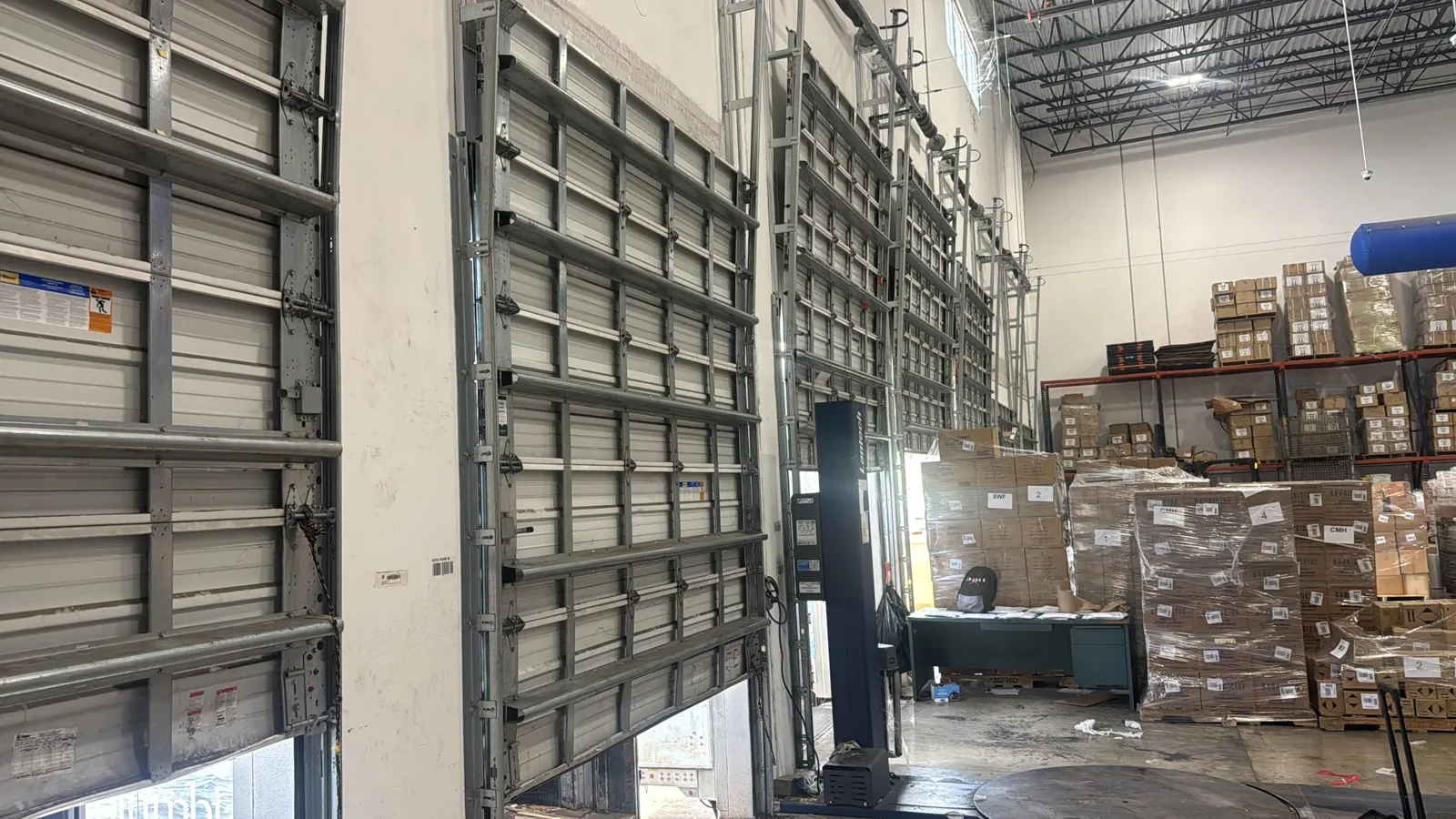
When the door fails after dark
We pick up at any hour of any day, so a door that gives out late in the evening can be reported the moment it happens. What matters most is where the door has ended up. A shut door trapping a car is a nuisance. A door stuck open, or hanging half open, leaves a ground-floor space under an occupied building exposed to the street, and that is the call that cannot wait until Monday.
While you wait, keep everyone out from under the door, never haul the door down yourself when a spring or lift cable has failed, and leave any dangling cable alone. If the door is closed and a spring is broken, it is safe to leave it closed and untouched. If the only way into the bay after hours is through the building, say so, since that decides who has to come down and unlock.
Shared lots, street parking and the rare private bay
Because so much of the parking around the Fens is shared or on the street, the private bays that do exist live unusual lives. Some are used every morning and evening. Others hold bicycles, boxes or a car that stays put for weeks, and their doors may open only a handful of times a month. Both patterns wear a door, just differently.
A door that hardly moves is the one that surprises its owner. Springs sit loaded in one position for long spells, rollers dry out, and a weak spring often chooses the first cold morning after a quiet fortnight to snap. A door that is cycled constantly, on the other hand, wears its rollers, hinges and opener gear steadily, and tends to announce trouble with noise long before anything breaks.
If your bay is one of the quiet ones, cycle the door every so often and pay attention to the sound it makes. Grinding, a jerk partway up, or a door that drifts down when you stop it halfway are all worth a call before they become a failure. For garage doors Fenway MA buildings keep mostly for storage, that habit alone heads off a lot of late-evening trouble. And whichever pattern your bay follows, never oil or adjust the spring itself; lubricating rollers and hinges is fine, but the spring and its fittings stay with someone trained for them.
A bay that gets little use also tends to collect clutter around the door. Shelving built close to the tracks, a bicycle hooked onto a track hanger, or boxes stacked against the photo eyes can all cause faults that look like mechanical failures. Clear a working space around the door before a visit, and the job goes more smoothly for everyone.
Mend the existing door, or swap it
The majority of doors in Fenway bays deserve fixing. Springs, cables, rollers, hinges and opener components wear out by design, and panels that remain sound keep going for years once those parts are renewed. Given the effort of getting a full door into a garage beneath a building, keeping a sound door is often the sensible route.
A new door makes sense once the panels are the problem: the lowest section corroded away where road salt and wet tyres sit, panels cracked or folded after a knock, or a door so modified over the years that each repair causes another fault. In that case the new door is chosen to suit the bay as it really is, with the track layout and springs set for the available headroom. The signs a door is due for replacement are set out in our guide, and choosing a new garage door walks through the options.
What a visit involves
A visit follows the same order whatever the fault. First comes access: getting to the bay without disrupting the building more than necessary. Then we inspect the entire door, not only the piece that broke, because one broken spring often has a tired partner and a sagging cable alongside it. You hear what was found and what is suggested before work starts. Afterwards we balance the door by hand, adjust how far and how hard the opener drives it, test the photo eyes, and the door is run several times while you watch.
In a shared building it also helps to agree where tools and parts can sit for the length of the job, so a corridor or a lane is not blocked longer than it has to be.
What to tell us when you book
A short description saves time on the day. Let us know whether the garage sits under an apartment building or a brownstone, whether it opens onto a street, a lane or only into the building, and how you get to it. Say what the door is doing: will not open, will not close, opens partway, makes a loud noise, or hangs crooked. Mention whether you heard a bang, whether a cable looks loose, and whether the opener light flashes. For garage doors Fenway MA buildings still keep, those few details often decide which parts come along on the first visit.
Ready when you are
Whether the door is stuck right now or has simply been getting louder and slower, tell us about the bay and how it is reached. Jot down which entrance leads to the bay and what the door did last; call us or book online.
Questions from Fenway
Is a bay reached only from inside the building still workable?
Yes. Tell us how the bay is reached and who holds the keys or fob when you book, and let the building’s manager know a repair is coming. Long parts are carried in carefully, and the route is checked before anything is brought inside.
Will the work disturb the flats above the garage?
Some noise is unavoidable, mostly from drilling and from running the door to test it. Spring and opener work is fairly contained. A full door replacement takes longer and is noisier, so it is worth agreeing a sensible time with the building.
Just before landing, our door rises again. Why?
Usually the culprit is the pair of photo sensors near floor level, knocked askew or blocked. In a narrow bay they are easy to knock. If cleaning the lenses and clearing the path does not help, the sensors or their wiring may need attention.
Can a new door fit a low bay under a building?
Usually, yes. A low-headroom track layout and a spring arrangement chosen for the space let a new door work in bays where a standard setup would not fit. The bay is measured properly before anything is ordered.
Our garage is shared by several households. Can old remotes be cancelled?
Yes. The opener’s memory can be cleared and the remotes that should still work re-paired, so lost or old remotes stop opening the door. A keypad code can be changed at the same time.