
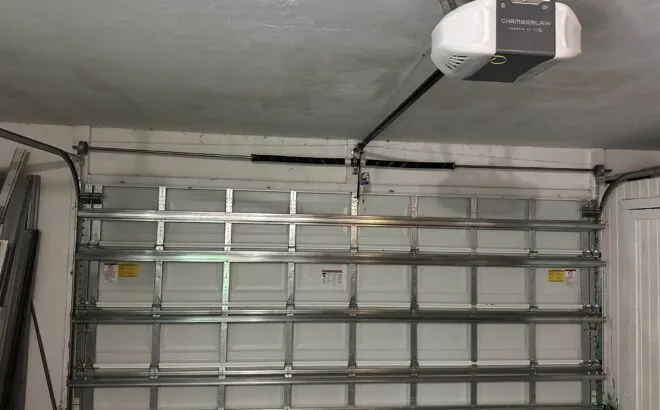
Parking entries and dock doors in new construction
Almost everything here is new construction, and cars live in structured parking rather than private garages. The doors that matter are commercial overhead doors across parking entries and the loading-bay doors that take deliveries, furniture and building supplies. Anyone asking about garage doors Seaport MA residents and businesses depend on is really asking about these: big, heavily used doors that a whole building passes through.
A parking entry door in a residential tower goes up and down for the cars of every unit upstairs, from the early commute to the last arrival after midnight. A loading-bay door is struck by pallets, cages and the tail lifts of box trucks. Both work far harder than any house door, and when either stops, the effect is felt across the building at once: cars cannot leave, deliveries stack up on the curb, or the entry is stuck open and the building is no longer secure.
Before anyone touches it, a building manager or a resident can usefully report:
- Whether the door is stuck fully open, fully closed or partway.
- Whether it moved at all when the button, card reader or remote was used.
- Whether anything struck it shortly before it failed.
Doors that serve a whole building
Garage doors in the Seaport mostly come in a handful of commercial forms, and each has its own weak points. The doors we work on in this neighbourhood fall into a few kinds. Sectional overhead doors on parking entries, made of panels that roll up into tracks under the ceiling of the ramp. Rolling steel doors on loading bays and service openings, where a slatted curtain winds onto a barrel above the opening. Some parking entries use a rolling grille rather than a solid door, letting air through while keeping the level closed. Every one is driven by an operator, and most are tied into a card reader, a fob system or a remote handed to each resident.
That last point matters. A parking door that will not open may have nothing wrong with the door at all. The trouble can be in the access control that tells the operator to run, in the operator itself, or in the door and its springs. Part of the job is finding which of those has failed before replacing anything. The access system belongs to the building, so we work alongside whoever manages it; our work is the door, its springs and its operator.
Building access and freight elevators
On this kind of property, the schedule is set by the building, not by the door. Getting to the head of a parking entry door may mean signing in at a front desk, being escorted to a lower level, or waiting for a security officer with the right key. Moving a heavy spring, a new operator or a set of door sections between the street and a loading dock or an upper parking level often depends on a freight elevator, and those are booked for other work too.
So when you call, it helps to tell us:
- Who manages the building and who can let us in at the time of the visit.
- Whether tools and parts have to ride a freight elevator, and who takes bookings for it.
- Whether the parking entry or loading bay has to stay in service while the work goes on, and at which hours traffic is heaviest.
With that information the visit can be fitted around the building’s own rules, rather than arriving at a locked door.
Springs on a high-cycle door
Large overhead doors balance their weight with torsion springs, and a door cycled from dawn to the small hours burns through its springs at a pace no house door ever approaches. On a sectional parking door the springs sit on a shaft above the opening; on a rolling steel door they are wound inside the barrel. Either way, they carry a great deal of stored energy and can injure badly if released carelessly. Adjusting or replacing one is skilled work, never a DIY job for a building’s handyman.
Signs a spring has failed or worn out:
- The operator struggles, stalls or reverses partway up.
- The door drifts down on its own when it should hold open.
- A loud report came from above the opening, after which the door misbehaved.
If a spring has broken, stop running the door. An operator lifting a door without its counterbalance will overheat, strip its drive or tear the door from its fixings. For more, see our Seaport spring repair page.
Operators, card readers and safety devices
Every door here is motor-driven. The faults we see include an operator that clicks but does not run, one that runs the door partway and stops, a door that refuses to come down after a wing mirror nudged one photo eye askew, a flattened rubber safety strip along the bottom rail, and limit settings that have drifted so the door no longer stops where it should. On a ramp the photo eyes are particularly exposed, mounted low where bumpers and wheels pass close by.
Safety devices on a parking door are not optional extras. A door coming down onto a car, a cyclist or a pedestrian on the ramp is a real risk, and a door with its sensors bypassed is not a repair. We put them back into working order and test them before the door returns to service. Where a smaller door here runs on a residential-type opener, we handle that as well, LiftMaster units included, repairing or replacing them. The Seaport opener repair page goes into openers and their controls.
Repairs to the door itself
Large doors take knocks a house door never sees. On a parking entry the bottom panels are hit by vehicles that misjudge the clearance or try to drive under a closing door, and the tracks on either side are struck by mirrors and wheels. On a loading bay, the lower slats of a rolling steel door are dented by pallets and cages, and the bottom bar is bent by trucks backing in too far.
Typical repairs include replacing damaged panels or slats, straightening or replacing bent tracks and guides, renewing rollers and hinges on sectional doors, and resetting the door so it runs square and closes evenly. The full list is on the Seaport garage door repair page; doors for shops, offices and docks are described under commercial garage doors.
When the entry jams at night
A parking door that jams at night strands every car on the level, or leaves the building’s lower floors open to the street. A person answers our line overnight and over holidays, so whoever finds the ramp blocked can ring straight away. No arrival time is promised; you get a straight estimate of when the van can get there and what may safely be done before that.
In the meantime:
- Cone off the ramp so no car or pedestrian passes beneath a half-open door.
- Do not keep cycling the operator in the hope it will clear itself; that can make a spring or cable failure much worse.
- If the entry must be secured, use the building’s own procedures rather than forcing the door.
More detail on urgent calls is on the Seaport emergency garage door repair page.
Cables, guides and doors out of their tracks
A sectional door struck by a vehicle can be pushed out of its tracks, and a rolling steel curtain can leave its guides when slats or end locks fail. On a sectional door, a lift cable that frays through leaves one edge unsupported, so the panels cock sideways and wedge in the opening. Any of these can leave a heavy door hanging in a dangerous state. Keep the area clear and do not try to drive the door back into line with the operator. Our citywide pages explain replacing lift cables and realigning a derailed door.
How a call-out runs
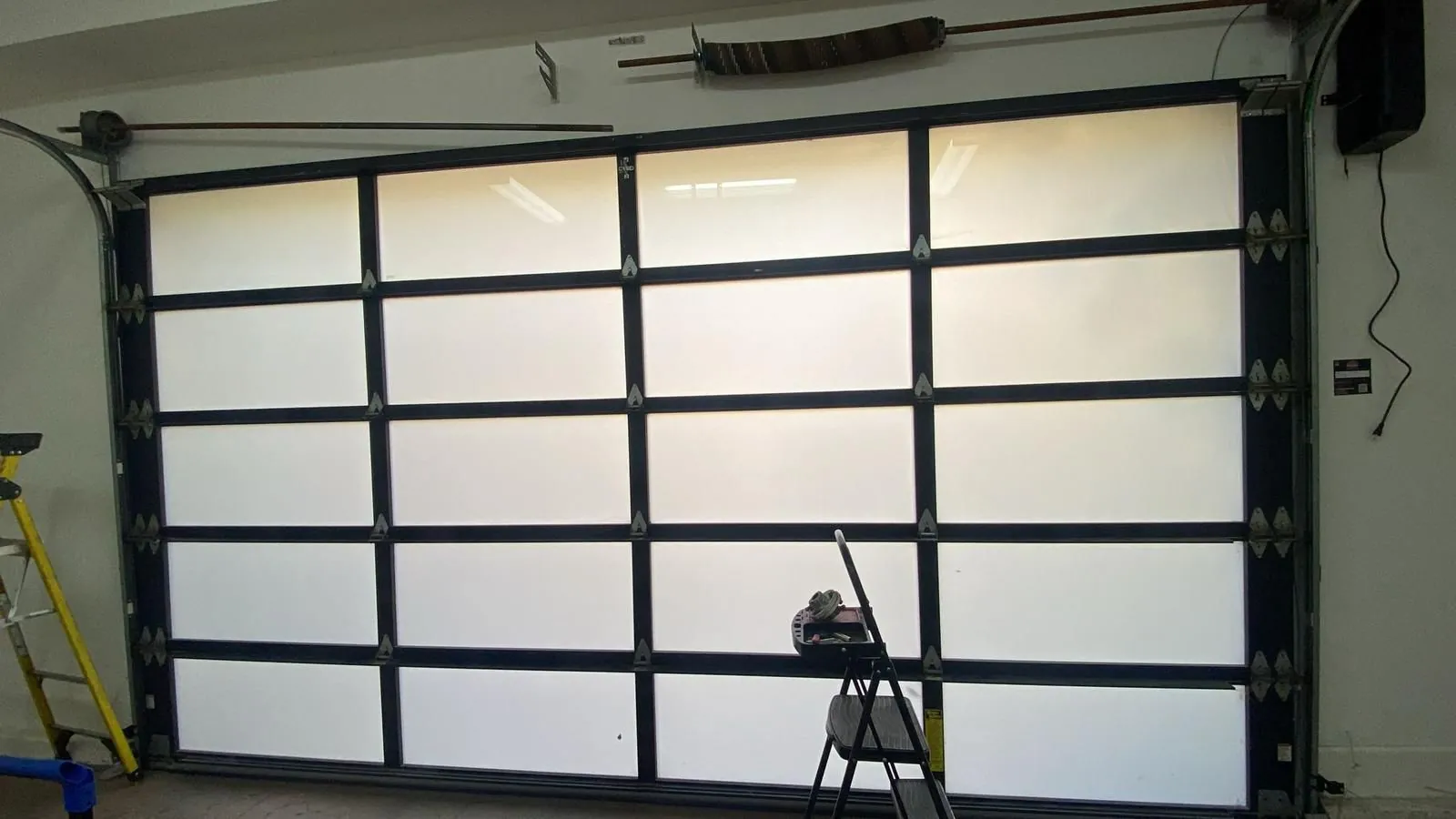
A visit to a Seaport building begins with access: signing in, finding the person who can open the plant room or the parking level, and booking the freight elevator if parts must go up or down. At the door, the work follows the same order every time:
- Survey everything before laying a hand on it: panels or slats, tracks or guides, springs, cables, operator, safety devices and the controls that trigger it.
- Where it is safe, take the operator out of the loop and check how the door moves and balances on its own.
- Find whether the fault is in the door, the operator or the signal from the access system.
- Explain the fault and the options to whoever is responsible for the building, before any part is replaced.
- Make the repair, then cycle the door again and again, checking that it stops at the right points and reverses when the safety devices are triggered.
A parking or loading door is never left in an unsafe state. If a part needs to be ordered, the door is either made to work safely in the meantime or left closed and secure.
Repair or replacement for a busy door
Most parking and loading doors are repaired many times over their life, and that is normal for a door that works this hard. Replacement starts to be the better choice when much of the door is damaged at once, when the springs and operator are both near the end of their life, or when the door no longer suits the traffic the building now handles.
New doors are something we both supply and fit, for homes and for businesses alike, from a dock’s rolling curtain to a ramp’s sectional door, and the tired old door leaves with us. Fitting a new door in an occupied building is planned around access, the freight elevator and the hours when the entry can be taken out of service. See new garage doors in the Seaport for more.
Questions a building manager might weigh:
- How often is this door repaired, and is the repair interval shortening?
- Is the operator built for the amount of traffic the entry now carries?
- Can the entry be closed while a new door goes in, or must a temporary arrangement be made?
Rolling grilles and ventilated ramp doors
Some parking levels close with a rolling grille instead of a solid door, so air can move through the level while the entry stays shut. A grille is built from rods and links, or from perforated slats, and it fails in its own ways. Links wear and stretch, rods bend when a vehicle brushes the curtain, and a grille that has lost a few links can start to sag at one end and catch in its guides. Because a grille is lighter than a solid curtain, it is easy to assume the spring load is small; it is not, and the barrel above a grille deserves the same caution as any other.
Ramp doors of either kind collect dirt, road grit and leaves in their guides and tracks, especially at the bottom where water drains toward the entry. That debris makes a door run rough and can stop a curtain from seating fully closed. Clearing it, checking the bottom seal or the grille’s bottom bar, and making sure the guides are clean and straight is often part of a repair visit here.
Keeping a busy door in service
A door that a whole building depends on rarely fails without warning. Before a spring breaks or an operator gives up, the door usually tells someone: it runs slower than it used to, it shudders at one point in its travel, it reverses now and then for no clear reason, or a new grinding note appears as it opens. Building staff and residents are best placed to notice these, because they hear the door every day.
A few simple habits help a manager keep ahead of failures:
- Keep a short note of when the door misbehaves and what it did, so a pattern can be spotted.
- Report impacts from vehicles even when the door seems fine afterwards, because a bent track can take days to cause trouble.
- Never let anyone bypass a photo eye or a safety strip to keep the door running; that turns a nuisance into a hazard.
Catching a worn roller, a fraying cable or a tired spring early lets the repair be planned for a quiet hour instead of happening at the worst possible moment.
Loading bays and service openings
Loading-bay doors in new buildings serve shops, restaurants, offices and residents moving in or out, often all through one dock. They are opened and closed constantly through the day and are often left partly open, which strains springs and lets the bottom bar take more knocks. Dock doors also see weather: wind pushing on a large curtain, rain driving under the bottom seal and grit building up in the guides.
Common faults are dented lower slats, a bent bottom bar, guides knocked out of line by a pallet jack, and worn bottom seals. A rolling steel door that has started to bind at the same height every time usually has a damaged guide or slat at that point. Getting the door running smoothly again usually means fixing the damaged part and checking that the curtain winds evenly onto its barrel. It also pays to look at the dock bumpers and the area just inside the opening: if pallets keep striking the same slat, a small change to how loads are staged can spare the door a lot of punishment.
Garage doors in the Seaport are mostly doors like these, heavy and shared, and their repair is planned around the building as much as the door.
Arranging a visit
Whether it is a parking entry that will not lift or a loading door that jams halfway, tell us what the door is doing, which building it is in, and how access works. We will say what is safe in the meantime and arrange a visit that fits the building’s rules. Our service areas list shows every other neighbourhood and town we reach.
For garage doors Seaport MA buildings rely on from the morning commute to the last delivery, call us or book online.
Questions from the Seaport
Our parking entry door is stuck open overnight. What should the building do?
Keep cars and people clear of the opening, stop cycling the operator, and follow the building’s own security procedure for an open entry. Call us whatever the hour; we will tell you what can be done safely and when we can reach the door.
Do you need the freight elevator to work on our door?
Sometimes. If parts or tools must travel between the street, a loading dock and an upper parking level, a freight elevator is often the only practical way. Tell us how it is booked and we will plan the visit around it.
Fobs do nothing at the ramp, yet the push button inside still lifts the door. What has failed?
Most likely the access side. If the push button runs the door, the door and its operator are likely fine and the fault is in the access system that sends the signal. We can check the operator side and confirm where the fault lies.
Can a spring on a large parking door be replaced by building maintenance staff?
It should not be. The torsion springs on a large overhead door store a great deal of energy and can cause serious injury if released carelessly. Replacing them is skilled work.
Do you install new doors in occupied buildings?
Yes. A replacement in a lived-in or trading building is planned around the building’s access, the freight elevator and the hours when the entry can be taken out of service.