
You hit the button. Silence, or else the opener whirs while the door sits there. When a garage door won’t open, the cause tends to fall into one of three groups: the opener is not getting a signal or power, something is physically holding the door down, or the parts that do the lifting have failed. Working out which group you are in takes a minute or two, and it tells you whether this is something you can sort out yourself or a repair that needs a technician.
Listen first: the sound tells you a lot
The sound the opener makes, or does not make, narrows things down quickly.
Silence, and the opener light stays off. The opener has no power. A plug may have worked loose from the ceiling outlet, a breaker may have tripped, or the garage outlet may sit on a protected circuit that has cut out. Older garages on shared circuits lose power this way more often than people expect.
Silence, but the opener light works. Power is reaching the unit, so the signal is the problem. A remote with a flat battery, a wall button with a broken wire, or a console switched into its lock mode will all leave the motor idle.
A hum or a click, and the door stays put. The motor is trying. Either the door is too heavy for it, which points to a broken spring, or the opener’s drive has slipped, or the emergency release has unhooked the trolley.
The motor runs and you can hear the chain or belt moving, but the door does not follow. The opener has come apart from the door. The release cord may have been pulled, or a part of the drive has worn through.
The door lifts a few inches, then stops or drops back. The opener senses that the load is wrong and gives up. A snapped spring or a cable off its drum is the usual reason, and the guide to a door that stalls partway up explains the other possibilities.
Checks that are safe to make first
Before you assume the worst because your garage door won’t open, rule out the simple causes. None of these involves touching anything under tension.
- Check the opener has power. Look for its light, reset the breaker if one has tripped, and press the reset button on a garage outlet if it has one.
- Try both the remote and the wall button. If one works and the other does not, the fault is in the one that fails, not in the door. Our guide to a garage door button not working covers wall controls in more detail, and the remote guide covers handsets.
- Swap the battery in the remote.
- Glance at the wall console: a vacation or lock setting, once switched on, shuts out every remote.
- Check the sliding bolt mounted on the door’s inner face. If someone has shot the bolt across into the track, the opener cannot lift it.
- In winter, look along the bottom of the door. A seal held to the slab by ice will keep a door down, and running the opener against it strains everything above.
If one of those clears it, the door should run normally. If it still sits there, or if anything you have seen points to a spring or cable, stop there.
What not to touch
The torsion spring above the opening, or the two extension springs stretched alongside the overhead tracks, carries the weight of the door. That stored force lets a weighty door glide up at a light touch, and it is also what makes spring work dangerous. Adjusting, unwinding or replacing a spring without the right bars and training can cause serious injury, so springs, lift cables and the corner brackets anchoring those cables are all strictly for a technician.
Do not pull the emergency release when a spring has gone. With the opener disconnected and no spring holding the weight, the door can come down hard. Nor should you heave on a door the opener cannot shift. A straining motor means excess weight, and weight that beats a motor will beat your back too.
The usual causes, from most to least likely
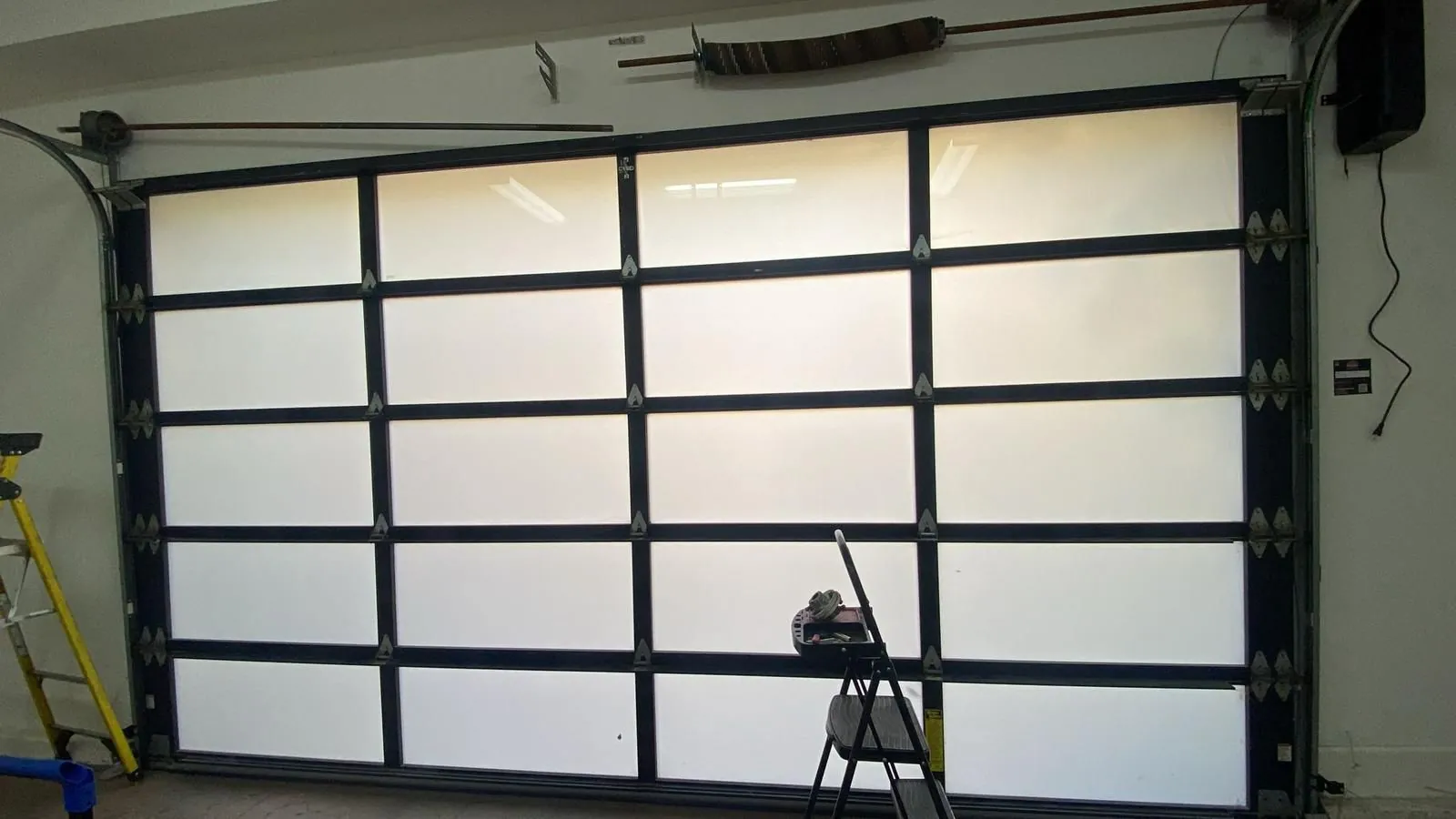
A broken spring. This is the most common reason a closed garage door won’t open. You often hear a bang from the garage some time before anyone tries the door, and looking up you may spot a split in the torsion spring’s coil, where the two halves have pulled apart. The opener hums, or lifts the door a little and stops. Our spring repair page explains what replacing one involves, and the broken spring guide covers how to spot one.
A snapped or slipped cable. Each lower corner of the door is tied by a cable to a drum on the spring shaft overhead. When one snaps or unwinds from its drum, the door usually sits crooked and the opener refuses to lift it. That is a cable repair job.
An opener fault. A stripped drive gear, a failed logic board, a worn belt or a broken wire to the wall button can all leave a sound door sitting closed. Opener repair and replacement covers all of these, including LiftMaster openers.
A door bound in its tracks. A bent track, a cracked roller or a door whose rollers have jumped clear of the rail will jam. Do not try to force it back. Off-track repair puts the door back in line and replaces bent or broken parts.
Ice and cold. Frozen seals, stiffened lubricant and tired springs all show up on the first hard cold snap.
How Greater Boston makes it worse
Weather and the shape of local garages both change the picture.
Cold is hard on springs. Springs that were already worn tend to give out on a bitter morning, which is why many calls about a stuck door come in the first cold week of the season. Ice packed against the bottom seal adds to the load.
Along the coast, salt air does its own damage. In Winthrop, Revere and Marblehead, tracks, rollers and cable ends corrode faster than they do inland. A seized roller or a rusted cable can make a door bind or stop before any spring breaks.
City driveways leave no room for a stuck door. In many neighbourhoods the garage is the household’s one off-street space, often reached down a narrow drive shared with the house next door. When that door stays shut, the car stays shut in, and a door that has jumped its track can block the drive for everyone who uses it.
When to ring us
If your garage door won’t open and a spring shows a break, a cable dangles, or the door sits crooked or out of its track. The same goes when a car you need is shut in. Leave the door in place, keep everyone, pets included, well back, and do not run the opener again. Ring mid-afternoon or in the middle of the night, and our emergency repair page has advice for the time between your call and the visit. If the cause turns out to be wider wear, the general garage door repair page lists everything the shop works on.
Questions about a garage door that won’t open
The motor hums and nothing moves. Has the opener died?
Rarely. Humming without movement usually points to a snapped spring, which leaves the motor facing the door’s full dead weight. Leave the button alone now, since running the motor against a dead weight can damage the opener as well, and call us.
Can I haul it up manually so the car can get out?
Only if you are sure neither spring has snapped and neither cable has slipped. With a broken spring or a slipped cable, pulling the emergency release can let the door fall. If you are not sure, leave it closed and ring us.
My garage door won’t open after a cold night. What happened?
It may be frozen to the ground, or the cold may have finished off a tired spring. Look along the bottom seal for ice, and look up at the spring for a gap in the coil. If the spring has a gap, do not run the door.
Why does the remote not work when the wall button does?
The remote is the problem, not the door. Change its battery, check the console is not in lock mode, and try again. If it still fails, it may need reprogramming or replacing.
Is a door that will not open an emergency?
It is when a car is shut in, when a spring or cable has gone, or when the door is off its track. Otherwise, pick a convenient slot when you book.
Get the door moving again
If the simple checks have not cleared it, or you have found a broken spring or a loose cable, call us or book online. Nobody has to wait for morning to report it; a person answers overnight too. The technician who comes out checks every moving part, including the ones that still seem fine. Other troubleshooting guides sit on our blog.