
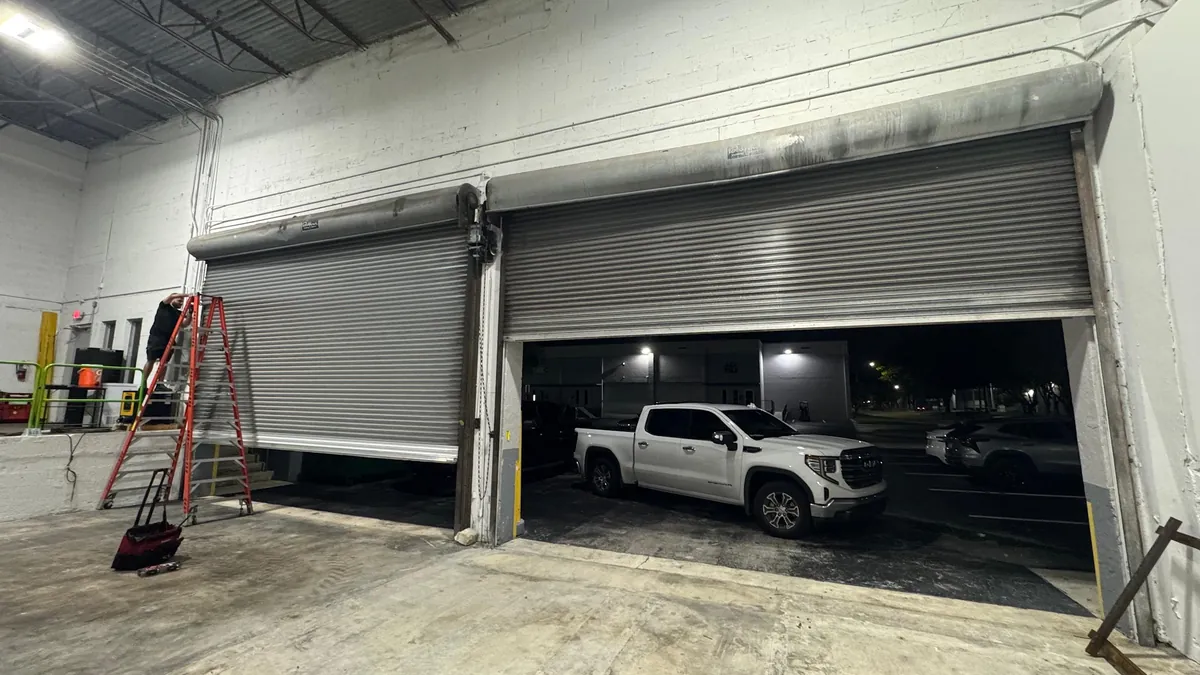
A dead door at the back of a tight lot
Garage doors keep terrible timing. The single bay out behind a Chelsea two- or three-family picks the dark hour before a shift starts to trap the car, or gapes open after midnight where anyone on the shared drive can see in, or loses a spring with a crack that rouses every floor of the house. Emergency garage door repair in Chelsea, MA exists for precisely that: a door frozen shut, a door that refuses to come down, a spring in two pieces, or a door that has lurched out of its rails, at whatever time it happens. A real person picks up our line through the night and on holidays, so the call can go in the moment you discover the trouble.
Settle three questions before dialling:
- Is any person, pet or vehicle beneath the door or in its swing?
- Where has it come to rest: on the ground, at the top, or hung up in the middle?
- Is the motor still twitching? If it is, unplug it now.
Breakdowns we answer at any hour
Stuck shut
Nearly always a parted spring or a dead motor, and typically found at dawn with the car marooned inside.
Stuck open
Photo eyes knocked askew, a motor fault, or a door wedged in its channels, leaving the bay exposed until morning.
Spring in two pieces
A wound or stretched coil that has fractured under strain, turning the door into ballast the motor cannot raise.
Out of its rails
Wheels that have jumped the channel, leaving the door skewed, jammed and liable to slump if anyone tugs at it.
Cable gone slack
One lift line parted, letting that corner drop and wrenching the door crooked in the opening.
Your first five minutes
How you handle the moments right after a failure counts for more than anything else written here. Take them in order:
- Clear the doorway. Kids, dogs and curious neighbours stay out of the opening until the door has been made safe.
- Kill the motor. Unplug the powerhead from its ceiling socket, or flip its breaker, so it cannot have another go.
- Let the door lie. Down stays down. Hung up halfway or lopsided means hands off: no shoving, no hauling, no props.
- Observe from a distance. Note any gap in the coil over the header, any cable dangling free, any wheel sitting outside its channel.
- Phone. Report what you see and what you heard.
Those steps keep people safe, save the motor from cooking itself, and stop a wounded door getting worse while you wait.
Hardware to keep your hands off
A broken door invites improvisation with whatever tools lie nearby. Resist. Some parts are hazardous on a good day and far more so once something has already given way.
The coil wound across the header holds dangerous tension, and it shares that load with the lift cables and the two lowest brackets. When one of a pair has snapped, its twin remains fully wound. A set screw slackened, a bracket levered loose, or an attempt to rewind a coil by hand can unleash that energy with enough violence to maim. Torsion springs are no DIY repair, midnight or midday.
A door hanging out of its channels is unstable, and yanking or kicking it straight can bring it crashing down. A door whose spring has failed weighs vastly more than it felt like yesterday, so heaving it up by hand, with a car jack or with a timber prop is asking for trouble. If the car cannot come out safely, it stays put.
Ring now, or ring in the morning?
Plenty of failures are urgent; some can sit until a civilised hour. Roughly:
- Ring now: the bay is stuck open and exposed; a vehicle you need shortly is shut in; the door hangs crooked or half raised and looks unsteady; a coil or cable broke while the door was up.
- Ring when convenient: the door is down and secure despite a broken coil, with nothing pressing inside; the car handset quit yet the wall button still works; the door is loud but still running.
Unsure which list you are on? Phone anyway and describe it. A short conversation usually settles it.
A bay stuck open behind the house
On the snug lots off Broadway and around Bellingham Square, a rear garage frequently faces a shared drive or the next-door yard. Until it is fixed, a bay that refuses to shut puts the car, the tools, the bikes and everything else stored there on show to passers-by. It also lets in rain and the damp, salty breeze off the creek, which is unkind both to the door’s hardware and to whatever sits in the bay.
If the door is parked fully open and steady, and the trouble is a dead motor or photo eyes that have lost each other, it can sometimes be lowered by hand once the carriage is uncoupled, provided neither coils nor cables show damage. At the faintest sign of a snapped coil, a drooping cable or a wheel out of its channel, leave it raised and phone. Lowering a door with a failed spring lets its entire weight come down on your hands.
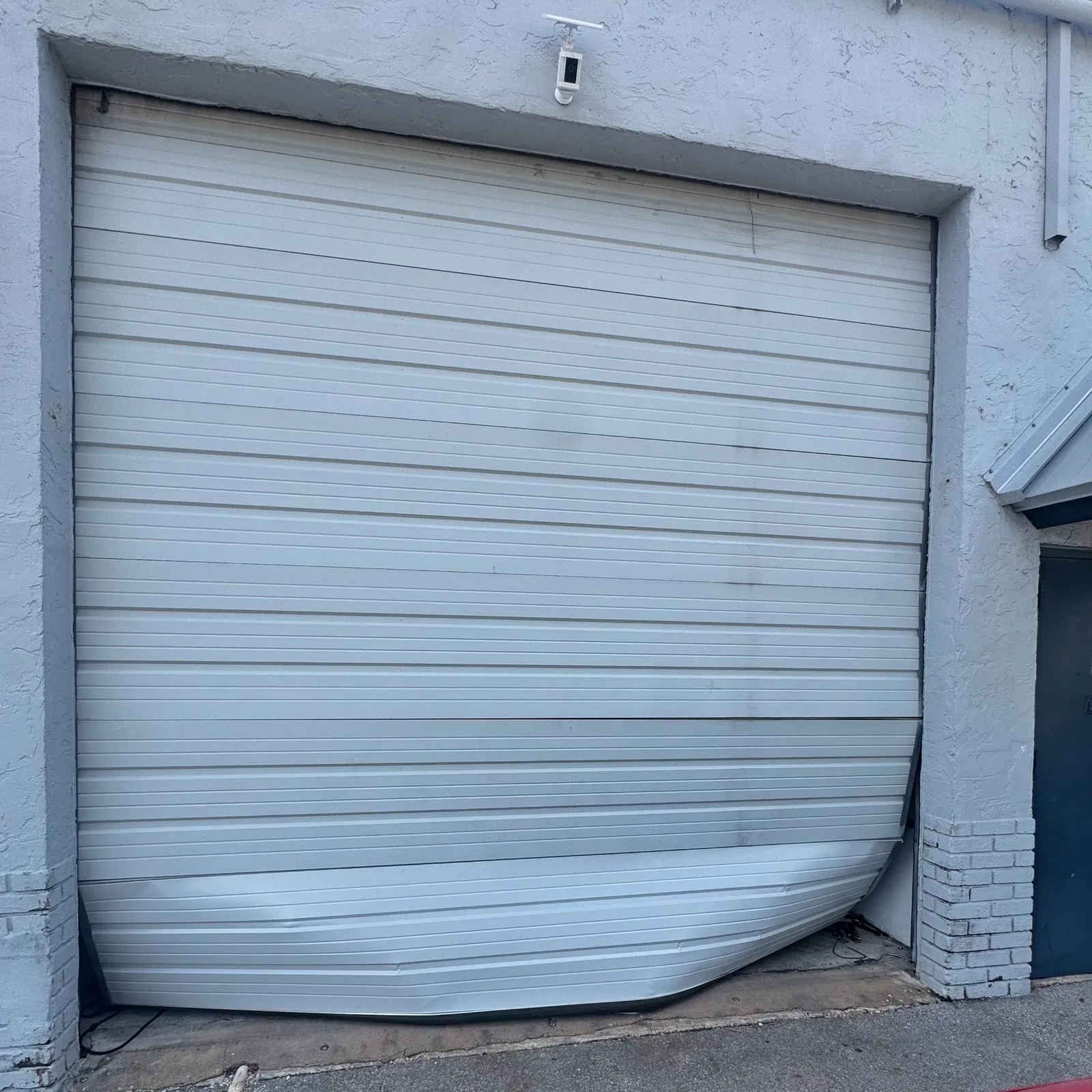
Why a door refuses to close
Among late-night calls, a bay that stays gaping is the one that most often turns out to be simple, and also the one people most want sorted before bed. The causes fall into a handful of groups. The photo eyes are first: if either is dirty, sun-dazzled, knocked off line by a passing bin or loose on a bracket shaken by traffic, the opener refuses to close and the door rises again each time. Next comes the opener itself, whose travel limit may have drifted so that it thinks the floor is higher than it is, or whose force setting reads normal drag as an obstruction. Then there is the door: a wheel binding in a kinked rail, a hinge cracked so the door bows, or a cable gone slack so one side drags.
Only the first group is safe to tackle yourself, by cleaning the lenses and clearing the beam. Holding the wall button down continuously can, on many openers, overrule the photo eyes and lower the door, but do that only if you can see the whole opening and nothing is in it. If the door still will not close, or it looks crooked as it moves, stop and ring. Emergency garage door repair in Chelsea for a door stuck open is usually about getting the bay secure first and tidying up the underlying cause straight after.
Frost, salt and the breakdown at dawn
A big share of urgent calls arrive with the first proper frosts. Cold steel loses some of its spring, and a coil already pitted by the briny air near the creek is most apt to crack on an icy morning. Ice can also glue the rubber strip along the bottom edge to the ground, so the motor strains, its force limit trips, and the door stalls or bounces back. Wrenching a frozen door loose with the opener can rip that strip and overload the cables.
When the base is iced down, uncouple the opener, coax the strip free along its full length, and only then try again. If a crack rang out from the garage on a bitter morning, assume a coil has gone and keep the door closed.
Trucks, tremor and the failure that crept up
Heavy truck traffic is part of the background in Chelsea, and the tremor it sends into nearby garages works on a door patiently. Brackets slacken, rails wander off true, photo eye mounts get nudged aside. Nothing feels urgent until the morning a wheel climbs out of a loose rail, or a door that has been catching for weeks finally sticks fast at chest height. Plenty of calls that arrive as emergencies are the final chapter of a long, quiet story.
That matters, because a thorough fix deals with the slow damage as well as the sudden one: brackets re-anchored, rails trued, every wheel inspected instead of only the one that escaped. Emergency garage door repair in Chelsea means getting the door safe and moving tonight, and also making sure the same fault does not resurface a week later.
Details that help on the phone
The better the picture you paint, the likelier the right parts travel with the technician. Worth mentioning:
- What the door was in the middle of when it failed, and any sound you heard.
- Its resting position, and whether its lower edge sits level.
- Any visible gap in a coil, or a cable hanging loose.
- Any wheel clearly sitting outside its channel.
- Whether a vehicle or anything else you need is shut inside.
- How the garage is positioned on the lot, and how easy it is to reach from the drive.
A picture taken from a safe distance helps as well. You will not be given an arrival-time promise, but you will get a straight account of what happens next.
Once help is on site
- Stabilising comes before anything else: a stuck or lopsided door is braced and the motor unhooked.
- The root cause is traced, be it coil, cable, rail, motor or photo eyes, instead of just the obvious symptom.
- The diagnosis and the remedy are explained to you, and work begins only once you have heard them.
- The fault is repaired, or, if a particular part has to be fetched for a return visit, the door is left secure in the meantime.
- The door is balanced and cycled, the opener’s limits are rechecked, and the auto-reverse is proven.
A spring that breaks in the night
A fractured coil tops the list of urgent calls. In a heartbeat the door swings from featherweight to deadweight, and the motor manages a few inches before giving up. Keep it shut, unplug the opener and phone. The fix means fitting a new spring, or a matched pair if the door runs on two, and then rebalancing everything. Our Chelsea spring repair page goes deeper into coil work in the city.
Doors out of their channels
When a door leaves its rails, the usual causes are a fender clipping it on a cramped approach, a lone cable parting, or a motor that kept pushing after the door had jammed. It is among the riskiest states a door can be in, since nothing is guiding it any more. Stand clear, keep the motor unplugged and resist bullying the wheels back into place. The repair means unloading the door, freeing and refitting its wheels, straightening or renewing kinked rail and confirming both cables sit evenly. There is more about that on the off-track repair page.
When the motor is the culprit
Now and then the door is perfectly healthy and the trouble lies with the opener, its photo eyes or a handset that has quit. If the springs are intact, tugging the red cord on the opener’s carriage while the door is down lets you work it by hand. Motors, handsets, wall buttons and photo eyes are all covered on the Chelsea opener page, and other faults on the door repair page for Chelsea.
Keeping the next emergency away
With the door running again, a few habits make a repeat less likely. Glance at coils and cables every so often for rust or bristling strands, keep the photo eye lenses clean and their brackets tight, keep barrels and bikes away from the rails, and take notice when the door grows heavy, rises unevenly or starts making a new noise. Those are the quiet warnings that usually come before an outright failure. Emergency garage door repair in Chelsea is something you hope to need once, not every winter.
Across the wider area, the emergency repair page describes how urgent calls are handled, and the Chelsea hub brings together everything we do in the city.
Shared garages and shared drives
On lots holding two or three homes, the rear garage and the drive in front of it often serve more than one household, and that changes how a breakdown is handled. A door stuck halfway can block a shared drive as well as the bay itself, so it is worth telling everyone who uses it before someone tries to squeeze a car past. Anyone with a handset needs to know the door must not be run, because a single press from an upstairs unit can set a damaged door moving again. When you ring, say whether the drive is shared and whether other vehicles need to get in or out, since that affects how the door is made safe and in what order the work is done.
Tight access also shapes the visit. A narrow drive may mean the van parks on the street and tools are carried back, and a garage squeezed against a fence or a neighbouring wall leaves little room to stand beside the rails. None of that stops the work, but mentioning it on the phone saves time on arrival.
A word on safety while you wait
Waiting for help with a broken door is uncomfortable, and the temptation to do something is strong. The most useful thing is usually to do very little. Keep the opener unplugged so nobody presses a button out of habit. Where the bay is open and its contents are a worry, move what you can into the house rather than trying to force the door down. If a car has to be used, arrange a lift or another way to travel rather than reversing under a door that could move. Put a note on the wall button if other people in the building might use the garage, so nobody tries to run the door before it has been seen.
Ring us whenever it happens
If the door has failed and it cannot wait, there is no reason to hold off until office hours. For emergency garage door repair in Chelsea at any hour of any day, call us or book online.
Questions from Chelsea
Will anyone actually pick up in the small hours?
Yes. Someone answers through the night and every day of the year, holidays included, so a failure never has to wait until breakfast. No arrival time is promised, but you will get an honest picture of what to expect.
The spring broke and my car is inside. Could I just raise the door myself?
Please do not. With the coil gone, the whole weight of the door rests on whoever lifts it, and it can come down without warning. Leave it shut, unplug the motor and phone, mentioning the car so getting it out is part of the plan from the start.
It is late and the door simply will not come down. Any ideas?
Start at the photo eyes: clear the line between them, wipe their lenses and look for steady lights. If the door then closes, that was it. If not, and the coils and cables look sound, it can sometimes be lowered by hand with the opener uncoupled. If anything looks damaged, leave it and phone.
Does a door hanging out of its rails count as an emergency?
Very much so. Nothing is guiding it, so it can drop or twist further. Keep children and animals well back, leave the motor dead, and let a technician deal with straightening it.
The door seems stuck to the ground on a freezing morning. Is something broken?
Possibly not. Ice can bond the bottom strip to the ground so the opener cannot lift it. Uncouple the opener, ease the strip free and try once more. If it still refuses, or you heard a sharp report from the bay earlier, assume a spring has gone and leave the door shut.