
A door on a peninsula wears from the outside in
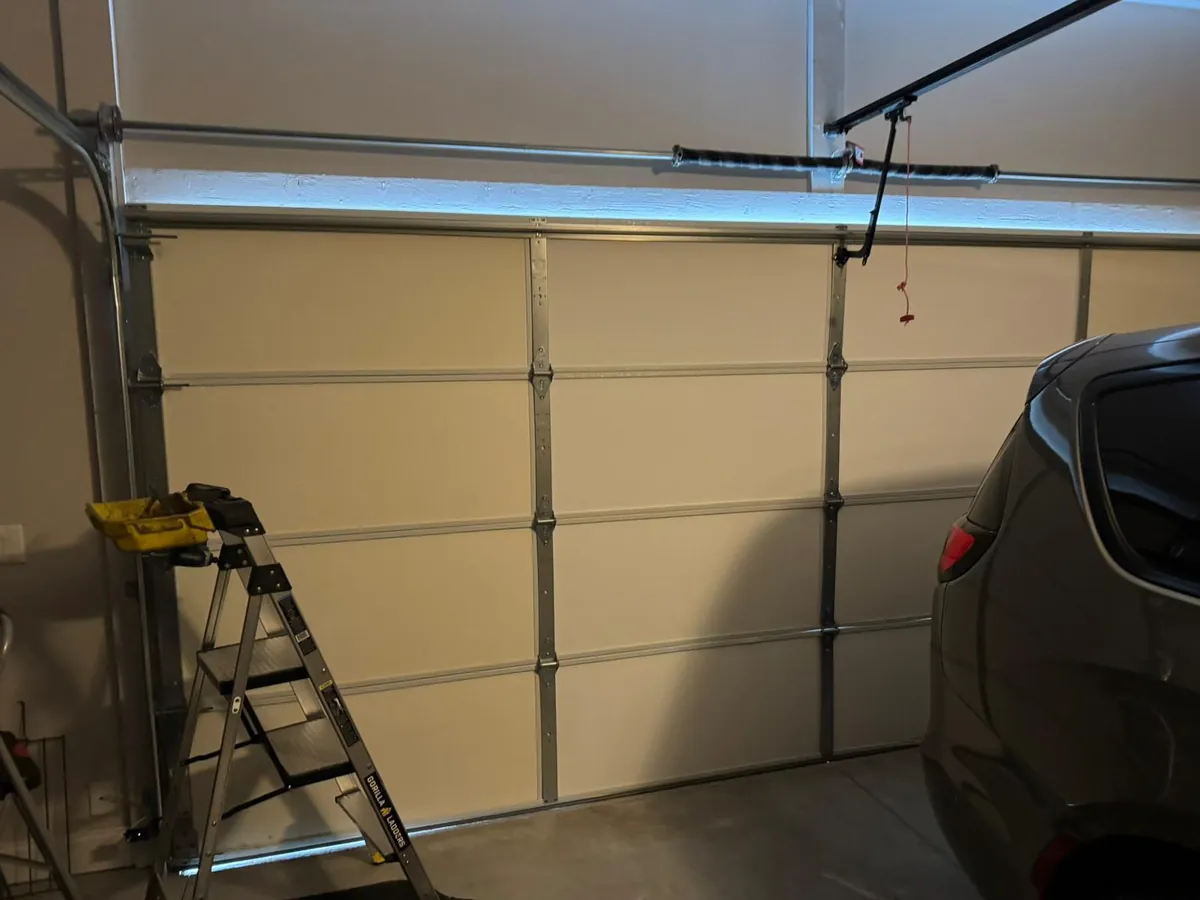
Winthrop sits almost entirely surrounded by water, and the garages here live in damp, salty air for the whole year. That air settles on every exposed bit of steel on a door: the springs over the opening, the cables at its corners, the tracks and the brackets that hold them to the frame. Our garage door repair in Winthrop, MA covers all of those parts, along with panels, openers and remotes, rollers, off-track doors and the safety sensors near the floor, on the single-car and paired garages that sit beside close-set single- and two-family houses.
Three signs can be read from the doorway without laying a hand on anything:
- Rust bleeding from the hinges or the bottom track brackets, which tells you the hardware is losing strength.
- A cable hanging loose at one bottom corner, or a bottom edge that tilts toward one jamb.
- A sensor near the floor with a blinking light, or one knocked crooked by a bin or a bike.
Parts we put right on Winthrop doors
Springs
Wound torsion coils over the opening, or stretched extension coils alongside the ceiling rails. Pitted steel cracks early, and after a break the opener cannot raise the door at all. See our spring repair here.
Cables and drums
Lift cables corrode where they wrap the bottom brackets and the drums. Once strands part, one corner sags and the whole door skews in its rails.
Tracks and rollers
Bent or rusted track sections, loose brackets and seized rollers that grind, jerk or let the door leave the track altogether.
Panels and seals
Creased or split sections, broken hinge leaves joining them, and a perished bottom seal that lets puddles and blown leaves under the door.
Openers and remotes
Motor units that groan but stay put, handsets that no longer respond and wall stations with dead contacts. See our opener repair here.
Safety sensors
The pair of photo eyes by the floor that stop a closing door when something is in the way, and that damp can cloud or corrode.
What salt air does to each part of a door
A garage door is a connected set of steel parts, and on a peninsula with water on three sides, every one of them is under slow attack. Corrosion here is not a cosmetic issue. It changes how the door moves and how long each part holds out.
Springs suffer first. A spring is loaded all the time, and the tiny pits that rust leaves on its surface become the starting points for cracks. Rust also roughens the coils, so neighbouring coils scrape one another through every turn, and a spring that scrapes is doing more work than it should. You often hear it before it fails, as a creak or a dry scraping above the door.
Cables are next. A lift cable is a bundle of thin steel strands, and salt works its way between them. The first strands to go are usually at the bottom, where the cable loops onto the bracket at the corner of the door and where puddles and slush sit against it. Once a few strands break, the rest carry more load, and the cable can let go with little warning.
Tracks and brackets corrode at their fixings. The bolts holding a vertical track to the door frame rust and loosen, the track shifts slightly out of line, and the rollers begin to bind. Travel that used to be smooth begins to shudder at one fixed spot, then sticks there, and eventually a roller jumps out.
Hinges between sections crack along rust lines, rollers with steel bearings seize, and the springs and cables on the bottom section, the part nearest the wet driveway, tend to look worst of all. None of that happens in a single season, but here it happens sooner than it would on a garage further from the water.
Garage door repair in Winthrop, MA for close-set houses
The homes on the peninsula sit close together, and many garages share a narrow gap with the house next door. That layout shapes the work. A tight side gap can leave little room beside the door frame for the vertical tracks, so a bent track may have rubbed against the jamb or the wall for months before anyone notices. Where a garage sits right up against the neighbouring house, every clatter from the rollers and every rattle from the motor reaches next door, so a quiet result matters.
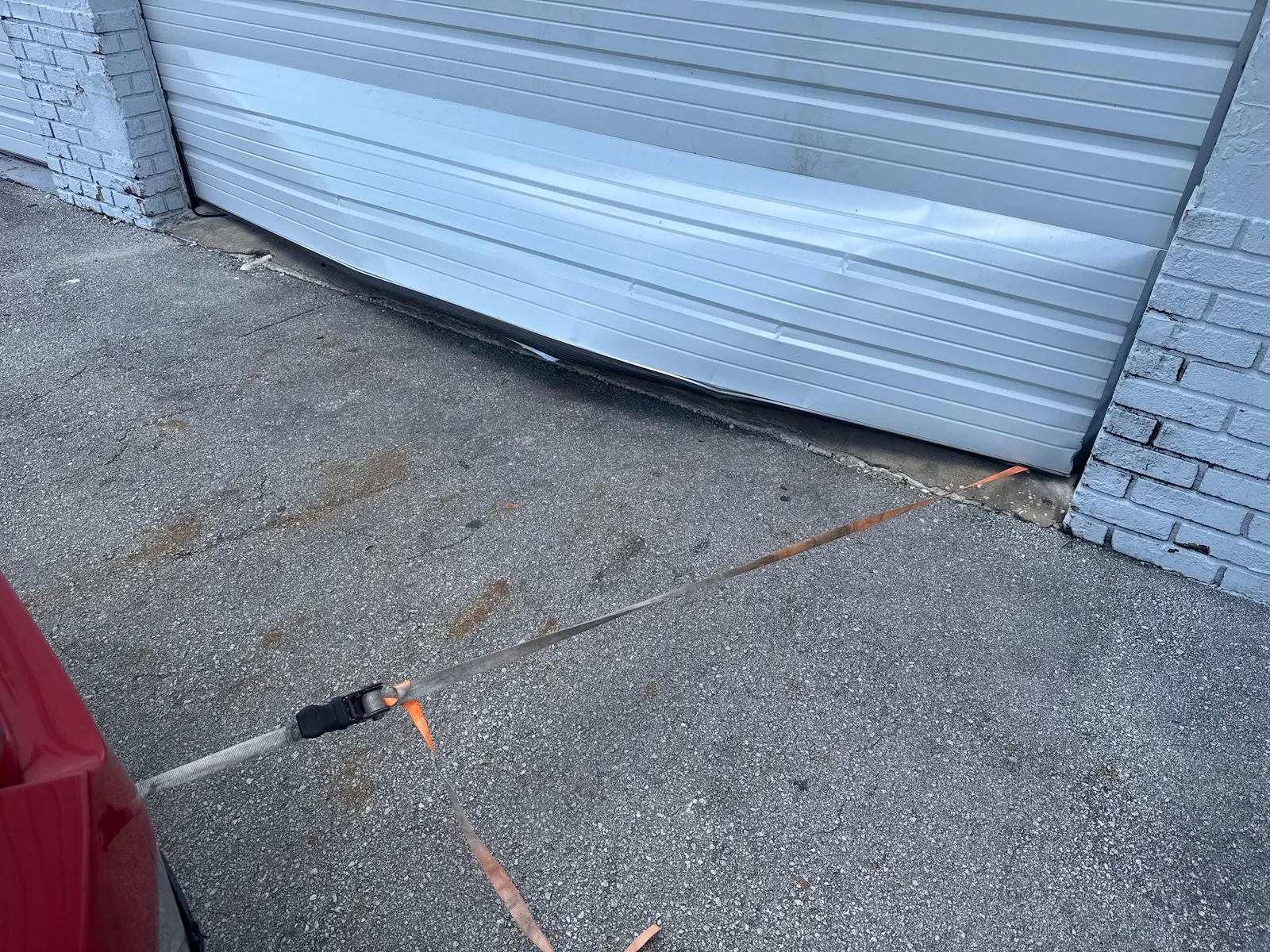
Short driveways mean the car is often parked only a few steps from the door, sometimes nose-in and close to the panels. A door that drops unexpectedly, or a section that is pushed in by a bumper on a tight turn, is a common reason for a call. Panels damaged this way can sometimes be straightened or a single section replaced, rather than replacing the whole door, depending on how far the damage runs.
A short driveway also leaves the bottom of the door close to the street, where road salt, sand and water collect in winter. The bottom seal, the bottom bracket and the lowest roller on each side take that spray with every passing plough and every wet tyre, which is why the lowest few feet of hardware on many Winthrop doors carry the worst of the rust.
How we find the real fault
A door that will not open is a symptom. The cause may be a spring, a cable, a roller, a misaligned track, a sensor or the opener, and often two of those at once. A visit for garage door repair in Winthrop works through the door in a set order so nothing is missed.
First the trolley is released from the opener’s rail, which lets the technician move the door manually and rules out an accidental start. Then comes the balance test: a well-sprung door, raised to waist height and let go, hovers there. A door that falls points to springs that have lost strength; a door that flies up points to springs set too tight. After that the springs themselves are looked over for gaps, stretched coils and rust, the cables are checked strand by strand at the corners and on the drums, and the tracks are sighted from top to bottom for bends and loose fixings.
Rollers are spun by hand to feel for a seized bearing. The hinges between sections are checked for cracks, and the panels for dents that catch on the tracks. Last, the opener is reconnected and run, and the sensors are tested to make sure the door stops and reverses when the beam is broken.
Before a single part is changed, you hear which part has failed, which ones look close behind it, and what leaving them would mean.
Repairs that are safe to try, and ones that are not
Some checks are worth doing yourself, and none of them involve the parts that hold tension:
- Unplug the opener when the door has jammed mid-travel, which stops it attempting another cycle while you look.
- Clean both sensor lenses with a soft, dry cloth; damp air and a film of salt dull them over time.
- Put a fresh battery in a handset that has stopped working, then press the wall station: if the door moves, the handset was the culprit.
- Move anything propped against the rails, whether a snow shovel or a bin.
The springs, the cables and the bottom brackets are a different matter. A torsion spring carries dangerous tension whether the panels are raised or lowered, and the cables plus their corner anchors share that load. A rusted set screw or a corroded bracket bolt can let go when it is disturbed, and the energy in a wound spring is released in a fraction of a second. These are not DIY repairs. With its spring gone, the door weighs far more than you would guess, so neither haul on it by hand nor push it with the motor.
Rust prevention between visits
Salt air cannot be kept out of a garage, but its effect can be slowed. A light coat of garage door lubricant on the springs, the hinges and the roller bearings, wiped back so it does not hold grit, gives the steel some protection. Do this a few times a year, and more often after a winter of salted roads.
Rinse the bottom of the door and the lowest section of each track with fresh water once the snow and road salt are gone in spring, and let it dry with the door open. Keep the bottom seal clear of sand and leaves so it can close properly and keep standing water off the bottom bracket. If the garage is damp, leaving the door raised for an hour on a dry, breezy day helps.
Do not paint over rust on the springs or cables, and do not use grease on the tracks, which gathers salt and sand into a paste. If a spring or cable already shows heavy rust, lubricant will not save it; that part is due for replacement.
Rollers, hinges and the small parts that go first
The smallest pieces on a door often show the salt first. Steel rollers have open bearings, and a fine crust of salt and grit gets into them until they stop turning and simply slide along the rail, wearing a flat spot on the wheel and a bright groove in the track. Nylon-tyred rollers with sealed bearings resist that better, and swapping a full set of seized rollers is one of the simplest ways to bring a stiff, loud door back to a smooth run.
Hinges are thin, folded steel, and the rust tends to start where the hinge bends around its pin. A cracked hinge lets two sections fold slightly out of line, and the door then catches on the way up. The bottom brackets, which anchor the cables, sit lowest of all and are often the most corroded part on the door. Because they carry spring tension, they are replaced with the tension safely released, never loosened while loaded.
On a visit, these small parts are checked on every section, not only where the trouble showed. Replacing one seized roller while its neighbours are close to seizing only brings you back soon.
Sensors in a damp garage
The safety sensors are mounted a few inches above the floor, in the wettest and coldest part of the garage. Condensation forms on the lenses, salt film dulls them, and the thin wires running up the wall to the opener can corrode where they join the sensor or where a staple has nicked the insulation. The result is a door that will open but refuses to close, or one that begins its descent and bounces back up with nothing in its path.
Cleaning and realigning the pair fixes many of these calls. Where the wiring or a sensor housing has corroded, they are replaced and rerouted away from the floor’s wet edge where the layout allows.
Repair the door, or replace it?
Most calls end in a repair. A broken spring, a frayed cable, a seized roller, a bent section of track or a faulty sensor are all parts that can be replaced on their own, and the door goes back to working as it did.
There are times when replacement is worth weighing up. A bottom section eaten through by rust, hinges cracking on several sections at once, or rails corroded from floor to ceiling can add up to so many new parts that a new door makes more sense. The same applies when a door is badly bent from an impact and more than one section is affected. When a visit turns up that kind of wear, you hear both options plainly and choose for yourself. New doors are supplied and installed as well as repaired, so either path is handled by the same team.
When the opener is the problem
On a peninsula the opener has its own troubles. Damp air can corrode the terminals on the wall button and the sensor wiring, and a sensor mounted near the floor sits in the wettest part of the garage. An opener that clicks but does not move, a door that reverses for no reason, or a handset that has to be held almost against the door before it works are all familiar. Openers are repaired and replaced, LiftMaster among them, and sensors are realigned or replaced when the damp has got into them. More detail is on our opener repair page for this town.
The opener should never be the thing that lifts the door. If an opener is straining, the cause is often a spring that has weakened, and fixing the opener without fixing the balance only moves the problem along.
Stuck open after dark
An opening that refuses to shut late in the evening is the call most owners dread, because the garage and often the house behind it are left open. When it has halted mid-way, unplug the motor and keep children, pets and cars well back. If a cable has snapped or the door has come off its tracks, do not try to force it down.
Someone answers the phone at any hour of any day. Our page on urgent call-outs in this town covers the steps to take until help arrives.
For the full picture of how a door works and every part we repair across Greater Boston, the garage door repair service page has it all, and our page for every service in Winthrop lists the rest.
Book your garage door repair in Winthrop
Whether the door is grinding on a rusted track, hanging crooked from a frayed cable or refusing to leave the floor, the next step is the same. Describe the noise, the point where travel stopped and anything that looks out of place, and we will take it from there. Garage door repair in Winthrop, MA starts with one conversation; call us or book online.
Questions from Winthrop
Why does my door seem to rust so quickly?
The garages here sit in salt air for the whole year, with water on three sides of the town. Salt settles on bare steel and draws in moisture, so springs, cables, tracks and brackets corrode faster than they would inland. The lowest parts of the door, nearest the wet driveway, usually go first.
Can a rusted spring or cable be cleaned rather than replaced?
Light surface rust can be slowed with a coat of garage door lubricant. A spring or cable with pitting, broken strands or flaking steel has lost strength and should be replaced, because cleaning does not restore the metal that has gone.
My door is noisy and close to my neighbour’s wall. Can that be fixed?
Often, yes. Grinding usually comes from rusted spring coils, seized rollers or loose track fixings. Replacing worn rollers, tightening and realigning the tracks and lubricating the moving parts can quieten a door considerably.
A car bumped the bottom panel on a tight driveway. Does the whole door need replacing?
Not always. If the damage is confined to one section and the tracks are straight, a single section can sometimes be replaced. If several sections are bent or the tracks were pushed out of line, replacement may be the sensible choice, and you will hear both options.
Should I try to fix a broken cable myself?
No. The cables and the bottom brackets carry the full tension of the springs, and the spring above them stores dangerous tension even when nothing seems to be moving. Disconnect the motor at the socket, stay out from under the door, and phone.