
What makes springs fail in Medford garages
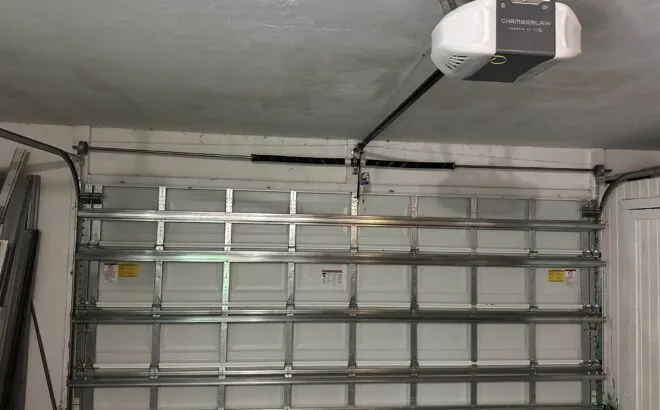
Most calls about a dead garage door begin with a spring. The single- and two-family houses of Wellington, West Medford and the Lawrence Estates come with garages of every sort, some built onto the house and some standing on their own further back, and because the lots run wider than in the inner neighbourhoods, a good many of those garages carry one double-wide door. A door that broad is a heavy thing, and the springs balancing it labour every time it moves. Garage door spring repair Medford MA homeowners need covers both families of spring: torsion springs wound on the bar above the opening, and extension springs hung beside the overhead tracks, with springs that have snapped or simply worn out replaced.
A spring is a consumable part. Each journey up and back twists or stretches the steel, and after enough of them the metal fatigues and gives way. A garage shared by two households on a two-family lot gets to that point sooner than one serving a single car.
Signs worth looking for, without laying a finger on the door:
- A coil above the door with a few inches of empty air where the spring has parted.
- An extension spring sagging, pulled out of shape or missing from one side altogether.
- A crack like a dropped plank in the garage, followed by a door that hardly lifts or will not lift.
Spring work we carry out in Medford
Snapped torsion springs
The commonest urgent call. The coil parts under load, typically with a noise like a gunshot, and the door is left at its full dead weight.
Pairs on wide doors
Double-wide doors usually run on two torsion springs. When one goes, its partner is overloaded and the door twists as it tries to move.
Stretched extension springs
In older and detached garages, extension springs gradually lose their pull and leave a door that creeps down or will not stay up.
Matching new springs to the door
Replacement springs chosen for what the door really weighs today, wound to the right tension and checked so the door hangs still at mid-height.
Cables knocked loose
When a coil parts, the jolt can unseat a cable from its drum. Cables and drums get inspected and re-set within the same visit.
How springs counterbalance the door
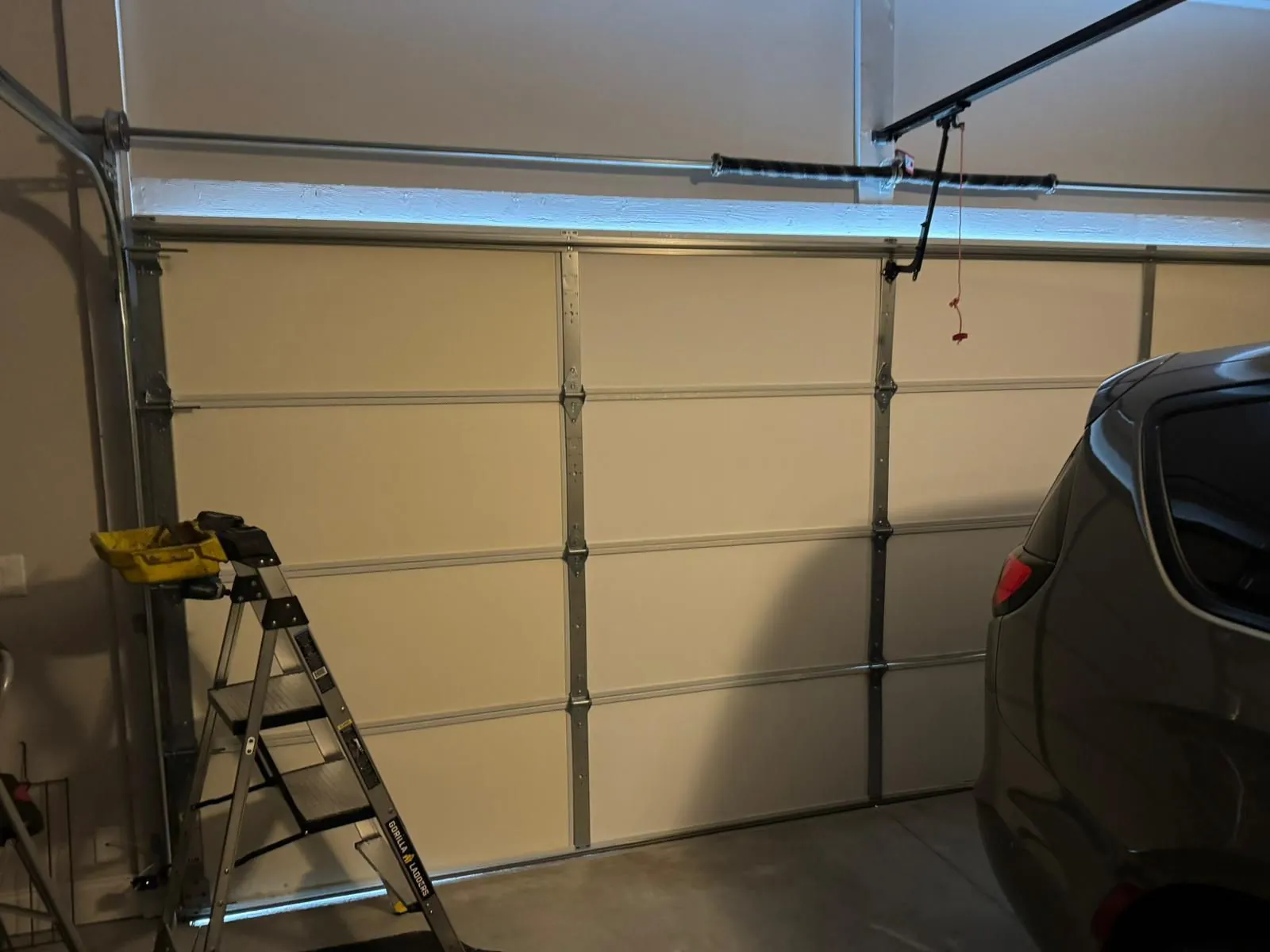
Nobody could raise a sectional door by hand every day without help, and the springs are that help. A torsion spring is a tight steel coil slid over a shaft mounted over the opening. While the door is lowered, its weight draws on the cables, rotates the drums and twists the coil tighter. That twist is energy in storage. When the door goes up, the coil relaxes, the drums reverse and reel the cables in, and the door climbs with very little effort from you or the opener.
Extension springs get there another way: they stretch where a torsion coil twists. One hangs beside each horizontal track, linked through a pulley to a cable that drops to the bottom corner of the door. Lowering the door pulls them long; raising it lets them contract, hauling the door upward as they do.
On a well-balanced door the springs take nearly the whole load. That is why a door with sound springs rises under one hand once the opener is uncoupled, and why that same door feels like a paving slab the moment a spring fails. The opener exists to guide and control a balanced door. It was never meant to haul a dead weight, and an opener driven against a broken spring can wreck its gears or bend its rail within a few tries.
Leave the torsion spring to us
A wound torsion spring holds dangerous tension, which makes it not a DIY repair under any circumstances. It carries enough stored force to lift a heavy door, and on a double-wide door that force is considerable. Unwinding a broken spring, taking it off, mounting a new one and bringing it up to the right tension calls for proper winding bars, a practised method and knowing which direction each spring has to turn. One slip, or a set screw slackened at the wrong moment, can send a bar spinning out of a hand hard enough to break bones.
So please leave the set screws on the shaft alone, do not attempt to wind a spring, and never substitute a screwdriver or a length of pipe for the correct bar. Extension springs look less threatening but still carry real force while the door is down, and one without a containment cable can lash out as it breaks. If a spring has gone, keep the door shut, uncouple the opener and ring us.
Double-wide doors and paired springs
A double-wide door covers two parking spaces and weighs far more than a single door. To carry it, the shaft overhead normally holds a pair of torsion springs, mounted left and right of a central bearing plate and sharing the work between them. Each is sized to the door, and the two are wound to match.
When one of the pair breaks, the survivor is suddenly expected to do double duty. The door may rise a little at one end and stay put at the other, rack sideways in its tracks or stay on the floor. An opener forced to lift it in that state can buckle the top panel where its arm is bolted, or drag its rail down from the ceiling.
Both springs in a pair have lived through exactly the same number of openings. If one has worn out, its partner is rarely far behind. On a broad door especially, fitting both new springs together keeps the lift even from side to side, keeps the two cables reeling on in step and saves a second call a few weeks later.
Matching a spring to a heavy door
A spring is not simply a spring. Its wire thickness, the width of the coil and its length settle how heavy a door it can carry and how many cycles it will last. The right choice depends on what the door actually weighs, how tall it is and how the drums are set up, and none of that can be read reliably off the old spring, which may itself have been the wrong one.
That matters more on Medford’s wider doors. A double-wide door that has had a window section added, a layer of insulation fitted or a heavy timber skin over the years may weigh noticeably more than when its first springs went in. Copying the old spring would leave the new one undersized from day one. During garage door spring repair in Medford, the door’s weight is judged before new springs are chosen, so the door is balanced to what it is now rather than to what it once was.
Extension springs in older detached garages
Stand-alone garages toward the back of a Medford lot are often older than the house’s later additions, and plenty of them still lift on extension springs. You find these over the horizontal tracks, one per side, with pulleys and cables carrying their pull down to the door.
Extension springs fail by weakening as often as by snapping. A door with tired ones feels heavy, will not stay where you leave it halfway and can sink by itself. When they do break, they can lash across the garage unless a containment cable is threaded along the inside of each coil. On older detached garages we confirm those cables are fitted, and extension springs are renewed in pairs so both sides pull alike.
In some older garages, switching from extension to torsion springs is worth discussing, particularly where the extension springs keep failing or the space above the tracks is tight. The answer turns on how much room sits above the door and how the door is built, and that is settled on site.
Two households, one garage
Spring life is measured in cycles, a cycle being one full opening and closing. Each spring leaves the factory with a finite allowance of them, and once it has done that many it is near the end of the road.
On a two-family house, a shared garage handles two households’ worth of coming and going. Add parking, wheeling bikes and bins in and out, and using the garage as the everyday entrance, and the cycles mount up fast. Springs on those doors run out sooner. At replacement time it is worth weighing springs built for more cycles than the originals, which can stretch out the time between spring changes on a busy door.
What a spring visit involves
The work follows a fixed order, because a broken spring affects everything around it.
- The door is secured where it stands, and the opener is uncoupled so nobody can run it by mistake.
- The broken spring, its partner, the shaft, the end bearings and the centre plate are examined.
- Cables and drums are looked at closely, since a failed spring commonly unseats a cable.
- The door’s weight is assessed so the replacement springs suit it, rather than duplicating whatever was there.
- New springs go on and are brought to the correct tension, and the cables are set evenly at both ends.
- The door is balanced and tried first by hand and then on the opener, so it travels smoothly and stays put at mid-height.
You hear about anything else that is worn before work goes beyond the spring itself.
Cables and drums when a spring breaks
Cables rarely snap along with the spring, but they are often thrown out of place. When a torsion coil lets go, the abrupt release can leave a cable loose enough to hop off its drum, after which the door sits crooked or wedges. With extension springs, a break can drop the pulley and leave the cable in a tangle.
A cable that has slipped from its drum is refitted and wound properly within the spring job. One that is frayed, kinked or missing a strand is replaced, because it will not bear the pull of a freshly wound spring for long. On a double-wide door both cables are compared so they reel on together; otherwise the door rises at a slant even with new springs.
Before the break: what a failing spring sounds like
Springs seldom fail without warning, though the warning is easy to miss. A door that drags harder than it used to when you pull it closed by hand, an opener that sounds as if it is straining on the way up, or a door that rises unevenly with one end leading are all signs that the springs are losing strength. A squeal or a dry grinding from the shaft as the door moves often comes from rust between the coils or a worn end bearing. On a torsion spring you may notice the coils have opened up slightly, or that the spring sits at an odd angle on its shaft.
On an attached garage these noises are often heard from inside the house, sometimes through a bedroom wall or ceiling, and they are worth paying attention to. A stand-alone garage behind the house gives fewer clues, because nobody hears it until something goes wrong. In either case, a spring that has been checked and replaced before it breaks is a spring that never leaves a car stuck behind a door at a bad hour, which is the best argument for garage door spring repair Medford MA owners arrange early rather than late.
Cold snaps and damp garages
Steel loses some of its give in the cold. A spring that has been wearing for years will often break on the first properly bitter morning of winter, just because the metal can no longer take the strain. An unheated detached garage takes the full chill, while an attached one borrows a little warmth from the house, yet both see more breaks in the coldest weeks.
Damp makes it worse. Condensation in a cold garage leaves the coils prone to rust, and rust between the coils adds friction every time the spring works. A thin film of a suitable spray on the coils from time to time helps, but a heavily corroded spring is one to change on the next visit rather than wait for it to break.
New springs, or a new door
Usually the job closes with fresh springs on a door that still has years in it. Now and then, though, springs keep breaking because the door is the real trouble. A timber door that has soaked up rain for decades can be far heavier than on the day it was hung, and springs sized for its original weight cannot hold it. A steel door with a rotten bottom section, or one so often patched and braced that its weight has crept up, can end up the same way.
When the door is the root cause, a new spring only buys time. We will say so if we see it, explain why, and talk through a replacement door. When the springs alone are at fault, the springs are all that changes. Faults elsewhere on the door, cables through to rollers, sit on the Medford garage door repair page.
Getting a broken spring replaced
With a broken spring, the sensible move is to keep the door shut and phone us. We pick up overnight and on Sundays and holidays, so a spring that breaks after dark can be reported straight away. With a car trapped behind the door, or an attached garage left gaping open, turn to the Medford emergency repair page for the first steps to take. An opener strained by a broken spring may need the Medford opener repair page, garage door spring repair across Greater Boston has a page of its own, and the Medford page lists all our services in town.
For garage door spring repair Medford MA homes can depend on, mention if the garage is built onto the house or out on its own, if the door is single or double-wide, what you heard and where the door is sitting now. Then call us or book online.
Questions from Medford
Something went off like a shot overhead and the opener now just hums. Spring?
Almost certainly. A torsion spring breaking sounds like a sharp crack, and afterwards the opener cannot shift the door’s weight. From a few steps back, study the spring on the overhead shaft for a split, uncouple the opener and keep the door down.
Can I replace or wind a torsion spring myself?
Please do not. A wound torsion spring holds dangerous tension, so swapping one out is strictly a job for us. We arrive with the winding bars and the know-how; a household toolbox brings neither, and the risk of injury is real.
On our double-wide door just one of the two springs snapped. Do both need changing?
Usually, yes. Both have done identical work since they went in, and the second tends to fail soon after the first. Renewing them as a pair keeps a wide door level and balanced.
Why do our springs seem to break more often than other people’s?
Usually because the door works harder. A garage shared by two households, or used several times a day as the main entrance, burns through a spring’s cycles faster. Higher-cycle springs are worth raising when you book garage door spring repair Medford MA households need for a busy door.
Can the car come out while a spring is broken?
Not if it means heaving the door up yourself. With no spring working, the door weighs everything it truly weighs and can drop without warning. If the car has to come out, ring and explain, and never walk or drive beneath a door held partway up on a broken spring.