
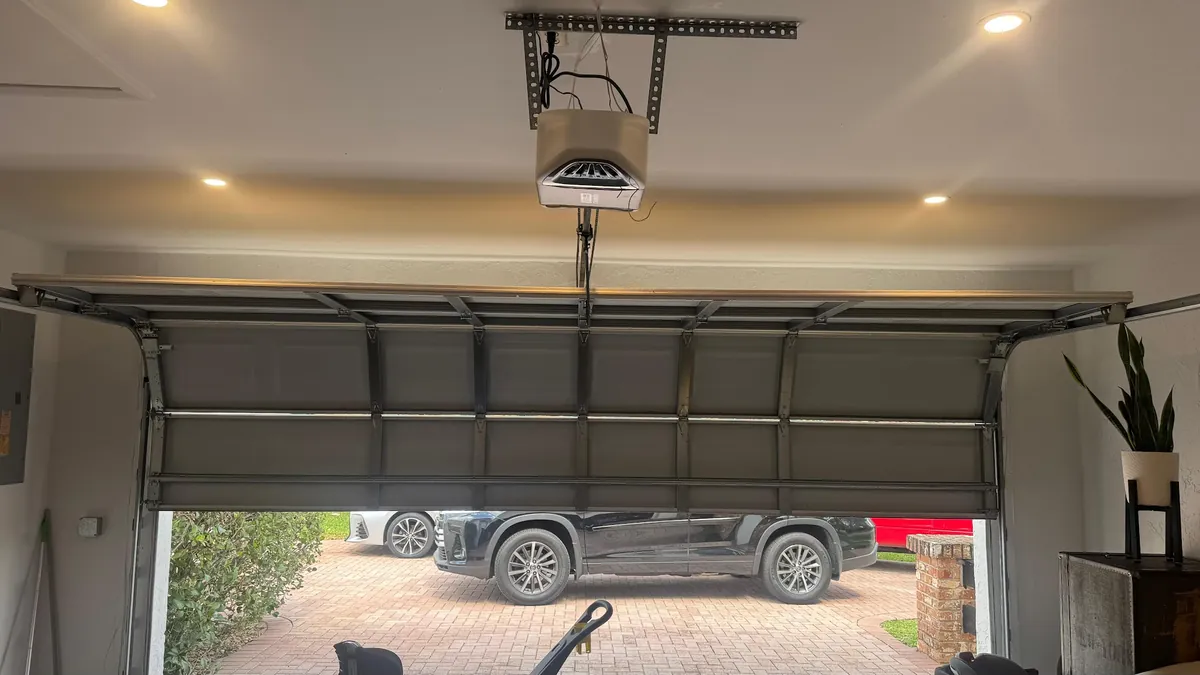
Openers in small coastal garages
Up near the ceiling of most single bays off Broadway, and in the streets behind the beach, hangs a motor that does its job hundreds of times a year without anyone thinking about it, until the day it hums, clicks or sits silent. Garage door opener repair in Revere, MA covers that motor and everything that talks to it: the remotes in the car, the button by the house door, any keypad by the driveway, and the two little safety eyes that watch the threshold. Damp, salty air reaches all of those parts, from the steel rail to the copper contacts.
A few moments of looking narrows things down before you ring:
- Lights on the motor housing: a repeating blink is frequently a diagnostic code the unit is trying to show you.
- The red release handle: if it has been pulled, the carriage is unhooked and the motor runs with nothing to move.
- The little lamps on each photo eye: one off or blinking means the beam is not getting across.
What we look after
The motor unit
Motors that drone and stall, worn-out drive gears, logic boards that stop responding, and units that run but no longer reach the limits they were set to.
Rail, chain and carriage
Chains gone slack or rusty, belts that slip, screw drives that bind, and the carriage that links the drive to the door’s top section.
Remotes and keypads
Dead handsets, keypads that ignore your code, and missing remotes wiped out of the unit’s memory so they no longer work.
Wall buttons and wiring
The button inside the garage and the thin low-voltage wire that carries its signal, often chafed, stapled through or corroded at a terminal.
Safety eyes
Sensor units knocked out of line by a bike or a bin, lenses clouded with salt film, and brackets rusted loose from the track.
Inside the motor housing
Picture the opener as a guiding hand on a balanced load, never as a winch. The springs carry almost all of the door’s weight, and the opener steers a door that is already balanced. Knowing that changes how you read a problem.
The motor sits in the housing on the ceiling. Its output turns whichever drive the unit uses, whether chain, belt or long threaded rod, laid along a rail that reaches out over the door. Sliding on that rail is the carriage, which some people call the trolley, and a bent arm links it to a plate fixed near the top edge of the door. Motor on, carriage moves, and the arm shoves or tugs the door through its tracks.
Inside the housing, a small circuit board keeps track of where the door is, using limit settings for fully open and fully closed, and a force setting that tells the motor how hard it may push before it decides something is wrong. Wired into that board are the wall button and the two photo eyes. The board also holds the codes for every remote and keypad that has been paired with it.
When the force needed rises above what the board expects, perhaps because a spring has weakened or a roller has seized, the opener stops or reverses. That is a safety feature, but it often looks like an opener fault when the real problem is the door. A large part of good garage door opener repair in Revere is working out which one it is.
Chain, belt, screw and wall-mounted drives
There are a handful of designs, and each one ages differently in a damp garage.
Chain drive. A steel chain runs around a sprocket on the motor and a pulley at the far end of the rail. It is strong and simple, but noisy, and in salty air the chain rusts, stiffens and stretches, so it slaps against the rail and the carriage jerks.
Belt drive. A reinforced rubber belt replaces the chain. It runs much more quietly, which matters if the garage sits under a bedroom on a two-family, and it does not rust, though the steel parts around it still can.
Screw drive. A long threaded rod turns, and the carriage rides along its thread. Fewer moving parts, but the thread needs lubrication, and grit or corrosion on it makes the motor labour.
Wall-mounted jackshaft. Instead of hanging from the ceiling, the motor mounts on the wall beside the door and turns the torsion bar directly. Because nothing runs across the ceiling, it suits garages with little headroom or a low ceiling, which are common in compact bays like the ones here.
We repair and replace LiftMaster units here, and openers from other makers too. Whatever is fitted, the same principles apply: a balanced door, a well-adjusted drive and sensors that can see each other.
Salt air and the electronics
The sea air does more than rust springs. On an opener, it works on several fronts at once.
The chain and rail corrode first, especially on a chain drive. Rust on the chain adds friction and noise, and rust at the point where the rail bolts to the wall above the door can loosen the mounting so the whole rail flexes as the door moves.
The terminals on the back of the motor, where the wall button and photo-eye wires connect, are bare metal screws. Salt and moisture leave a green or white crust on them, and a crusted contact produces the kind of on-again, off-again fault that seems worse on muggy days.
The photo-eye brackets are bolted to the bottom of the tracks, the wettest and saltiest part of the garage. As they rust, they loosen and sag, and the two eyes drift out of line.
The remote and keypad contacts corrode too. A keypad mounted outside by a short driveway is fully exposed to wind and salt, and its buttons can stop registering long before the unit itself fails.
Even the circuit board can suffer. A garage that stays damp for long stretches lets condensation form inside the housing, and over time that can affect the board.
None of this is unusual near the water. It just means an opener in a coastal garage benefits from a periodic check of its terminals, sensors and drive.
Two remotes, two households
Garages beside two-family houses are often shared, or used by more than one person every day. That brings particular opener issues. A remote lost or handed on still opens the door until its code is cleared from the opener’s memory. Several remotes working one opener means more chances for one of them to be stuck in a pocket or a bag, pressing the button by accident. And a door in near-constant use puts more wear on the drive gear and the carriage than one that runs twice.
If you would like every old handset wiped and new ones programmed, a keypad reset, or a second wall button checked, mention it when you book. It is a simple part of the visit, and it is worth doing whenever a remote has gone missing.
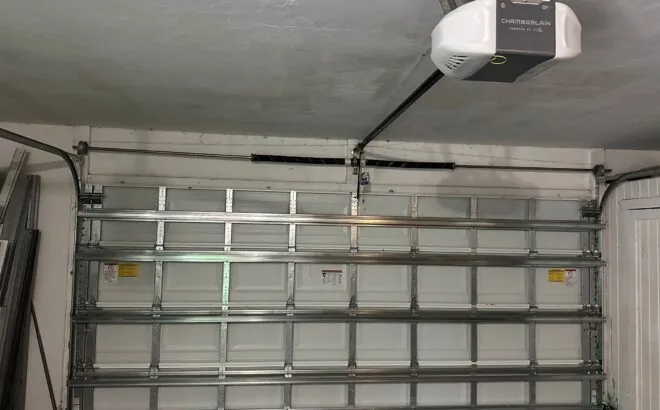
Short driveways and the safety eyes
With a short driveway, the door is close to the sidewalk, and the area around it gets busy: bins put out on collection day, bicycles parked against the wall, a car pulled in tight. Every one of those can sit in the photo-eye beam or nudge a sensor out of line. When the door only goes down while someone keeps a finger pressed on the wall button, the opener has stopped trusting its eyes.
The fix is often simple. The lenses are cleaned, the brackets are tightened or replaced, and the two eyes are realigned until their lights glow steadily. Where wires have been chewed, pinched under the door or corroded at the terminal, they are replaced. Last comes a test with a solid object on the threshold, to be sure the door bounces back up on contact.
What happens on an opener visit
Every garage door opener repair in Revere begins by separating the door from the motor. The release gets pulled and the door is worked by hand, since a motor fix will not last on a door that is heavy, sticky or lopsided.
- Door before motor. Its balance is felt by hand and its springs, cables, rollers and rails inspected. If it drifts when released at mid-height, the springs are the first fix.
- The motor is run on its own. With the door still disconnected, the motor is run so its sound, the movement of the carriage and the drive are clear.
- The drive is inspected. The chain, belt or screw is checked for tension, wear and rust, and the rail and its brackets for movement.
- Controls are tested. The wall button, every remote and the keypad are tried one by one, and the terminals are checked for corrosion.
- The sensors are checked. Lenses, brackets, wiring and alignment are tested until both eyes show a steady light.
- Settings are dialled in. Reconnected, the unit gets its up and down stopping points and its push limit set to suit this particular door, and auto-reverse is proven.
Diagnosis comes first; you hear the fault and your choices before a single part goes on.
Repair the opener or replace it
Most faults are fixed in place: a fresh drive gear, a chain tensioned or renewed, a new carriage, eyes lined up again, the wall control rewired, a handset or keypad swapped, or a new circuit board. Swapping the whole unit starts to win out when its motor has burnt out, once an ageing opener has several things wrong at once, when the board cannot be sourced, or when the opener is simply too weak or too loud for the door it is driving.
A replacement is also worth considering when the garage itself has changed. A heavier new door, a bedroom built over the garage, or a low ceiling that a ceiling-mounted rail barely fits under can all point to a different kind of opener. We install new openers as well as fixing old ones, and when the opener is replaced, the new one is fitted to the door’s actual weight and the garage’s actual headroom, then programmed with your remotes and keypad.
Keypads by a short driveway
An outside keypad lets anyone with the code open the door without a remote, which is handy when a garage serves more than one household. On a short driveway, though, the keypad usually ends up on the door frame within a step of the sidewalk, catching rain, spray and salty wind head-on. Its rubber buttons harden and crack, water gets behind the cover, and the battery contacts corrode. Typical symptoms are a code that works only on the third try, buttons that need a hard press, or a keypad that does nothing at all.
A failing keypad can usually be replaced and paired with the existing opener during the visit, and the code changed at the same time. When garage door opener repair in Revere includes a new keypad, it is worth choosing a spot on the frame that is a little more sheltered from the weather, so the new one lasts longer.
Before you call
Some checks are harmless and often solve the problem:
- Make sure the opener has power. Check the outlet on the ceiling and the breaker.
- Put a new battery in the handset. Then press the wall control: a door that answers the wall but not the handset points to the handset or its programming.
- Give both photo eyes a gentle clean and clear whatever sits between them.
- Check whether the red release has been pulled. If so, the carriage needs reconnecting, which is usually done by running the opener until the carriage clicks back into place.
- Check whether a lock bar on the door has been slid across. Openers will strain against a locked door.
What not to do: do not adjust the force setting upward to make a struggling door close. That defeats the safety reverse. And if the door feels heavy, shows a split coil overhead or sits crooked, the motor is not your problem at all. Bear in mind that a torsion spring holds dangerous tension; touching it is never a DIY repair, however simple it looks. Keep the opener unplugged and ring us.
When the power goes out
During a storm or a power cut, an electric opener cannot move the door. Pulling the red handle frees the door for lifting by hand, provided its springs are whole and it is properly balanced. Pull the handle straight down, then lift the door from its middle. When power returns, run the opener; on most models the carriage reconnects itself on the next cycle.
If the door is very heavy when released, do not keep lifting it. A stubborn, heavy door means its spring is tired or snapped, and anything that heavy is just as hard to hold up as to raise. Leave it closed and call.
Other Revere pages
Opener work for the whole of Greater Boston is laid out in our main garage door opener repair and replacement service. Springs, cables, panels and tracks are handled on the garage door repair page for Revere, with broken torsion and extension springs given their own Revere spring repair page. Breakdowns after dark are the subject of the emergency page for Revere, and every service we offer in this city is listed on the Revere town page.
Booking an opener repair
Openers like to give up just as you are leaving or arriving, with the car shut in or left out on the apron. You can reach us by phone at any hour of any day, so report the fault right away. Describe what the motor does when you press the button, any blinking lights on its housing, whether the door can be raised by hand, and whether a vehicle is inside. When you need garage door opener repair in Revere, there are two easy routes: call us or book online.
Questions from Revere
A humming motor, a door that will not budge: what is going on?
There are two usual suspects. Either the red release has been pulled and the carriage is disconnected, or a drive gear inside the motor has stripped. If the door is very heavy when lifted by hand, a broken spring is the real problem and the opener is reacting to it.
Our door only closes if I hold the wall button down. Why?
That is the opener telling you the safety eyes cannot see each other. Clean each lens, clear the space between them, and turn both units so they face each other squarely. If the lights still do not glow steadily, the bracket or wiring needs attention.
We lost a remote. Can it be stopped from opening our door?
Yes. The opener’s memory can be cleared, which removes every remote and keypad paired with it, and then the remotes you still have are paired again. It is worth doing whenever a remote goes missing.
Is there an opener that suits a garage with very little headroom?
Yes. A wall-mounted jackshaft opener mounts beside the door and drives the torsion bar directly, leaving the ceiling clear. That makes it a good match for compact garages with low ceilings, provided the door has a torsion spring setup it can attach to.
Will you fix a LiftMaster?
Yes. LiftMaster units come through our hands for repair and for replacement, as do plenty of other brands’ openers. The checks are the same: a balanced door, a sound drive, working controls and sensors that line up.