
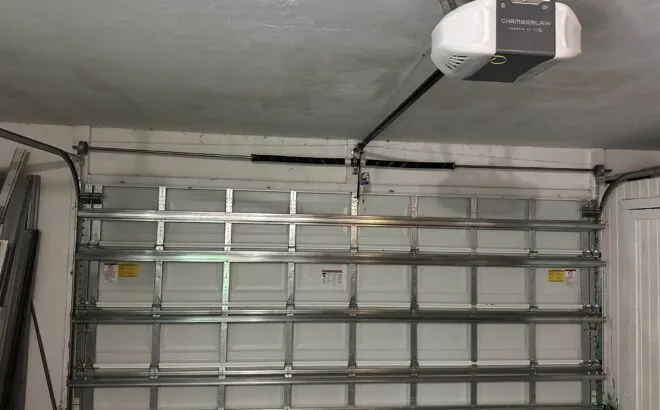
Why hillside garages in Belmont go through springs
A spring is the hardest-working part of any overhead door, and in Belmont it is the part most likely to fail without warning. Our garage door spring repair Belmont MA work centres on the single-family homes of Belmont Hill and Waverley, nearly all with garages attached to the house and wide driveways leading up to them. Those wide openings mean broad, heavy doors, and the coil above each one has to counterweigh every pound of it, every time the door moves.
One point is worth repeating: on the steeper hill lots, springs carry a heavier working load than on the level streets lower down. A door that closes against a pitched slab, that gets driven down past its natural stopping point to seal a sloping threshold, or that takes gusts head-on from the open side of a hill, puts extra strain on its counterbalance. Over the years that strain shows up as coils that tire early or snap on a cold morning.
If you suspect the spring, these three signs settle it from a safe spot by the house door:
- A split somewhere along the torsion coil, so it looks like two springs with a gap between them.
- A curtain that the opener budges by a few inches and then abandons.
- On extension spring doors, one long coil hanging loose or stretched out of shape beside the ceiling rail.
Spring problems covered on a Belmont visit
Snapped torsion springs
The most common call of all. The coil on the shaft above the door fractures, usually with a crack like a gunshot, and the door will no longer lift.
Worn or stretched extension springs
Side-mounted coils lose their pull over time, and the door starts to feel heavy, rise unevenly, or creep back down when it is let go partway.
Spring replacement in pairs
On doors that hang from two coils, both are changed together, so the new one is not fighting an old partner that is already halfway through its life.
Rebalancing after a break
Once the right spring is fitted, its tension is set so the door floats at waist height. That is what spares the opener and the cables.
Torsion and extension: the two kinds of spring
Most attached garages in town use torsion springs. One or two heavy coils slide over a steel shaft mounted just above the header, fixed at their inner ends to a plate bolted over the middle of the opening, with a slotted cone at the outer end that takes the winding bars. As the curtain comes down, the cables pull on the drums, the shaft rotates, and the coil twists tighter, storing up the force that will raise the door next time. Going up, the coil gives back its twist, spinning the shaft the other way so the drums take the cable in. The whole door is counterweighted by a few feet of tempered steel wire.
Extension coils store their energy as stretch, not twist. They run along the horizontal tracks, one each side, and lengthen as the door comes down. A cable threaded through a pulley links each spring to a bottom corner of the door. You mostly find them on lighter doors and on garages that have kept their original hardware. Each one should have a safety cable running through its centre, a thin steel line that keeps the coil captive if it breaks, so a snapped extension spring does not fly across the garage. When that containment cable is missing, adding one is part of the job.
Neither kind is interchangeable at random. A spring is chosen to match one particular door’s weight and height: gauge of the wire, the bore of the coil, how long it is, and on torsion springs the direction of wind all have to be right. A coil that is slightly too strong makes the door spring upward and float off the floor; one a touch under strength leaves the curtain sagging and the motor straining. Matching the spring is half the work of garage door spring repair in Belmont, MA, and it is why a hardware-store coil seldom fits.
Hill lots, wide doors and spring wear
The hill is where this shows most. On Belmont Hill a garage slab often follows the lot’s grade, so the door does not close onto a level line. To shut out the draught at the high side, the down limit gets set long, and the opener presses the bottom panel into the concrete every time it closes. That last push loads the spring and the cables beyond what the door needs. Where a driveway pitches sharply away, water and slush drain toward the threshold, and the bottom fixtures that anchor the cables rust; a corroded fixture adds drag that the spring has to overcome.
Width matters as much as slope. The wide driveways described for this town lead to broad doors, and a broad door has more panels, more hardware and more weight. A heavier curtain needs a heavier coil, and a heavier coil stores more force, which is one reason a broken spring on a wide door is far from a minor thing.
Down in Waverley, where the streets are flatter, doors close onto level slabs and the spring’s load stays steadier. The springs there still wear out, because every coil has a limited number of open-and-close cycles in it, but they tend to wear more evenly and with fewer surprises.
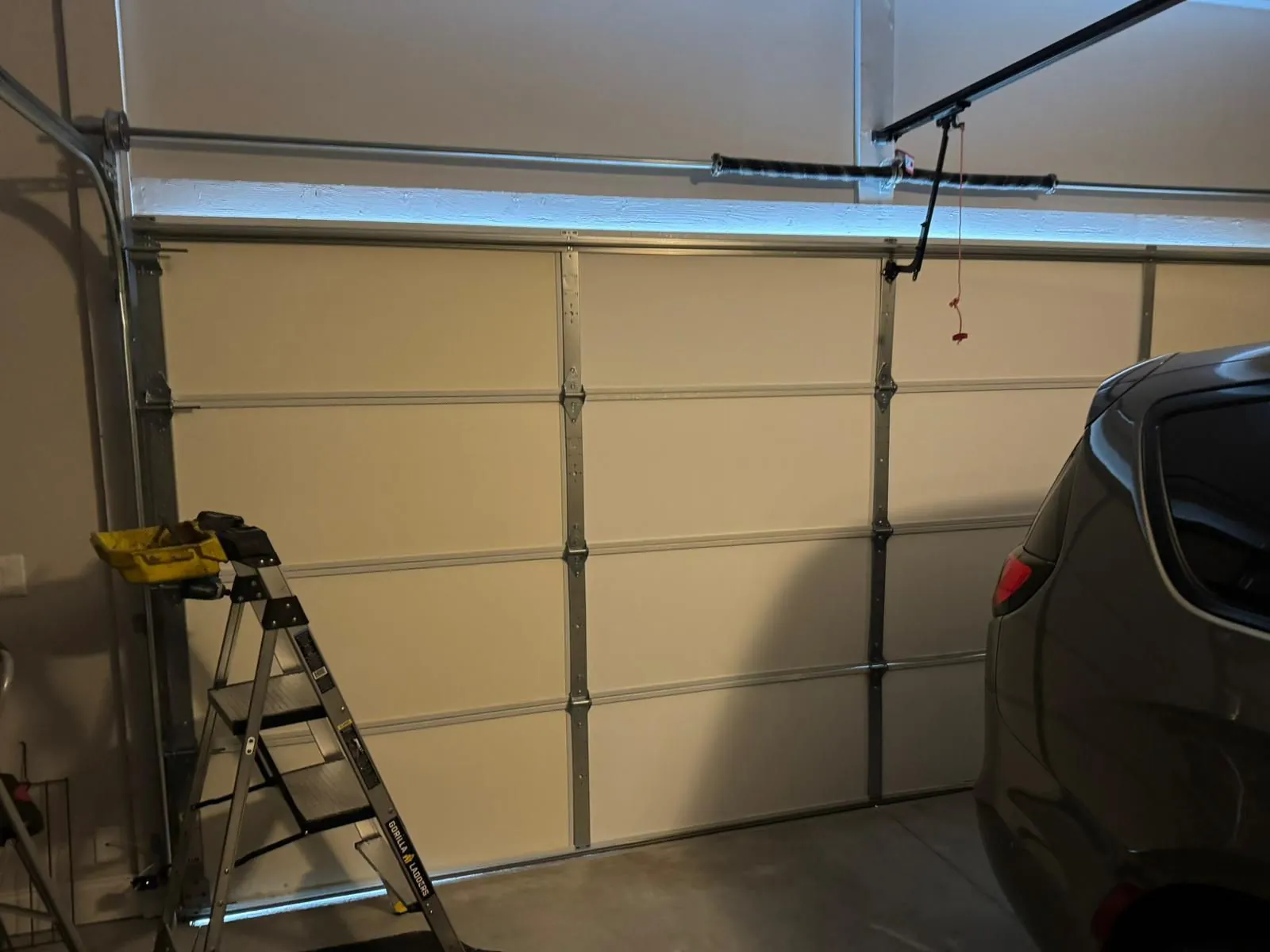
What to do the moment a spring breaks
Most owners learn of a break from one sharp crack in the garage, often when nobody is in there. What you do next matters more than how quickly anyone arrives.
- Leave the curtain in whatever position it stopped. Closed stays closed. If it is open, keep everyone, including the car, out from beneath it.
- Pull the motor’s plug, so the wall control cannot be pressed out of habit.
- Do not pull the red emergency release while the door is up. With the spring broken, that cord is the only thing letting the opener hold the door, and releasing it can let the door fall.
- Keep your hands off the bottom rail. With its counterbalance gone, a broad steel door weighs far more than anyone should raise.
Then call. Describing the bang, the gap in the coil, and whether the car is inside makes it easier to bring the right spring on the first visit. The emergency repair in Belmont page covers what to do when this happens in the middle of the night.
Leave the winding to a technician
The torsion coil holds dangerous tension, enough to cause serious injury, and that tension is present even when the door is down and nothing appears to be happening. Winding or unwinding one means fitting steel bars into the winding cone and turning it by quarter-turns against that force; a slipped bar or the wrong tool can spin out of a hand with enormous force. Loosening the set screws on a wound spring, or unbolting the centre bracket, releases the lot at once. Extension springs carry similar danger when they are under stretch.
Treat it as off limits: this is not a DIY repair, video tutorial or not. The same caution applies to the bottom brackets and cables, which carry the spring’s force down to the floor.
What a spring visit involves
The first job is to make the door safe. The opener is disconnected and, if the door is up, locking pliers or clamps grip the vertical rail under a roller, holding the curtain still during the work overhead. The broken coil is measured and identified, and the door’s weight and height are taken into account so the replacement matches.
On a torsion system, the old spring’s remaining tension is let off under control, the shaft is supported, and the new coil goes on. The technician winds it the number of turns that door calls for, locks it, and the drums and cables are checked so both sides pull evenly. On extension systems, the new coils go in with their containment cables, and the pulleys and cable ends are inspected while everything is apart.
Then comes the balance test, which is the real measure of the job. With the opener still disconnected, the curtain is lifted by hand to around chest height and let go; a correctly sprung door hovers there. Only then does the motor go back on its trolley, with its limits and force readjusted to the lighter feel of the balanced curtain and its reversing function proven. You are told what was found and what was replaced before anything is finished.
Garages with extension springs
Some attached garages still run on the extension springs they were built with, one long coil on each side above the horizontal track. These systems have more exposed parts: pulleys, cable ends, and the S-hooks and eye bolts that hold the springs to the track hangers. If one pulley wears or one cable frays, that side lags and the door climbs crooked, and the spring on that side works harder to compensate. When extension springs are replaced, they go in as a pair, matched to the door’s weight, with containment cables threaded through each coil. The pulleys and cables are looked at at the same time, because they share the same wear.
On a hill lot an extension spring door can be fighting a sloping slab as well as its own worn pulleys. When that is the case, garage door spring repair in Belmont is only part of the answer: the bottom seal, the down limit and the cable lengths are set to suit the floor, so the new coils are not overloaded from the first day.
Other parts a broken spring can take with it
A spring rarely fails in isolation. The moment it breaks, the cables can go slack and jump off their drums. If the opener was running at the time, it may have strained its gears or bent the top section of the door at the opener arm. Rollers that were already worn take a jolt. During a spring visit, these knock-on effects are checked, and anything damaged is named. Cable replacement is explained on the cable repair page, and wider problems with the door fall under garage door repair in Belmont.
Early warnings from a tiring coil
A coil seldom goes from sound to snapped without some hint. A coil loses a little strength with every cycle, and the door gives hints. The opener begins to sound laboured on the way up. There may be a pause just as the curtain leaves the slab, or a slowing as it nears the top. With the opener released, the curtain no longer stays put at mid height but drifts down toward the slab. On extension spring doors, one side may rise ahead of the other, which tells you one coil has lost more pull than its partner.
Look at the coil itself from the floor. Rust along a torsion spring adds friction between the coils and shortens its life; a spring that has stretched so its coils no longer sit tight together is tired. Gaps, rust and a door that feels heavier than it used to are all reasons to have the spring looked at before it fails at a bad moment. On the hill lots, where springs carry more load, those signs are worth watching for sooner.
The opener and the spring
A failing spring often gets blamed on the opener, and the opener often gets blamed on the spring. They are linked. An opener is built to steer a balanced curtain, not to lift the full mass of a wide door. When a coil weakens, the motor takes up the slack until its gears wear, its force limit trips, or the rail mount at the ceiling starts to flex. That is why a door with a weak spring may reverse for no obvious reason, or stop a foot off the floor.
The reverse is also true. An opener with its force turned right up can hide a broken or weak spring for a while by brute strength, until something else gives. After any spring work the opener’s force is set back to a sensible level for the newly balanced door, so it can do its real job, which is stopping and reversing when it meets resistance.
Spring breaks and the Belmont winter
Hard frost makes spring steel less forgiving, and a coil that has been fatiguing for years often picks the first frosty morning to fracture. On an attached garage, the discovery tends to come with the car already started for the commute. The wise move in winter is to check the door’s balance occasionally: with the opener released and the door closed, lift it partway. A door that feels much heavier than it used to, or slides down quickly when let go, has a spring that is weakening. Calling about it then is calmer than calling after the bang.
Spring replacement or a new door?
In most cases a broken spring means a new spring, not a new door. The door’s panels and tracks are unaffected by the break itself. Replacing the door is only worth discussing if other parts are also near the end: panels rusted through at the bottom, several sections damaged, or an ageing timber curtain that has grown too heavy for any sensible coil. You will be told honestly whether that applies. Our wider spring repair service page explains the work across Greater Boston, and all of this town’s services are gathered on the Belmont page.
Getting a broken spring sorted
Calls are taken at any hour, Saturday and Sunday as much as midweek, so a coil that lets go after dark or before sunrise does not have to wait for morning to be reported. If the opener has also been straining, the opener repair in Belmont page describes what can be checked on the same visit. To arrange garage door spring repair in Belmont, MA, or to ask whether a tired coil should be changed before it breaks, call us or book online.
Questions from Belmont
There was a bang overhead in our attached garage, and the door is stuck down. Spring?
That pairing points straight at it. From well back, check the shaft over the header; a fractured torsion coil shows an obvious split somewhere along its length. Leave the door closed and unplugged until the spring is replaced.
With the spring gone, is there any way to drive out?
It is safer not to try. Without the spring, the door has to be lifted entirely by hand or by the opener, and neither is designed to carry that weight. Forcing it risks the door falling or the opener failing. If the car is needed urgently, say so when you call.
Only one of our two springs snapped. Do both need changing?
Generally, yes. Both coils went up on the same day and have shared every lift since, so the survivor is usually close to breaking too. Replacing both keeps the door balanced evenly.
Why do springs seem to break more on hillside garages?
On the steeper hill lots, springs carry a harder load than on level ground. A sloping slab, a door pressed hard into the floor to seal, and more exposure to wind all add strain, so coils on those doors tend to tire sooner than on a level street.
Does a garage door spring repair in Belmont, MA include checking the rest of the door?
Yes. Once the new spring is on, the cables, drums, rollers and opener settings are checked, and the door’s balance is tested by hand before the visit is finished.