
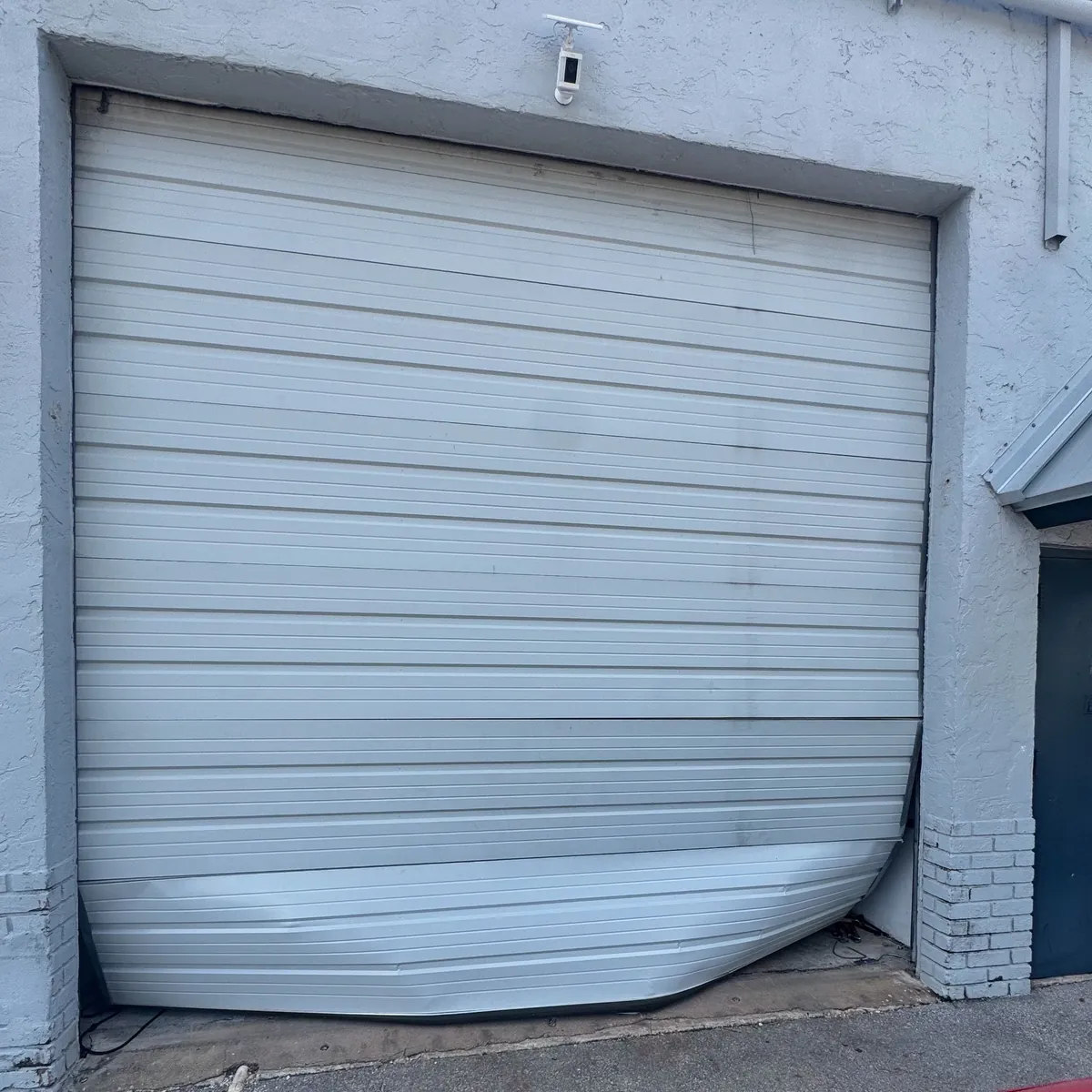
Steep driveways and mixed garages between the Avenue and the Heights
Head off Massachusetts Avenue and start climbing toward the Heights, and the ground rises under every house. The single- and two-families on those streets sit on slopes, and their garages follow the land: some are separate buildings at the end of the lot, others are built into or onto the house itself, and plenty of driveways tilt hard toward the opening or away from it. For garage doors Arlington MA owners rely on, that gradient is the biggest single factor in what goes wrong.
A door is designed to close onto a flat, level floor. On a hillside lot the slab inside the garage, the apron outside it and the driveway beyond all pitch at different angles, and the bottom edge of the door rarely meets the ground evenly. Water and grit run downhill toward the threshold. Ice forms where the slope flattens out at the door. Cars come up the grade with the engine working and stop closer to the panels than they would on flat ground.
On a sloped Arlington lot, these are the signs worth noting before you call:
- One bottom corner of the door touches down well before the other, or the seal gaps at one end.
- A cable at a lower corner hangs loose after the door has closed.
- The door stops or reverses as it reaches the floor, especially in cold weather.
Garage doors Arlington MA households call us about, service by service
All of our work is available in town, and four services have their own Arlington pages. Sagging sections, grinding rollers, a door that drifts crooked or a panel dented by a car rolling back on the grade are covered under Arlington garage door repair. A snapped coil, which turns the door into dead weight, sits under spring repair for Arlington homes. Motors, handsets, keypads and photo eyes are dealt with on the page for Arlington opener repair and replacement. And for a door that packs up after dark, wedged open or penning a car in, see urgent garage door repair in Arlington.
Which of those you need depends partly on the garage you have. A detached building down at the low end of a lot behaves differently from a garage tucked against the side of a two-family, and both behave differently from a door facing straight down a steep drive. The sections that follow go through each service as it plays out on these streets.
What a slope does to a door
Every overhead door depends on balance. The springs are tuned so that, released from the opener, the door hovers more or less wherever a hand lets go of it. That balance assumes the bottom of the door lands squarely on the floor and both cables go slack at the same moment. On a pitched slab, one end of the door lands first. The cable on that side unloads early while the other is still carrying weight, and cycle after cycle that uneven unloading lets a cable slip on its drum or ride off it altogether.
The bottom section suffers too. A door that lands on one corner twists slightly every time it closes. Hinges near the bottom work loose, the bottom seal wears through at the high point and gaps at the low point, and the opener’s down-force has to be set higher to get a tight close, which makes the safety reverse less sensitive than it should be.
There are fixes for all of this. A bottom seal can be shaped or chosen to follow the slab rather than fight it. Cables can be re-tensioned until both corners settle together. The opener’s limits can be set to stop the door where it meets the high side without crushing the seal. None of it is complicated once the slope is recognised as the cause rather than treated as a door fault, and it is the most common thread running through repairs to garage doors in Arlington MA.
Springs on hillside garages
When a spring breaks, it usually goes on a cold morning with the door shut, and the first clue is a door that creeps up a hand’s width under power and quits. On a steep driveway, that can strand a car in the garage just when it is needed most.
Detached garages on older Arlington lots often still run on extension springs, stretched along the overhead tracks on each side. Attached garages and newer doors more often carry a torsion coil on a bar across the header. Each kind has its own hazard. A stretched spring lacking a containment line down its centre can lash sideways when it parts. The torsion kind stores enough twisting force to injure badly if its cones are loosened with the wrong tools, so be clear about it: a torsion spring holds dangerous tension, and Arlington homeowners should treat it as no DIY repair; the same caution covers the cables and corner brackets it loads.
Replacement springs are sized to the actual door, weighed by hand on site, not to a figure on a label. A door that has gained a strut, a new bottom section or a thicker seal over the years can need heavier coils than the pair taken down. Coil types and how they are replaced are explained in more depth under garage door springs.
Openers and the climb up the driveway
On a steep lot, the opener is often used from a car that is stopped on a slope, sometimes with someone waiting for the door to clear before inching forward. A door that hesitates, reverses or stops halfway is more than an annoyance there. That is why opener calls in Arlington tend to focus on reliability: a handset that works every time from the bottom of the drive, a keypad that has not been weathered into silence, and photo eyes that are not tripped by water running across the threshold.
Photo eyes are a particular issue where the ground falls toward the garage. Melted snow and rain run down the driveway and across the opening, splashing the lenses with grit. A beam knocked a fraction out of line by a shovel or a bin will stop the door closing. Cleaning and realigning the eyes is often all an opener call needs.
When the motor itself is worn, it shows as grinding, a door that slows near the top, or a unit that clicks without moving. An unbalanced door speeds all of that up, which is why the sections get a hand-lift test before any motor is written off. We repair and replace LiftMaster openers on Arlington garages as well as other makes of unit. Read more on the garage door opener services page.
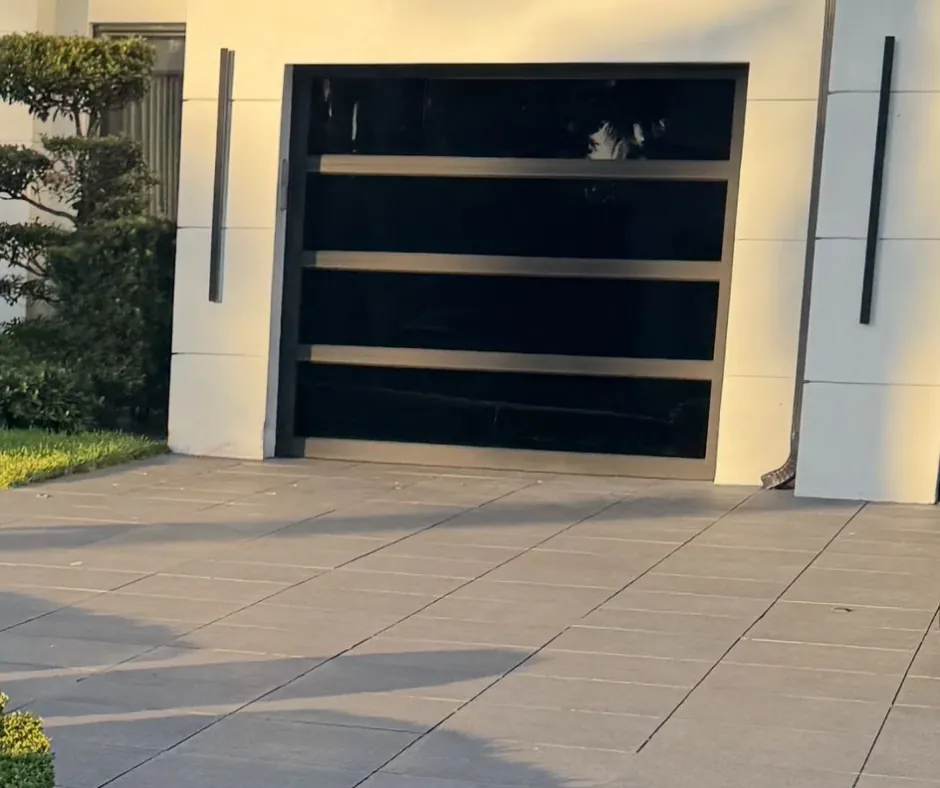
How a visit runs
Arriving at a steep driveway, the first thing is somewhere safe to park and a look at the door from outside: how the bottom edge meets the slab, whether the seal is torn at one end, whether the sections sit straight in the opening. Inside, the trolley is released and the technician lifts the sections by hand to feel how well they are balanced.
Next comes the hardware, from the spring or springs overhead down to each bottom bracket. Cables are checked for fraying where they leave the drums and where they hook to the brackets, and both are measured against each other. Rollers, hinges and tracks are checked along the full travel. On a detached garage the track brackets get extra attention, because a building on a slope may have moved slightly on its footings over the years.
Then motor, handsets, keypad and eyes are tried in turn. You hear in plain words which part let go, what made it go and which neighbours of it are nearly spent, and the work starts once you give the nod. Once the parts are in, the springs get trimmed for balance, the opener’s limits are set to the actual floor rather than an ideal one, and the auto-reverse is checked by letting the closing door meet an obstruction on the slab.
Winter on a steep drive
Arlington’s slopes add their own winter problems. Meltwater trickles down the drive, sets hard at the threshold once the sun goes, and bonds the rubber to the concrete. Ask the opener to raise a door welded down like that and the rubber rips or the motor labours, backs off and quits. In the worst cases a section bends or a cable comes off its drum.
A few habits help. Clearing snow and ice from the strip along the threshold before the evening freeze stops the seal bonding to the concrete. On a frosty morning when the sections refuse to rise, inspect the bottom edge instead of jabbing the button again. A heavier bottom seal, or a threshold detail that sheds water away from the door, can be fitted where a garage at the foot of a drive collects water every winter.
Snow pushed up against the door by a plough or a shovel can also bow the bottom section inward. If the door has started to scrape at the bottom or catch on the way up after a heavy storm, the bottom section and its hinges are the first things to check.
When it fails at night
A door stuck open at the top of a slope, or one that will not lift with the only car inside, is the kind of problem that turns up after dark. Our line is staffed whatever the hour, including Sundays, so the problem can be logged as soon as it shows itself.
In the meantime: switch the opener off at its plug so nobody keeps trying the button. Stay well clear of a door that is leaning or hanging from one side. Where an attached garage stands open, secure the inner door to the living space. Never drag a spring-broken door upward, and keep hands off the spring, cables and brackets. Further pointers for the waiting period are on the emergency garage door repair page.
Detached at the back, attached at the side
The local mix of detached and attached garages means two quite different kinds of building. Out-buildings standing behind the house are usually unheated, often older than the door it carries, and sometimes wired from the house by a long run of cable. That last point matters for an opener: a weak or intermittent supply shows up as a motor that stalls, a light that flickers, or a handset that is reliable on Monday and useless by Wednesday. Before a unit is replaced in a detached building, the supply to it is checked.
Unheated garages also mean cold hardware. Lubricant thickens, rollers stiffen and a door that runs easily in summer can labour through January. A door that slows and groans only in the cold months is usually asking for new rollers or attention to its hinges, not a new opener.
An attached garage is a different matter. It shares a wall with the living space, so the door is part of how warm and dry the house stays. Gaps at the jambs, a perished bottom seal or a cracked panel let cold and damp straight in. Its opener is often mounted under a room, so noise carries. On an attached garage set into a slope, the door may face down the drive with the whole weight of winter runoff heading toward it, which makes the threshold and seal the first things to look at.
Some properties have both: an attached bay beside the house and an older detached garage behind it. Looking at both doors on one visit is often sensible.
Two-families and shared garages
A two-family house often has one garage for two households, or two garages side by side. Either way, the doors see more use than a single family’s would, and more people are using handsets. Every extra trip loads the springs and rollers again, and more chance that a fault is noticed by one person but not reported. A door that has started to jolt or squeal on the way up is worth reporting straight away; on a steep lot a worn roller or a frayed cable can lead to a door that drops or derails.
For owners of a two-family, it helps to know where each opener’s plug is, how many handsets are in use, and whether anyone has fitted their own keypad. When a tenancy changes, wiping the opener’s stored codes and pairing just the handsets still around takes little time.
Fix or replace
The question comes up on garage doors in Arlington MA more often after a hard winter than at any other time.
Most Arlington doors that we see are worth fixing. Springs, cables, rollers, hinges and seals are wear parts; swap them and a sound set of sections carries on. Replacement starts to win out once the bottom section has been bent or rusted by years of water running down the slope, when panels are cracked in more than one place, or when a timber door has absorbed so much water that it can no longer be balanced.
If you do replace, the slope matters again. A new door is fitted to the real opening, with a bottom seal suited to the slab, cables set for an even close, and springs matched to its weight. We supply the new door and hang it, and the retired one leaves with us. See the new garage door installation page for how that works.
Neighbouring towns
Arlington borders several towns we serve, including Belmont and Lexington. Beyond those two, the service areas page lists every place on our map.
Before you ring
Planning a visit around the hill starts with a few details about the garage doors Arlington MA homes like yours depend on: detached or attached, whether the drive climbs to the door or drops to it, what the sections do once the button is pressed, and whether a car is trapped inside. A photo of the bottom edge where it meets the slab is especially useful. A real person takes calls whatever the time. Once you have that list, call us or book online.
Questions from Arlington
Why does the seal gap at one end on our sloping slab, and can that be fixed?
Usually, yes. A seal suited to an uneven slab, an adjustment to the cables so the door lands evenly, and new opener limits often close the gap. If the slab itself has moved, that is noted on the visit and the options are explained.
The door froze to the ground this morning. Is it damaged?
Possibly not, but stop pressing the button. Chip or melt the ice off the threshold first, and only then try once more. If the seal has torn, a cable has slackened or the door now runs crooked, leave the door parked until it has been looked over.
The garage is detached at the bottom of the lot. Does that make a repair harder?
Not harder, just different to plan. Parts and ladders are carried down the drive, and the building itself is checked, because a garage on a slope can shift slightly over the years and pull the tracks out of line.
We share the garage with the other unit. Who should report a problem?
Whoever notices it first. A new noise or a jolt in the travel is easier and less disruptive to deal with early, before a roller chews into the track or a cable frays through.
Can I put a cable back on its drum myself?
No. Spring tension holds that cable and can let go without warning. Let the door stay as it sits, pull the opener’s plug, keep the driveway clear of people, and ring us.