
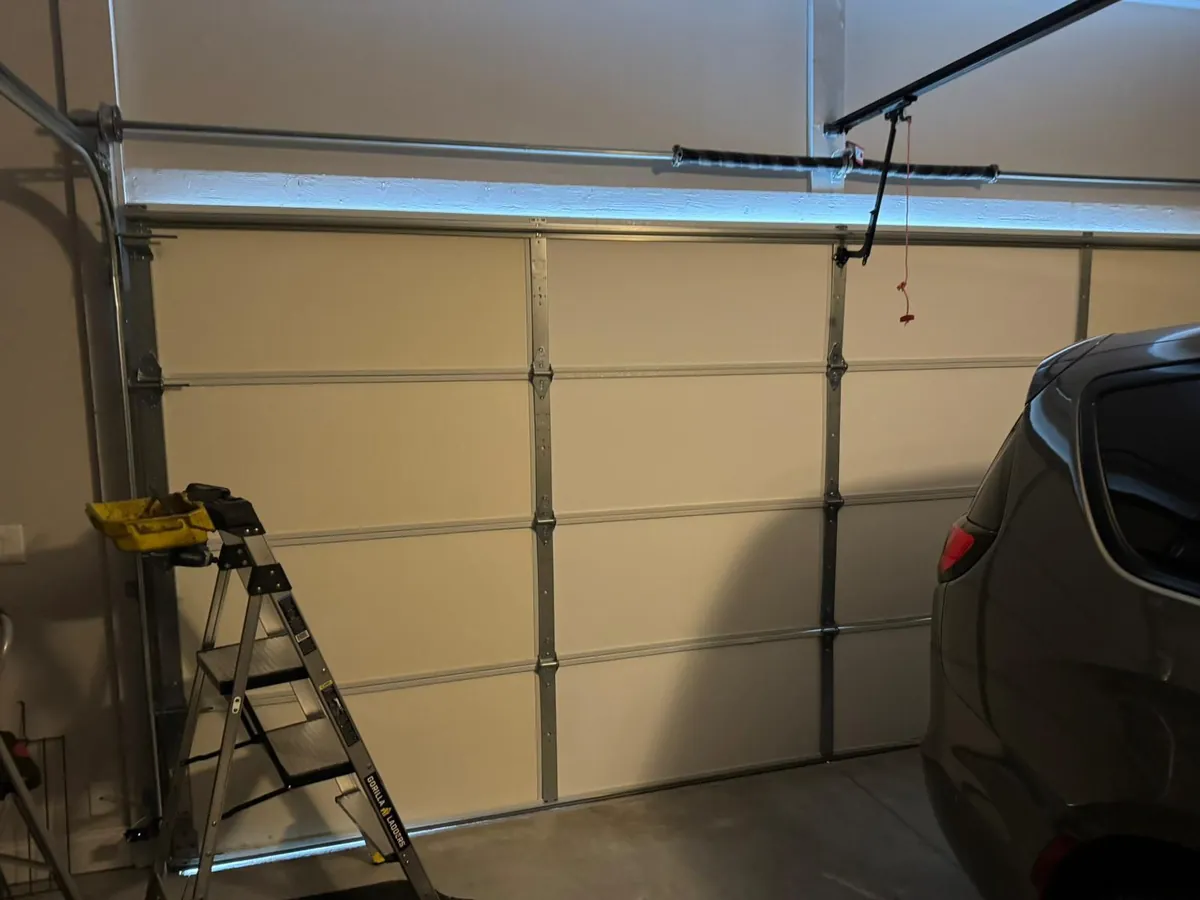
Salt, wind and rain on a narrow peninsula
Hull is a narrow strip of land with water on both sides, and its garages take a beating that inland towns never see. Cottages and year-round conversions sit close to the shore, most with short driveways and a small garage either attached to the house or standing just beside it. Salt air settles on every piece of steel, and wind-driven rain is pushed sideways against the door and into the gaps around it. For garage doors Hull MA homes rely on, those are the hardest conditions anywhere in the area we cover.
That shows up in the parts that fail. Springs and lift cables rust where they never would a few miles inland. Roller bearings seize, hinges stiffen, and the fasteners holding tracks to the framing corrode until they snap or pull loose. Weatherstrip dries, cracks and curls in the sun and salt. And the door itself, if it is steel, starts to bubble and rust along the bottom edge where water collects.
When you look at your door, notice three things before you call:
- Orange rust or flaking on the springs, cables or the bottom brackets where the cables attach.
- Rollers that do not turn freely, or a grinding sound as the door moves.
- Water, sand or debris coming in under or around the closed door during a storm.
Garage door services in Hull
Salt-worn repairs
Corroded hinges and brackets, seized rollers, perished seals and dented panels after a storm. Everything a general visit can cover is on the garage door repair page.
Rusted springs
Salt eats into spring steel and shortens its life. A rusted torsion spring holds dangerous tension and can let go without warning, which puts it firmly outside DIY repair. See spring replacement.
Openers near the shore
Damp air works on circuit boards, remotes and the photo-eye sensors. Openers, LiftMaster models included, are repaired or swapped out; details are on the opener page.
Storm-night breakdowns
A door blown in, jammed open or stuck shut in a nor’easter cannot wait for a calm day. Our line is answered at all hours; the emergency repair page explains how it works.
Corroded cables
Lift cables rust from the inside out at the bottom brackets, then snap. Both are replaced together and the drums checked. Read about cable replacement.
Wind-bent tracks
Gusts that flex a closed door can twist sections and spring rollers from their rails. We lower and realign it; see off-track door repair.
Doors built for the conditions
When rust has gone through the panels, a new door is the lasting fix. Measuring, supply and fitting are on the new door installation page.
What salt air does to the moving parts
Every garage door relies on a few pieces of steel under constant load: springs, cables, drums, hinges, rollers and the brackets holding everything together. Inland, those parts wear by use. On the Hull peninsula, they also wear by corrosion, and corrosion is the faster of the two.
Spring steel is the most vulnerable. Torsion coils are wound so close together that salt finds its way between the coils where it cannot be wiped off. Rust pits the surface, the pits become weak points, and one day the spring breaks at a pit long before it has done its full number of cycles. Extension springs on older cottage garages suffer the same way, and their exposed hooks and pulleys rust quickly too.
Cables are the hidden risk. Each lift cable is a bundle of thin wires wound into a rope, and on the peninsula rust can work through the inner strands while the outside still looks grey. The weakest point is usually at the bottom bracket, where the cable meets the lowest section close to the wet slab. When we visit a door here, we look at that spot on both sides, because a cable that fails on one side drops that corner of the door suddenly.
Rollers and hinges suffer a slower kind of damage. Bearings packed with grease attract sand and salt, then dry out and seize. A roller that no longer turns slides along the track instead, wearing a groove in it and making the opener work harder. Hinges between the sections stiffen and crack.
Wind-driven rain and the seals around the door
On an exposed shoreline, rain does not just fall; it arrives sideways. A closed garage door faces that rain head on, and the seals around it are what keep the water and sand out. The bottom seal runs along the slab, the side and top weatherstrip close the gaps at the jambs and header, and between the sections the joints are shaped to shed water.
All of those seals age faster here. Sun, salt and cold make rubber and vinyl hard and brittle. Once the bottom seal cracks or curls, water runs under the door with every storm, puddles on the slab and soaks the bottom section, its brackets and the cable ends. Sand blows in with it and works into the rollers.
Replacing tired seals is one of the most useful small jobs on garage doors in Hull. A new bottom seal in its retainer, fresh weatherstrip on the jambs and header, and a check that the door closes evenly against the slab cut down sharply on the spray, grit and puddles that end up inside. Where the slab has worn or settled unevenly, we look at whether the door’s closing position needs adjusting so the seal meets the ground along its whole length.
Short driveways and doors close to the street
Most Hull cottages and conversions have short driveways, so the garage door sits only a few car lengths from the road, and sometimes less. That has a couple of effects. Cars park close to the door, and a slow bump from a bumper is a common start to a dented bottom section or a bent track. And with little space in front, work on the door often happens with the van on the street and the tools carried a short distance in, which suits a repair visit well.
It also means the door is very visible from the street. On a house that has been converted from a summer cottage to year-round living, the garage door is often the last thing left from the seasonal days: a light, uninsulated door that was fine for a few months a year but struggles with year-round use and winter weather. For many owners, a new door is a natural step after the rest of the conversion.
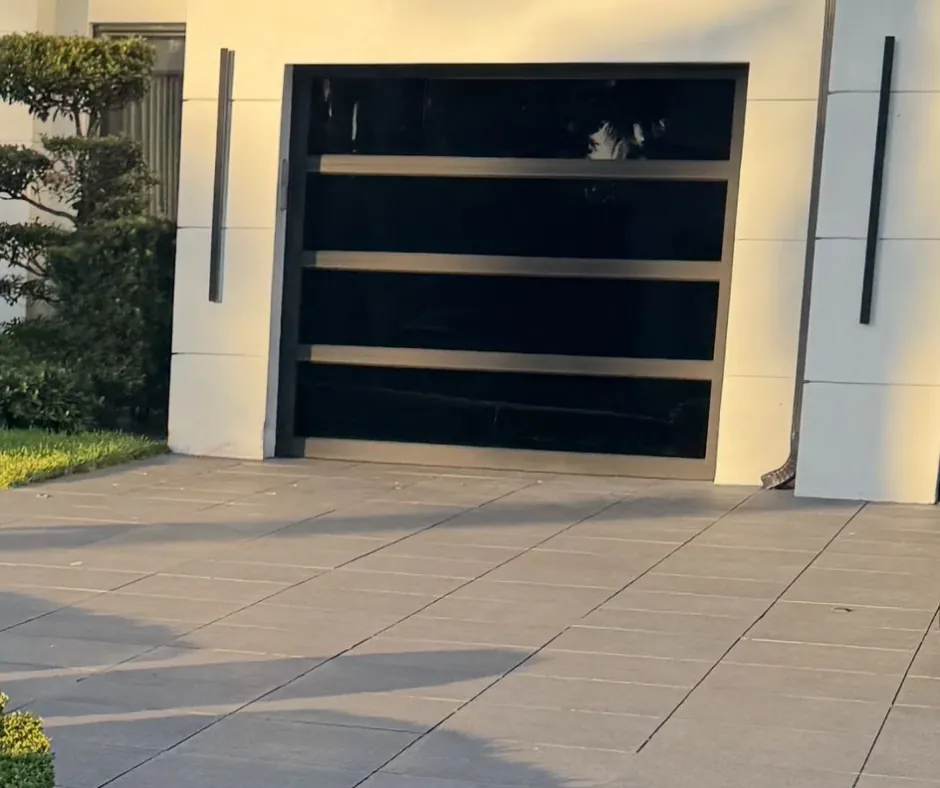
The garage that sat shut all winter
Many Hull houses began life as summer cottages, and some still sit empty for part of the year. A garage door that goes unused for months near the shore does not simply wait. Its springs sit under load the whole time while salt works into the coils, the grease in the roller bearings stiffens, the opener’s remote batteries run down and the photo eyes collect a film of salt and dust. The first time the door is asked to open in spring, every one of those weak points is tested at once.
That first opening is when we hear about it. The opener hums and lifts the door a few inches before stopping, a cable that had rusted quietly through the winter snaps under the sudden load, or a roller that has seized drags the door sideways and out of its track. On a conversion that is now lived in year-round, the same problems show up instead after a long stretch of cold weather, when a door that was built for summer use meets its first serious winter.
If your house has been closed up, a few steps before you use the garage door again can save a breakdown. Look at the springs and cables for rust from a safe distance, and do not touch them. With the door all the way down, tug the opener’s release cord and raise the bottom edge a little by hand: it should feel light and stay roughly where you leave it. If it feels very heavy, drops quickly or will not move, leave it and call us. A door in that state needs its springs and cables looked at before the opener tries to lift it.
For garage doors Hull MA cottage owners open only now and then, a check at the start of each season makes sense. It is far easier to replace a rusted cable on a door that is still level and in its tracks than on one that has just dropped a corner.
Springs on the peninsula
Behind every working door sits a counterbalance: a torsion coil wrapped round the steel bar over the opening of a Hull garage, or, on many older cottages, a pair of extension springs stretched out along the ceiling tracks. They carry the panels’ weight, leaving the opener, or your hands, to steer. When a spring breaks, the door’s full weight is suddenly there, and the opener will strain or fail to lift it.
Any torsion spring holds dangerous tension, and a salt-pitted one is even less predictable than a clean one. Treat it as a professional job, never a DIY repair: the winding cones and set screws are off limits without the proper bars and training. If a spring snaps on a Hull door, let the door stay put, clear people and cars away from it, and phone us. If the door is up, do not pull the release cord to bring it down, because without spring support it can drop hard.
When we replace springs here, we look closely at everything around them: the cables, drums, bearings and the spring bar itself. Replacing a broken spring next to a rusted cable only moves the next failure a few weeks down the line.
Openers and sensors in damp air
An opener lives in the garage too, and the damp, salty air reaches it. Circuit boards corrode, wiring terminals turn green, and remote receivers lose their range. The safety sensors, two small photo eyes mounted low on each side of the door, sit right where rain and sand blow in. When their lenses cloud over or their brackets rust and droop out of line, the door reverses or refuses to close.
Many sensor problems are quick to put right: clean the lenses, straighten the brackets, re-aim the eyes. When the opener itself has failed, we repair or replace it, and LiftMaster openers are among those this shop works on and installs. If power to the garage is lost in a storm, a working manual release matters a great deal, so we make sure it moves freely and show you how to use it safely.
Storm nights and doors that will not close
Wind is the other big risk. A strong gust against a wide, lightly built door can push it inward, bend the sections and pop rollers out of the tracks. A door that will not close as a storm comes in leaves the garage, and sometimes the house, open to the weather.
Our phones are staffed through every night of the week, so a breakdown in the middle of a gale can be reported as it happens. Tell us what the door is doing and whether anything is visibly broken. If the door is stuck open on a broken spring or cable, stay out from under it. If it has come off the track, do not keep pressing the remote, because every attempt bends it further.
When we put a wind-damaged door back on track, we take the weight off it safely, straighten or replace bent track sections, refit the rollers and check the struts and hinges. If the sections themselves have folded, replacement may be the only lasting fix.
Repair or replace on the coast
Many calls about garage doors Hull MA owners make can be handled with repair: a pair of springs, two cables, new rollers, fresh seals, a sensor or an opener. If the sections are sound, those repairs give the door a good run.
Salt changes the balance sooner than it would inland, though. When rust has come through the steel skin along the bottom, when the sections have bent in a storm, or when hardware rusts out faster than it can be replaced, a new door is the more lasting choice. We measure the opening, check the framing around it for rot or rust at the fixings, and talk through door types suited to an exposed, salty site.
For a converted cottage, a new door is also a chance to match the rest of the year-round house: a door that seals properly, insulates the garage and suits how the garage is now used every day rather than for a few summer months.
What a visit involves
- You call us or book online, describe the door and what it is doing, and mention any storm damage or rust you can see.
- We inspect the springs, cables, drums, rollers, hinges, tracks, seals, opener and sensors, paying particular attention to rust.
- We talk you through the rust, wear or storm damage we found and our suggested fix, and wait for your go-ahead.
- Before packing up, we cycle the door top to bottom several times, test the photo eyes and make sure the release cord works.
Keeping a coastal door going
A few habits help in salt air. Rinse the door’s exterior with fresh water after a big storm or a spell of spray. Every few months, look at the springs and cables for rust and listen for grinding rollers. Keep sand off the slab where the door closes. If the bottom seal is cracking, have it replaced before winter. And if the door starts to feel heavy or move unevenly, call us before it fails in bad weather.
Other towns we serve are listed on the service areas page, including our neighbours in Hingham and Weymouth.
When you are ready
Rust, wind damage, a snapped spring or a door that has had enough: we look after garage doors in Hull MA through every season and every storm. Call us or book online.
Questions from Hull
Why do springs and cables seem to fail so often here?
Salt air speeds up corrosion. Rust pits the spring coils and works into the cable strands, which weakens them long before they would wear out from use alone. Checking them regularly helps catch the problem early.
Water comes under the garage door in storms. Can that be fixed?
Usually, yes. A new bottom seal and fresh weatherstrip on the sides and top often stop most of it. If the slab is uneven, we may adjust how the door closes so the seal meets the ground along its full width.
Our door was blown in during a storm. Is it repairable?
It depends on the damage. If the rollers have popped out and a track is bent, it can usually be put back on track and repaired. If the sections themselves are folded or cracked, a replacement tends to serve a Hull garage better.
Is it safe to use the door if the spring looks rusty?
A rusty spring may still work, but it is weaker and can break without warning. Have it looked at. Coastal torsion springs hold dangerous tension; renewing one is our job, never a DIY repair.
We converted our cottage for year-round living. Should the garage door be replaced too?
Often it makes sense. Many seasonal cottage doors are light and uninsulated. A new door that seals well and suits daily use can make the garage much more comfortable and secure.