
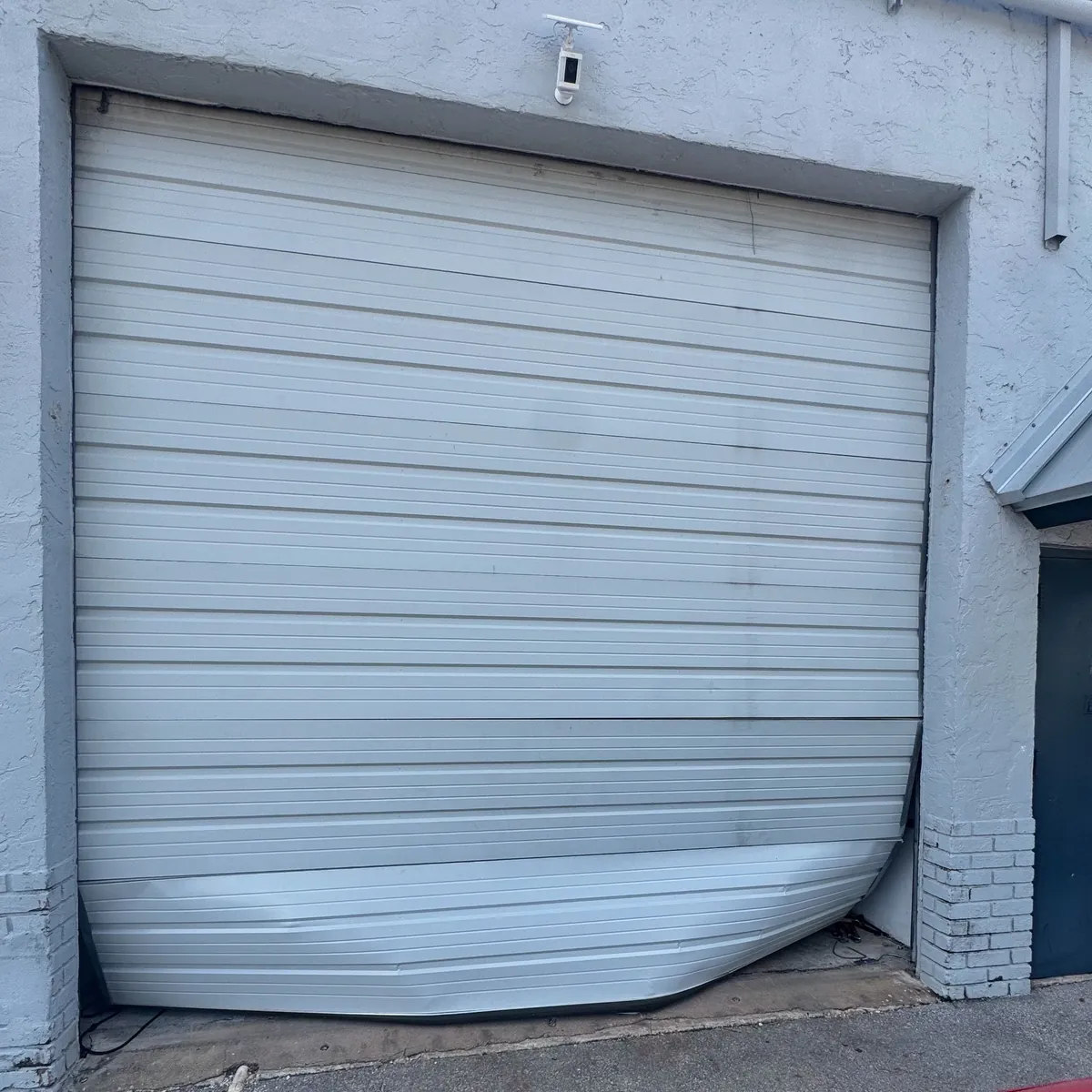
Two-families, post-war houses and their garages
Across Four Corners and North Woburn the housing is a mix of two-families and the modest single-family houses put up after the war, and the garages behind and beside them vary every bit as much. Some stand alone at the rear of the yard, with a strip of paving squeezed past the house to reach them; others are built onto the side of a post-war ranch or cape. Looking after garage doors Woburn MA property owners have starts with working out which sort of garage the door is hung in, long before any ladder comes off the van.
The two types fail in different ways. A detached garage has its own frame, its own slab and often its own electrical feed run out from the house, and it gets less attention because nobody walks past it on the way indoors. A garage joined to the house is opened every day and is how most drivers step indoors. On a two-family lot the garage may belong to one unit, be split between both, or carry twin single-bay doors so the upstairs and downstairs units each get one.
Whatever the layout, three observations help us more than anything when you call:
- Detached or attached, and how many doors it has.
- Whether one bay or both are affected, if there are two.
- Whether the opener runs at all, or the door is dead to the button.
Garage door services in Woburn
Each card climbs to the service’s main page. These headings cover nearly everything we are asked to do for garage doors Woburn MA two-families and single-family houses carry.
Repairs for older and newer doors
From a post-war wooden door that has dried out and split, to a newer steel door with a bent section or a binding roller. Read the broader garage door repair page.
Snapped springs
A bang from the back garage and a door that will not rise. Torsion and extension springs are replaced to suit the door’s real weight, as the springs page explains.
Openers for one bay or two
A pair of doors may mean two openers and a drawer full of remotes. Openers, LiftMaster units included, are mended or swapped; the opener services page has more.
A dead door at a bad hour
When the car is trapped or the door will not shut for the night, ring us at whatever hour; the emergency garage door repair page lists safe first steps.
Cable trouble
A lift cable unspooled from its drum, or frayed where it rubs a bracket, leaves the door hanging lopsided. See cable repair.
Off-track doors
Older detached garages with tired framing let tracks drift, and rollers then escape. The off-track garage door repair page explains what we do.
Brand-new doors
When the sections are past saving, we supply a new door and hang it in the existing opening, as set out on new garage door installation.
The garage out back
A detached garage behind a two-family or a post-war house is its own small building, and it ages on its own schedule. Its slab may have heaved or settled differently from the house. Its wall framing may have been sheathed in a hurry and never insulated. Its roof may shed water straight down onto the header above the door.
Each of those shows up at the door. A heaved slab leaves the bottom section rocking on a high spot. Uninsulated walls let condensation form on the inside of a steel door and on the hardware in cold snaps. A header soaked from above softens, and the bracket holding the spring anchor or the opener’s front mount starts to work loose in the wood. When we repair a door in a garage like this, the building around it gets as much scrutiny as the door.
Power is a recurring theme too. Plenty of back garages draw their power over one feed from the main house, buried in a trench, slung overhead, or on older lots wired in a way nobody would choose today. An opener that dies without warning in a back garage may be perfectly healthy, starved only by a breaker that has flipped in the basement panel or a ground-fault socket that tripped in the damp. It is worth checking that before assuming the opener has failed. Faults in the wiring beyond the opener belong to an electrician, and you will hear from us plainly if that is the cause.
Because a detached garage is out of sight, small problems in it tend to grow. A roller that has begun to squeal or a cable fraying at the bottom may go unnoticed for months, until the day the door refuses to move. A glance at the door each time you use it, and a call when something changes, is the cheapest maintenance there is.
Two doors, two households
Plenty of two-family lots in North Woburn and around Four Corners end up with a garage that serves both units.
Sometimes that means one wide door used by both units, sometimes two singles side by side, one for each household. Either way, shared use changes how the door wears.
Two households means two sets of comings and goings, and the door rises and falls far more each day. Rollers, hinges and springs wear sooner, and remotes multiply: each driver may have one, plus a keypad code that has been passed around. When a door is shared, it is also more likely to be used after something has started to go wrong, because nobody wants to be the one who stops it working. That is how a worn roller becomes a bent track, or a fraying cable becomes a door hanging off one side.
A few habits help on a shared garage. Agree that anyone who hears a new noise or sees a crooked door stops using it and says so. Write down which remotes are paired to which opener, so one that goes missing can be deleted from the opener. And make sure both households know where the opener’s plug is, so a jammed door can be stopped safely.
Twin doors are mechanically separate, so one bay can be out of action while its neighbour runs normally. It is still worth having both looked at on the same visit, because doors of the same age, installed together, tend to wear out together.
Broken springs, front of the queue
No call comes in more often. When a spring breaks, nearly every door behaves the same way: the opener lifts it a short distance and stops, or strains while the door barely moves. On a back garage, you may only discover the break the next time you go to take the car out.
Lots of the post-war single doors here, and many on two-family garages, still hang from extension springs strung parallel to the overhead rails. Heavier or more recent doors tend to have a torsion coil wound around a bar across the header. Whichever is fitted, it carries the door’s weight, and once it lets go the door is far too heavy to raise safely.
A wound torsion coil holds a dangerous charge of tension, so changing one is not a DIY repair, even for someone who owns every tool. Side springs have their own hazard: with no restraining cable threaded through them, a snapping coil whips loose and can strike anyone standing nearby. Spot a coil in two halves or a side spring dangling slack, and the plan is simple: door stays shut, opener stays unplugged, and the garage stays empty of children and pets until we arrive.
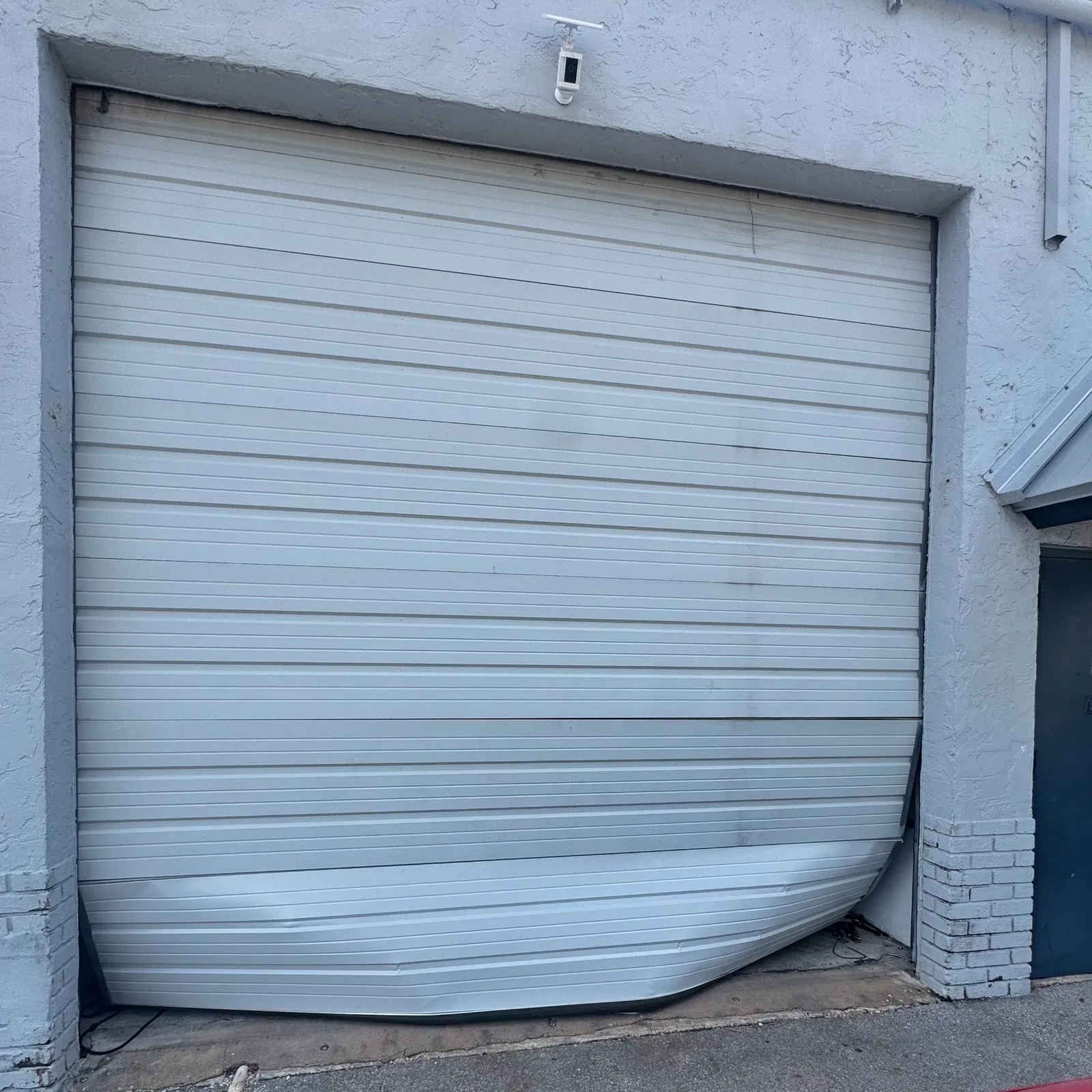
The attached garage on a post-war house
Not every garage here stands apart. Many of the single-family houses built after the war have a one-car garage built onto the side, often under a low roof with a modest ceiling height. That brings its own constraints. Headroom above the opening can be tight, which decides whether a torsion spring fits above the header or extension springs are the better choice, and how much room the opener’s rail has. Many of these garages were first fitted with a wooden door, and a lot of them have since had a steel door put in, sometimes with the original track and brackets left in place. A repair has to account for that mix of old and newer parts.
An attached garage also leads straight into the house, so a door stuck open after dark leaves the whole house exposed, not just the car. When we work on garage doors Woburn MA post-war houses have, we check the seal around the opening and the door into the house alongside the moving parts.
Openers, remotes and sensors
The opener on a Woburn garage might be the newest part of an old door, or it might have been running for as long as anyone can remember. Either way, its job depends on the door being balanced and the safety system working.
Common faults:
- The motor whirs and nothing else happens. On a chain or belt drive, the trolley may have come disconnected, or the drive may have stripped. On a door with a broken spring, the opener simply cannot lift the weight.
- On its way down, the door reverses an inch or so above the slab. A bin, a bike or the mower has knocked a photo eye off its aim, or road dust has dulled a lens.
- One car’s remote works and the other’s doesn’t. A fresh battery usually settles it; now and then the remote has to be paired again.
- Nothing happens at all. In a detached garage, check the house breaker and any ground-fault outlet before anything else.
The door is tried first with its trolley unhooked, because an opener that has been fighting an unbalanced door will soon fail again. With the door gliding, the opener’s stopping points and pushing force get dialled in, the reversing feature is proved, and every remote and keypad paired to it is tried. A worn-out opener is swapped for a new one.
Cables, rollers and tracks on older framing
A post-war garage is usually framed in wood that has moved a little with every season since it went up. That matters for the parts that guide the door. Track brackets are lagged into that wood, and when it shrinks, splits or softens, the brackets loosen and the tracks drift out of line. The rollers then bind, the door shudders, and eventually a roller can jump out altogether.
Cables suffer when the door runs crooked. A cable that has been rubbing on a misaligned track or a bent bracket frays at that point, and the first sign may be a few broken strands near the bottom corner. A cable that has unspooled, typically after the door came down onto a bin or a bumper, lets one corner drop.
A door hanging askew, out of a rail or held up by a single cable should be left exactly as it is, with the opener unplugged, until we get there. The repair involves bracing the door with clamps until the rollers are unloaded, refitting the rollers, straightening or replacing track, moving brackets to sound wood if needed, and equalising the cables before the door moves again.
How a visit goes
The door comes first. Unhooked from the opener and hand-raised to roughly chest height, it should hang still; sinking or climbing tells us the springs are off.
Next, a full inspection of the hardware and the building it hangs in: springs, cables and bottom brackets, drums, hinges and rollers, the tracks and their brackets, the header and jambs, the slab under the door and the bottom seal. On a detached garage we also check the power supply to the opener. The opener, the photo eyes, the remotes and any keypad are tested separately.
Before a spanner turns, you hear which part broke, why it broke in this garage, and which neighbouring parts are getting tired. When the repair is finished, the springs are matched to the door, the opener is retuned, and a block placed on the threshold proves the door backs off it.
Fix or replace
Most doors we see in town are worth fixing. Springs, cables, rollers and hinges are parts that wear, and replacing them gives a door with sound sections a long further life.
Things change when the sections themselves start to crumble. On a post-war wooden door, that means panels split or rotted along the bottom, or a door so dried out and patched that it no longer holds together. On an older steel door, rust through the bottom section or dents in several sections are the usual signs. The replacement is supplied by us and hung in your present opening; on a back garage, that visit is also the time to judge the header, the jambs and the power to the opener. For garage doors Woburn MA owners are replacing on two-family lots, it also makes sense to think about whether one wide door or two singles will suit the households better.
Safe steps while you wait
Without touching anything dangerous, you can:
- Take the opener’s plug out if the door has jammed or hangs crooked.
- In a detached garage, check the breaker and any ground-fault outlet if the opener is completely dead.
- Clear anything leaning against the photo eyes and wipe their lenses.
- If the wall button works and a remote does not, give the remote a new battery.
Keep your hands off the springs, the cables, the drums and the corner brackets; all of them stay loaded whatever position the door is in.
Calling us
A door that fails behind a two-family can strand two households’ cars at once, and it rarely happens at a convenient moment. Someone answers our line whatever the clock says, Saturdays and Sundays too, which means a door found broken after supper can go on our list that night. Our service areas page names every town and neighbourhood we reach, and neighbouring Winchester and Burlington have their own pages.
Before you ring about garage doors Woburn MA homes rely on, have four things ready: detached or attached, one door or two, what the door is doing, and whose car is stuck. Then call us or book online.
Questions from Woburn
Our back-garage opener is completely dead. Has it failed?
Possibly not. A garage standing apart from the house usually draws power over a feed from it, so check the breaker and any ground-fault outlet first. If power is reaching the opener and it still does nothing, the opener or its wall button needs looking at.
Upstairs and downstairs share one garage door. Can each household get a separate remote?
Certainly. An opener will normally hold a number of remotes as well as a keypad code. When we visit, we can program the remotes in use and clear any that have been lost, so only the current households can open the door.
Only one of our two garage doors has stopped working. Should both be checked?
It is worth it. Doors installed together tend to wear at the same rate, so if one has broken a spring or a cable, the other is often close behind. Checking both on one visit saves a second call.
Our old wooden door has split along the bottom. Can it be repaired?
Sometimes. A single damaged section can occasionally be replaced if a match can be found, but on an older wooden door the rest of the panels are often near the end as well. The whole door gets assessed, and you hear straight whether mending it or replacing it is the sounder spend.
The door shudders and seems to catch partway up. What causes that?
Usually a roller binding in a rail that has wandered as its bracket worked loose in tired timber. Stop using the door if it gets worse, and have the tracks, brackets and rollers checked before a roller jumps out.