
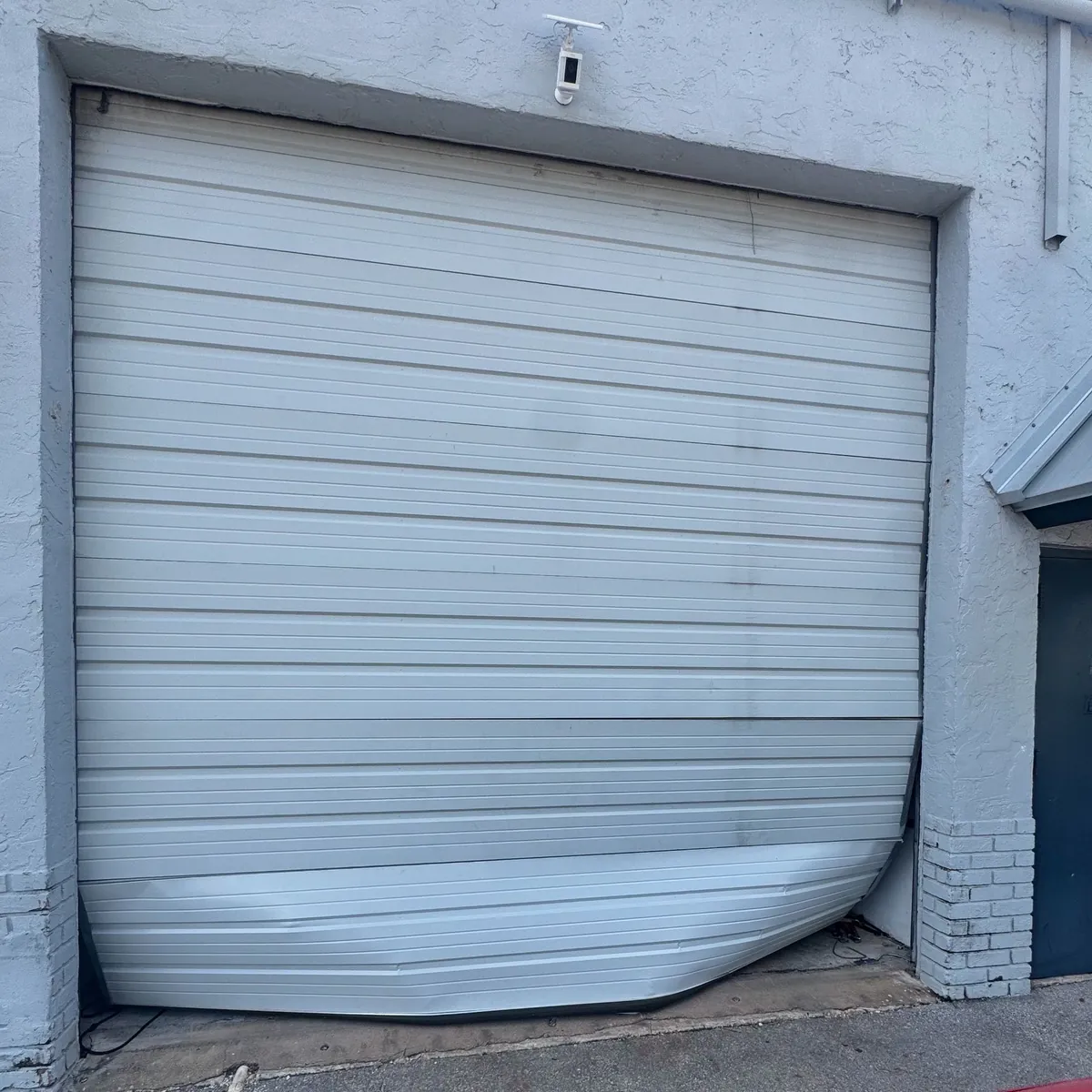
From antique village openings to two-car doors by the harbour
Few towns put such different garages side by side. In the village, an antique colonial may have an opening so small that a modern car barely clears the jambs, often in an outbuilding or an ell that was built for a carriage, a wagon or a workshop long before anyone hung an overhead door in it. Toward the harbour, newer houses carry full-width two-car doors with openers, glazing and insulation. Calls about garage doors Hingham MA owners make cover that whole span, and the right repair depends heavily on which end of it the door sits.
An undersized opening in an old building makes almost every part of the job a fitting exercise. Headroom is short, jambs have moved, and there may be barely enough wall beside the door for a track. A wide modern door brings the opposite challenge: a long, heavy span with a lot of weight on its springs and a lot of flex across its middle.
Whatever kind of door you have, a quick look from a safe distance tells us a great deal before we arrive:
- Is there a split partway along the coiled spring over the header, or a slack spring along one of the overhead tracks?
- Has either lift cable come loose from its drum or bottom corner?
- Does the door sit flat on the floor, or has one side dropped?
Garage door services in Hingham
Garage door repair
Hinges, rollers, panels, seals, tracks and sensors, from cramped antique openings to wide two-car spans. Each part is described under garage door repair.
Spring repair
Old small doors often run on extension springs; wider modern ones on torsion springs. Torsion springs hold dangerous tension, so changing one on a Hingham door is not a DIY repair. Read about garage door springs for both kinds.
Openers and remotes
An opener squeezed into a low old ceiling, or one hauling a heavy two-car door, plus remotes, keypads and safety eyes. LiftMaster repairs are among the opener services we offer.
Emergency calls
A door wedged open on a winter night, or a car trapped behind a broken spring, can be phoned in at any hour. Read the emergency garage door repair notes for sensible steps while you wait.
Cables and drums
When a cable frays, parts or jumps its drum, the door tilts in its opening. Both sides are replaced as a pair; see garage door cable repair for detail.
Off-track doors
Doors jolted out of their rails in a tight old opening or knocked crooked across a wide one, lowered safely and realigned. More under off-track garage door repair, with our advice.
New doors
Doors made to the odd sizes of antique openings, and replacements for tired two-car doors near the water. Visit new garage door installation for the process.
Small openings in old buildings
The oldest garages in the village were rarely built as garages. Many are former carriage sheds, barns or workshop ells, adapted at some point to hold a car, and the opening was cut or widened to suit whatever was parked there at the time. The result is an opening that can be narrower and lower than any standard door, framed in timber that has moved for generations.
That shapes every repair. Headroom above the opening may be too short for a standard torsion spring and track, so extension springs, or rails built for low headroom, are often what keeps such a door moving. The side room beside the jambs can be tight enough that the vertical tracks are fixed to whatever solid timber is available, not where a standard installation would put them. A door in a building like this has usually been fitted and refitted, and each fitter has left their own blocking, shims and screw holes behind.
When we work on a door in one of these buildings, the first job is understanding how it was put together. A track bracket that keeps pulling out might need a new fixing point in sound timber. A door that binds halfway up might be fine in itself while the jamb has bowed. On garage doors Hingham MA antique outbuildings carry, a good repair is one that suits the building, not one that assumes the building is square.
Matching a door to an antique house
A door on an old village property shapes the face the property shows to the lane, and many owners care as much about that as about how the door runs. An antique colonial or its carriage shed usually suits a plain, flat or recessed panel face, a carriage-style door with a row of small lights across the top, or a painted finish that matches the trim. A glossy, modern door can look out of place against old clapboards and small-paned sash.
Appearance is not the only consideration. An old building may not be weather-tight around the opening, and an insulated door gains little if the walls, the jambs and the header leak air on every side. On the other hand, a lighter door asks less of a timber frame that has already moved, and a lighter door needs lighter springs, which is kinder to old framing every time the door cycles.
When a door in the village needs replacing, the conversation covers both questions: what will look right on the building, and what the building can comfortably carry. Many owners choose to keep and repair an older door for as long as its sections allow precisely because it already looks right. When the sections are past saving, a new door sized and finished to suit the house is the next step. For garage doors Hingham MA antique properties need, that balance between looks and practicality decides most choices.
Wide two-car doors toward the harbour
The newer houses toward the harbour tend to have attached garages with a single wide door covering two bays. A door that wide is heavy, and it relies on its springs, cables and hinges working evenly across its whole span. If one side of the balance fails, the door twists; if the sections lose their stiffness, the middle can bow as the door rolls up into the horizontal tracks.
Wide doors usually carry a pair of torsion springs on a long shaft, and when one breaks, the door may lift unevenly or not at all. The opener on a two-car door also has a bigger job, and a drifting balance that a single-car opener might tolerate soon shows on a wide one as a motor that strains, slows or reverses.
Where salt air from the water reaches a garage, steel hardware can corrode faster: spring coils, cable strands, roller bearings and bottom brackets all show rust sooner than they would inland. A rusted bottom bracket or a cable with red-brown strands at the corner is a reason to have the door looked at before it gives way.
Wide doors also need their struts. Many two-car doors have steel reinforcing bars fixed across the upper sections to stop them sagging as they lie flat under the ceiling. If a strut has been removed, bent or has worked loose, the top section can droop when the door is open and catch as it starts back down. A door that hesitates or jolts just as it leaves the fully open position is often showing exactly that, and it is a simple thing to check during any visit to a harbour-side garage.
Springs on doors large and small
Springs do the lifting on every overhead door, whatever its size. On small, older doors you will often find extension springs, one stretched along each horizontal track, usually with a safety cable running through the middle to hold the spring if it breaks. On the broader, newer doors near the harbour, a torsion pair is wound onto a bar across the header and turns a cable drum at each end.
A broken spring looks different on each. An extension spring may be visibly snapped, hanging from its pulley or lying on the floor. A torsion spring shows a gap in its coils. In both cases the door becomes much heavier and the opener may lift it a little and stop.
Torsion springs are wound with dedicated steel bars and hold dangerous tension; one slip can cause serious injury, which puts them firmly outside DIY repair. Extension springs also store energy while the door is shut and can whip if a fitting lets go. A shut door with a broken spring should stay shut: hands off the bottom section, and leave the wall button alone. Our explainer on torsion versus extension springs shows the difference between the two systems.
Openers in low ceilings and on heavy spans
In an antique outbuilding the opener may have to live in a sliver of space under the joists. Where a ceiling rail simply will not fit, a jackshaft unit mounted on the wall beside the door, turning the spring bar directly, can sometimes take its place. On a wide modern door, the opener’s job is to move a heavy span smoothly, and it relies on the springs to carry the weight.
Common faults are the same at both ends of town: remotes that stop working, keypads that no longer accept a code, safety sensors pushed out of line, and motors that hum but do not move. Some of these are simple; others mean a worn gear or a failing board. Openers of all the usual kinds are repaired or replaced, LiftMaster among them, each one matched to the door it has to move. The guide to garage door opener types explains the choice.
Cables and off-track doors
A pair of steel lift cables connects the spring system to the door’s bottom brackets. In a tight antique opening, a cable can rub against a jamb or bracket and fray; on a wide door, a cable that slips its drum can let one side drop several inches and twist the whole span. Either way, the door ends up lopsided, and it should stay parked until someone has examined it.
A door also leaves its tracks when a roller is jolted out, often because a car caught the bottom edge or a track bracket worked loose from old timber. In an undersized opening there is so little side clearance that even a small knock can shift the door. On a wide door, a car pulling in too far or a bin against the bottom section can push a roller out on one side.
If your door is crooked or off its track, unplug the opener and keep everyone out from under it. The springs are still loaded and the door can fall. When we get there, the door is brought down in a controlled way, its rails, wheels, hinges and cables are inspected, and it is set square in the opening again. The off-track guide describes the usual causes.
What a visit in Hingham involves
- When you get in touch, describe the fault, say whether the door is a small antique one or a wide modern span, and mention any car shut inside.
- On arrival, the door is examined in the state we find it, before any part is moved.
- You hear what broke, what knock-on damage there is, and how we propose to put it right, before any work begins.
- Once agreed, the fix goes in, the balance is set, the opener’s limits are adjusted, and the auto-reverse is tried against an obstruction.
- You watch the door run a full cycle before we leave.
On an antique property, it helps to know beforehand if the garage is in a separate outbuilding and how it is reached.
Repair, or a door made to fit
Repair is the usual answer, at both ends of town. The hardware that moves a door is meant to wear and be replaced, and a Hingham door whose panels are still solid carries on happily once that hardware is renewed.
On an antique opening, replacement raises a special question: a standard door may simply not fit. A new door for an old building has to be sized to the opening that exists, and sometimes the right answer is a door built to that size rather than an opening altered to suit a standard door. We supply and install doors in both situations, small and unusual openings as well as standard two-car widths, and we tell you which approach suits your garage before anything is ordered.
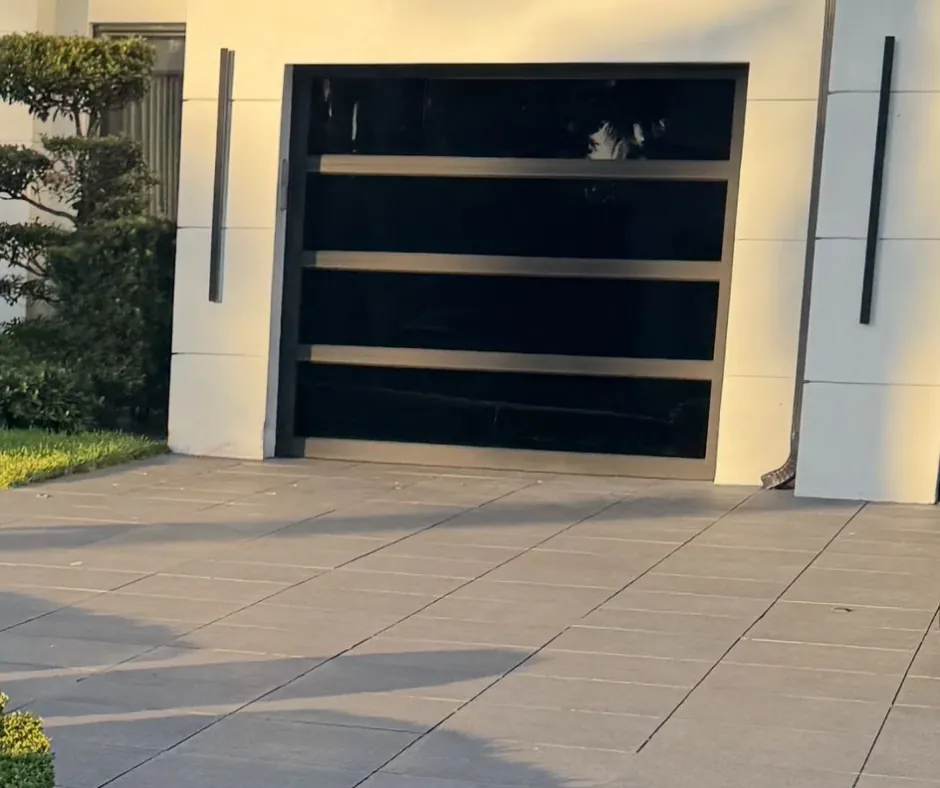
On newer houses toward the harbour, replacement usually comes down to the condition of the sections, the insulation, and how the door looks against the house. A wide door with rusted bottom sections or cracked panels in several places is often better replaced than patched. For materials and looks, see the new garage door guide, and full view glass garage doors suit some newer houses well.
Keeping both kinds of door in good order
A few simple habits help any door last. Watch it run once in a while and listen for scraping, banging or new noises. Sweep sand, leaves and packed snow away from the weatherstrip and the feet of both rails. Test the safety reversal by placing a soft object in the door’s path and making sure it goes back up. On an old outbuilding, check that the track brackets are still firm in the timber. Near the water, glance at the coils, cable ends and corner brackets for any orange bloom of corrosion.
For garage doors Hingham MA homes of every age depend on, those checks catch most problems while they are still small and simple to fix.
Book a visit in Hingham
Describe the fault, tell us whether this is a village outbuilding or a newer two-car garage, and explain how to reach it. For garage doors Hingham MA owners need working today, calls are taken at any hour, so you can report a failure as soon as it happens. Call us or book online.
Neighbouring Weymouth and Hull are covered too, and every town we serve appears on our service areas page.
Questions from Hingham
Our garage opening is smaller than any standard door. Can it still have a new door?
Yes. A door can be supplied at the size of the opening as built, and its rails and springs laid out around whatever clearance the old framing allows. We will measure and explain the options before anything is ordered.
Is it worth repairing an old door in an antique outbuilding?
Often, if the sections are sound. The moving hardware can be renewed and the rails refastened to the old timber as it stands today. If the door is rotted or split in several places, a new door sized to the opening is usually the better spend.
Our wide two-car door goes up crooked. What is happening?
Usually one side has lost support: one of the pair of springs has snapped, a cable has left its drum, or a strand has frayed through. Stop using it, unplug the opener and call, because a twisted wide door can bend its sections and tracks.
Does living near the water affect our garage door?
It can. Salt air tends to rust steel hardware sooner, especially springs, cables and bottom brackets. If you see rust on those parts, it is worth having the door checked before something gives way.
Our old outbuilding is tight under the joists. Is an electric opener still possible?
Quite possibly. Where a rail cannot go on the ceiling, a unit mounted on the wall beside the door can sometimes do the job. We measure the space and weigh the door before suggesting anything.