
Small garages on steep ground, with the sea right below
Swampscott’s older houses climb steep streets above the ocean, and their garages were squeezed onto whatever level ground each lot could spare. The result is a garage that is small, often a single bay, reached by a driveway that is short and pitched hard toward the street. Calls about garage doors Swampscott MA owners make tend to trace back to one of two things: the slope the door sits on, and the salt that rides in on every onshore wind.
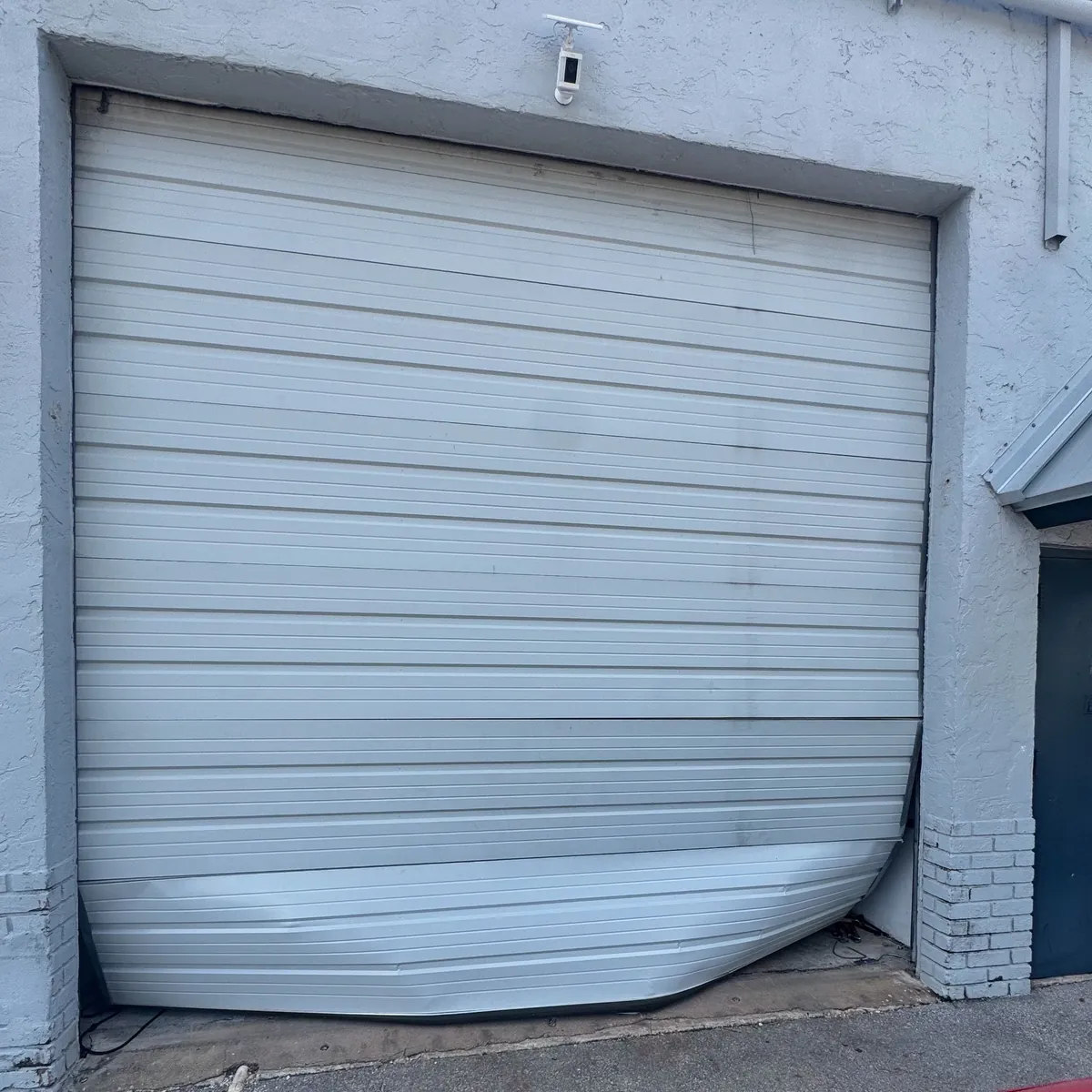
A garage on a steep lot rarely has a perfectly square opening. The slab may fall away toward the driveway, leaving the bottom rail to settle on the concrete at a slant, high end first. Salt air works on every steel part of the system at the same time, from the springs over the door to the bolts holding the tracks to the jambs.
From the driveway, without touching the springs or cables, three clues are worth noting before you phone:
- Orange streaks running down from the coils overhead, or crusting the corner brackets where each cable is hooked on.
- A gap of daylight under one end of the closed door, with the other end tight to the slab.
- Rollers that grind or stick in the tracks rather than turning smoothly and quietly.
Garage door services in Swampscott
Every service the shop offers reaches these hillside garages, and each card points up to the main page for that kind of work. If you are trying to name the fault before you phone, the cards are a quick sorting guide for garage doors Swampscott MA homeowners have tucked into slopes above the water.
Garage door repair
Panels, hinges, rollers, sensors and the hardware that bolts it all together. On a door that faces the sea, repair usually means replacing corroded pieces rather than adjusting them. See garage door repair.
Spring repair
A torsion spring weakened by rust can snap without warning, leaving a door the opener can barely budge off the slab. See garage door springs.
Motors, remotes and photo eyes
A small garage puts the opener close to the door and the photo eyes close to anything stored against the wall. See opener services.
Doors stuck at a bad hour
A door jammed half-open on a stormy night, or a car shut inside at dawn. Ring whenever it happens, weekend or weekday. See urgent repair.
Cables and drums
Lift cables sit in the damp corners of the opening and are among the first parts the salt reaches. See cable repair.
Doors that jump their rails
A door that lands crooked on an uneven slab puts sideways strain on its rollers until one leaves the rail. See off-track repair.
New garage doors
When rust has reached the panels themselves, a replacement door sized to the existing opening is often the sensible answer. See new garage door installation.
What sea air does to a garage door
For garage doors Swampscott MA builders hung on these ocean-facing lots, salt is the biggest single factor in how a door ages. Moist, salty air settles on every surface inside the garage, and a garage that is closed most of the day traps that moisture rather than drying out. Steel parts do not fail all at once; they lose a little of their surface each season until something gives.
The springs are the most important example. A torsion spring is a tightly wound coil of steel, and rust on its surface creates tiny pits. Each pit is a weak point, and every time the door opens and closes the coil flexes across it. A rusty spring will often look sound right up to the morning it parts with a report that rattles the windows of the room above. Extension springs, the long ones that run beside the horizontal tracks on some older doors, suffer the same way and add their own risk, because a snapped extension spring with no safety cable through it can whip across the garage.
Cables come next. Each lift cable climbs from its corner bracket up to the grooved drum overhead, and its lowest few inches sit right where puddles, tracked-in slush and salt gather. Strands at the bottom bracket rust and break one by one. A frayed cable is easy to miss until it lets go, and when it does the door drops on that side and jams at an angle.
Hinges, roller stems, track bolts and the bottom bracket all corrode in turn. A seized roller stops spinning and starts sliding, and the scraping wears a flat on the roller and a groove in the track. On a coastal door, the job on a visit is often less about one broken part and more about finding every part that is about to become the next broken part.
Short, steep driveways and the bottom of the door
The pitch of the driveway shapes how the door sits. Where the garage floor follows the slope even slightly, one end of the bottom rail kisses the concrete well before its twin. Over time the door is pushed against that high corner every time it closes, and the opener’s close force does the pushing.
That uneven contact leads to a familiar set of problems. The bottom seal wears through on one end. Water runs under the low corner and pools against the slab, which brings more salt and moisture into the garage. The opener’s force settings drift as someone adjusts them to stop the door reversing, and a door with its force turned up too far is a door that will not reverse properly when something is in its way.
A visit on a sloped slab starts by watching the door close to see where it lands, then checking the limit and force settings on the opener, the condition of the bottom seal and the bottom brackets, and whether the tracks are plumb. Sometimes the answer is a new seal and a careful adjustment; sometimes the tracks need to be reset so the door comes down square to the floor it actually has.
Springs on a coastal door, and why to leave them alone
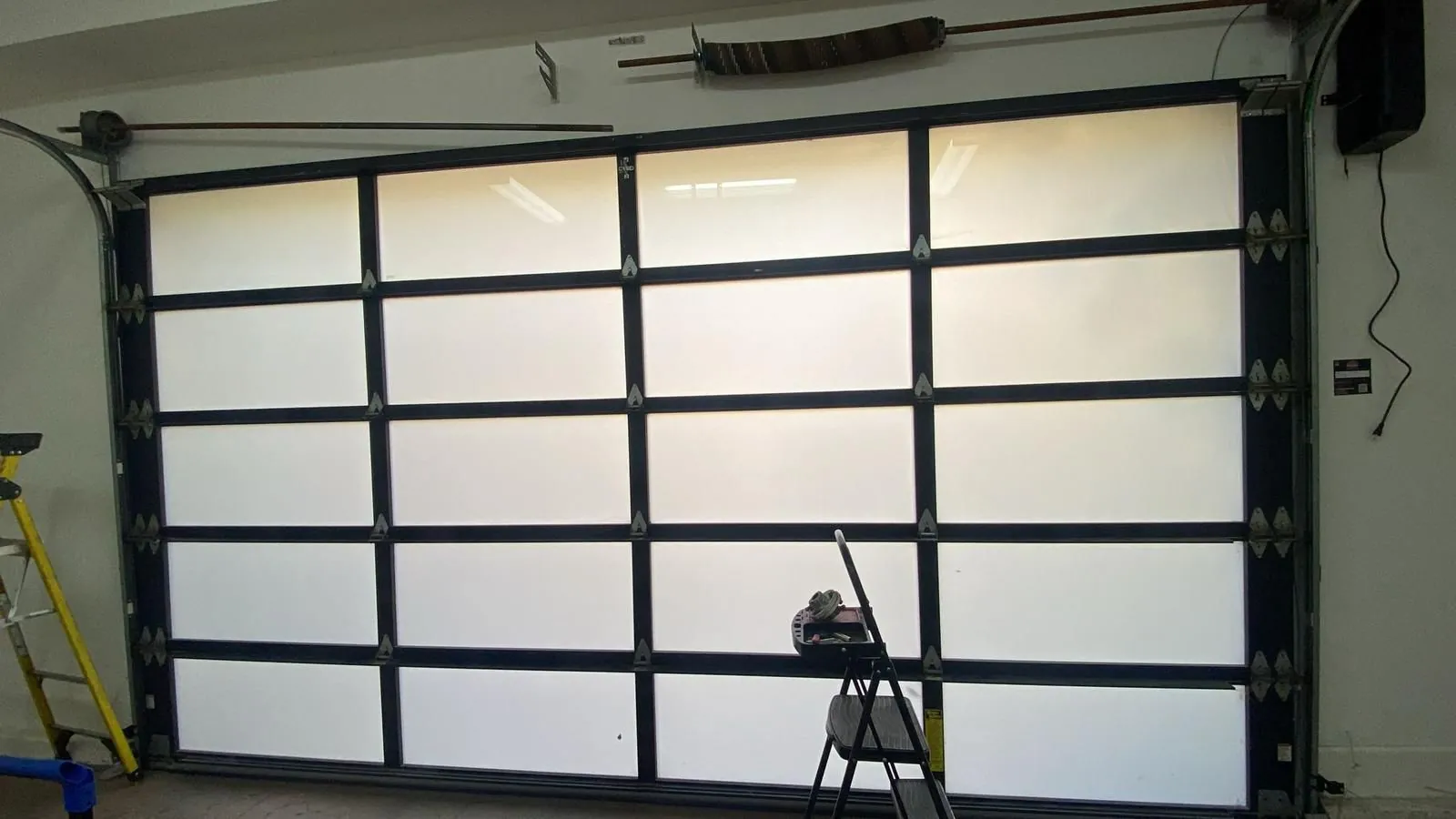
Of all the urgent calls, a snapped spring tops the list everywhere, and salt pitting only shortens the odds on these steep coastal streets. The signs are simple: a split showing between two coils on the shaft, a door that feels far heavier than it should, or an opener that strains, lifts a few inches and stops.
Do not try to wind, unwind or replace a torsion spring yourself. The spring holds dangerous tension, enough to break a wrist or worse if a winding bar slips, and it stays dangerous even when it looks broken, because the surviving length of coil, or its partner on the shaft, can still be holding most of its wind. Extension springs carry their own stored energy too. With a spring gone, park on the street if you can, let the door stay put, and phone.
On the visit, a pair of springs is usually renewed as a pair, because the survivor has breathed the same salt air and lifted the door just as often. Cables, drums and shaft bearings get a close look while everything is unloaded, since coastal rust seldom picks on one part alone.
Openers in a cramped garage
A small single-bay garage leaves the opener rail close to the ceiling and the motor hanging just inside the door. Damp air reaches the circuit board and the gear inside the motor head, and older units in coastal garages often start acting up in wet weather first: a door that reverses for no reason, a remote that behaves on Tuesday and sulks on Wednesday, a wall button that needs pressing twice.
The photo-eye safety sensors, the pair of small lenses mounted low on the jambs, are a frequent culprit. In a tight single bay, bins, bikes and garden tools nudge them out of line, and condensation on the lens can confuse them on a foggy morning. A sensor that has been nudged out of line is an easy fix; one with corroded wiring needs replacing.
When an opener is past repair, it is replaced with a unit that suits the headroom above the door. LiftMaster openers are among those this shop repairs and replaces, along with remotes, keypads and wall buttons.
Cables, drums and a door that lands crooked
When a cable snaps, the door hangs from one side only. It tilts in the opening, one roller rides up the track, and the door may wedge itself solid. Leave the opener switch alone, and resist hauling the door down by hand; the remaining cable and spring are now holding the whole weight unevenly.
The repair replaces both cables, checks the drums on the shaft for wear and rust, and resets the door so it hangs level. On a door near the coast, the bottom brackets that the cables hook into are checked closely, since a corroded bracket can tear apart under load even with a new cable on it. If the bracket has thinned, it is replaced in the same visit.
When the door comes off its tracks
An off-track door is one where a roller, or a whole side, has come out of the rail. On these hillside lots it often follows months of the door landing on a slant, or a bumper clipping the bottom section as a car noses up the short, steep approach. Once a roller leaves its rail, the door can hang twisted, part way up the opening.
Keep everyone, and especially children and pets, away from an off-track door, and do not try to lift it back with the opener. The section can fall. The repair straightens or replaces bent track, swaps out rollers that have gone flat-sided or stuck, and resets the door so it travels true from the floor to the ceiling and back again.
Emergency calls on a stormy night
A door that will not close during a nor’easter is a different problem from one that will not open on a calm afternoon. Rain and spray blow straight into an open garage on an exposed street, and a door stuck halfway is a door that cannot be locked.
The storm can jam the door at whatever hour it likes; the shop keeps its line staffed through every one of them, Sundays too. Describe the position the door is stuck in, mention any loud snap you heard, and say if a cable is dangling. Those details shape what gets loaded onto the van and what you are advised to leave alone in the meantime. No one can put a clock on an arrival during a gale, yet the call itself still gets answered.
Repair or replace on a salt-worn door
Garage doors Swampscott MA households have kept through many winters by the water eventually reach a point where another round of repairs stops making sense. The springs, cables and rollers can be replaced again and again, but if the panels themselves are rusting through at the bottom section, or the steel skin has blistered and split, the door is losing the stiffness it needs to travel straight.
The signs that point toward replacement are rust holes in the panels rather than on the hardware, sections that bow or crack along the hinge lines, and a door so heavy with repairs and patches that the springs can no longer be balanced to it. A new door supplied and installed by this shop is sized to the existing opening, which matters in a small garage where the opening may not be a standard size, and fitted with new springs, cables, rollers and tracks so every steel part starts fresh against the salt.
What a visit involves
The work follows a set order on every call:
- The door is studied shut, then cycled on the opener, to see where it binds, scrapes or lands on a slant against the sloped slab.
- Springs, cables, drums, rollers, hinges, brackets and tracks are checked one by one, with particular attention to rust on a door this close to the water.
- Before a tool comes out, you hear which parts have gone, which are nearly gone, and which can safely be left for another season.
- Once you agree, the repair is done and the door’s balance is set against the new springs, the opener gets fresh force and travel settings, and the safety reversal is tested.
Looking after a door that faces the sea
There is no stopping salt air altogether, but a few habits slow it. Hose down the lowest panel and its corner brackets once the salted-road season ends. Keep the bottom seal intact so water does not sit against the slab. Open the garage on a dry day to let damp air out. Listen to the door: a new grinding, a squeal or a jerk partway up is usually a roller or a bearing asking for attention before it fails. None of that stands in for a trained hand on the springs and cables, which stay off limits for weekend tinkering.
Your next step
If the door is jammed, grinding, leaning or simply behaving oddly, the first step is a short conversation about what it is doing. Tell us what you see; whatever the hour on the clock, call us or book online. For more on the area the shop covers, visit the service areas page, or see the neighbouring pages for Lynn and Nahant. A door problem on garage doors Swampscott MA owners rely on is worth checking early, because on a coastal street small rust problems rarely stay small for long.
Questions from Swampscott
Why does my garage door spring keep breaking?
Sea air pits the surface of the steel coil, and each pit is a place where the spring can crack as it flexes. A garage that stays closed and damp makes it worse. Replacing both springs together, and checking the cables at the same time, gives the door a fresh start rather than a series of separate breakdowns.
My door touches down on one side first. Is that a problem?
It can be. On a sloping slab the door presses on the high corner every time it closes, which wears the seal, strains the hinges and can push the opener’s force settings out of line. A visit checks where the door lands and whether the tracks or the seal need resetting so it closes evenly.
Can I lift the door myself after the spring snaps?
Please don’t. A door missing its spring is a dead weight that catches people out, and whatever spring and cables survive are loaded lopsidedly. Let it sit, then ring; you will be talked through what is safe to do until help gets there.
Is a rusty door worth repairing, or should it be replaced?
If the rust is on the hardware, such as the springs, cables, rollers and brackets, those parts can be replaced and the door kept. If the panels themselves are rusting through or splitting, replacement is often the better choice. You will be told which applies before any work begins.
Can I call about a door during a coastal storm?
Yes. Nights, weekends and gales make no difference to the phone line, so a door that refuses to shut in driving rain can be reported the moment it sticks. Nobody quotes an arrival time, though the call is always picked up.