
Quiet doors on wooded lots, and the faults that hide in them
Lincoln’s mid-century and contemporary houses sit well back on large wooded lots, and most have an attached garage reached by a long drive through the trees. Many of those doors lead a quiet life: they rise and fall a handful of times a week, not a dozen times a day. With garage doors Lincoln MA owners rarely think about, the trouble is less about wear from heavy use and more about what time, shade and the woods do to a door that mostly stands still.
A door that seldom moves can look perfect for years. Its springs have hardly cycled, its rollers have barely turned, its opener has had an easy life. Yet steel still corrodes in damp shade, grease still dries and stiffens, and leaves, needles and grit still drift into the tracks and the corners of the opening. Problems build quietly and then show up all at once, often on a cold morning when the door has not been opened for days.
A quick look from the drive, hands off the hardware, tells you a lot:
- Leaf litter, pine needles or twigs packed into the bottom of the vertical tracks or against the photo eyes.
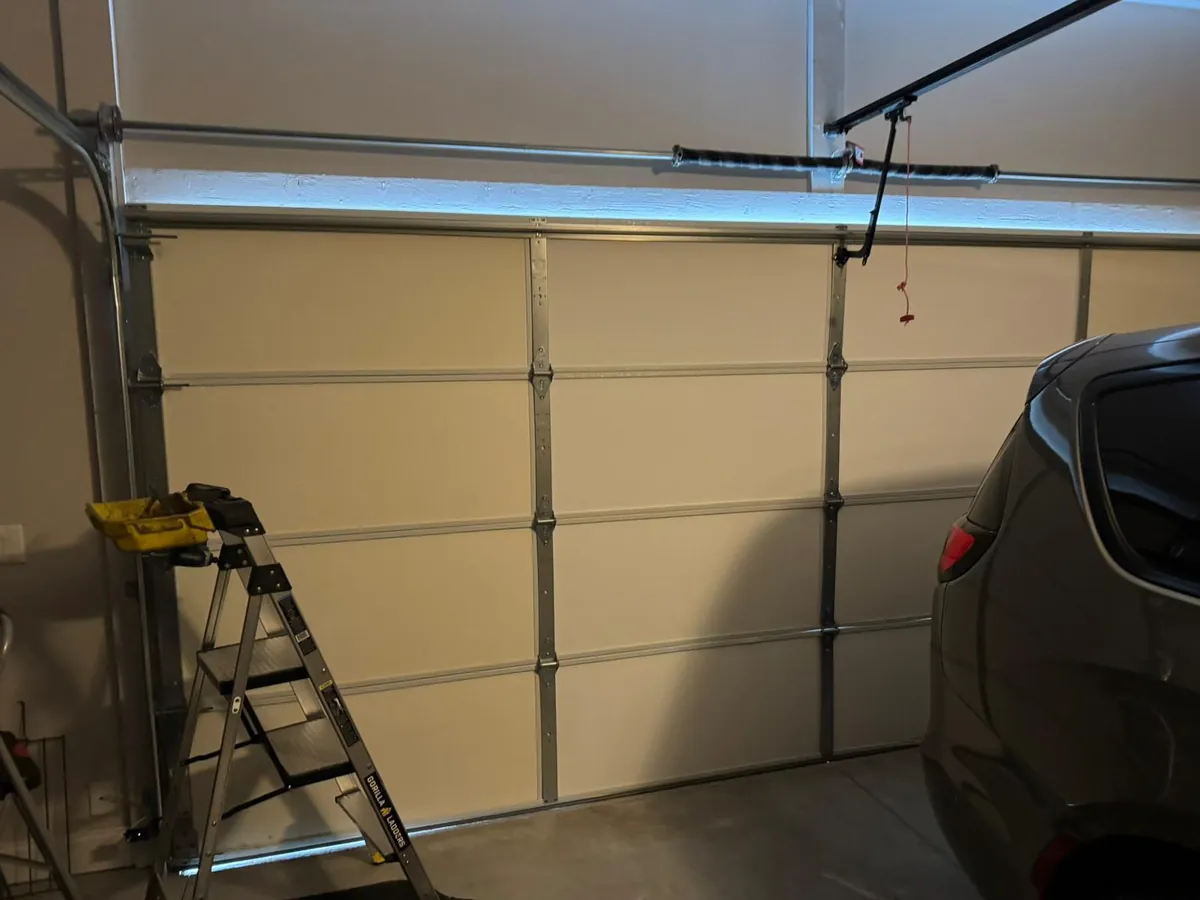
- A dark film of dried grease, or rust freckling, on the spring above the opening.
- A door that shudders or pauses on its first run after a long quiet spell.
Garage door services in Lincoln
Every kind of work the shop does can reach these houses at the ends of their drives. Each card opens the main page for that work, so you can read more before you ring about garage doors Lincoln MA homes keep tucked among the trees.
General repair
Hinges, rollers, panels, seals and brackets on doors that have aged more from weather and time than from use. See garage door repair.
Springs that have sat idle
A spring that has spent years under tension in damp air can crack even with few cycles behind it. Never one for a homeowner to touch. See garage door springs.
Remote range and older openers
A long drive puts the remote’s range to the test, and an older opener may lack modern safety features. See opener services.
Help after dark
A door stuck shut on a dark, wooded lot at night is a real problem. Calls are taken whatever the hour. See urgent repair.
Rusting lift cables
Lift cables that have rested in one position for days can rust at the bends. See cable repair.
Doors off their rails
Needles wedged in a track, or a roller gone stiff, can lift a door clear of its rail. See off-track repair.
New doors for modern houses
A replacement door can suit a contemporary facade, and aluminium-framed full view glass is one route the shop offers. See new garage door installation.
When a door barely moves
It is easy to assume that a door used lightly will last indefinitely. Mechanically, light use does help: springs are rated by the number of times they can open and close the door, and a door that cycles rarely takes a long time to use those up. But a spring is still a coil of tempered steel held under heavy tension every hour of every day, door open or shut. In a shaded garage with damp air coming in off the woods, the surface of that steel slowly oxidises. Rust roughens the coil, and roughness is where a crack begins.
Lubrication follows the same pattern. The thin film of grease on the springs, the roller bearings and the hinge pins does not wear away quickly on a quiet door; it dries out. Dried grease turns tacky, then hard, and starts to resist the movement it was supposed to ease. A roller that was smooth last spring may now drag in the track rather than turn. The first time the door runs after a long rest, all of that stiffness arrives at once, which is why so many problems on these houses appear on a single cold morning.
The fix is rarely dramatic: clean and re-lubricate the moving parts, replace any roller that has seized, and look closely at the springs and cables for rust. But it is worth doing before something lets go rather than after.
Springs under constant load
A torsion spring on a quiet door holds exactly as much tension as one on a busy door. It does not relax between uses. That stored energy is what makes a broken spring dangerous and what makes spring work something to leave to a trained technician, with the right winding bars and a clear sense of how many turns the door requires. A bar that slips under that load can break a hand or an arm, and a spring that has already cracked can still hold a lot of its wind.
When a spring breaks, the door will usually refuse to open, or the opener will groan, lift the door a short way and stop. A visible split in the coil on the shaft confirms it. If you hear a sharp bang from the garage on a quiet night, that is very often the sound. Leave the door closed, do not try to lift it, and call.
Where two springs share the shaft, both are usually renewed at once. Their shared years of tension and damp mean the second is not far behind. The cables, drums and centre bearing are checked while the spring is unloaded, because rust that took one part rarely stops there.
Long drives, remotes and openers
A long drive changes how an opener is used. People want the door rising as the car comes round the last bend, which asks a lot of a remote’s range through trees and around the house. When a remote that once worked from the drive now needs to be pointed from a few feet away, the cause may be a weak battery, a failing receiver in the opener, or an aerial that has been knocked or folded.
Older openers bring their own issues. A mid-century house may be on its second or third opener, and some of the older units in garages like these predate the photo-eye sensors that send a closing door back up. If the opener has no sensors, or the reversal does not work when tested, that is a safety matter as well as a convenience one. Where an opener is past saving, it is replaced with a current unit. LiftMaster is one of the opener brands the shop repairs and replaces; remotes, keypads and wall controls are handled on the same visit.
The safety sensors themselves need a clear view. On a wooded lot, leaves blown into the garage, a cobweb across a lens, or needles stuck to the housing are enough to make a door reverse or refuse to close. Wiping the lenses gently and clearing debris is safe for anyone to do; realigning a bent bracket or replacing a sensor is a job for the visit.
Leaves, needles and the tracks
Woodland drifts indoors. Every time the door opens in autumn, leaves and needles blow in and settle in the bottom of the vertical tracks, along the threshold and behind the photo eyes. Twigs lodge in the curve where the track turns from vertical to horizontal. On a door that runs rarely, that debris has time to build up between trips.
A roller that meets a wad of needles at the bottom of its track can ride up and out of the rail. The bottom seal can trap leaves under it and stop the door sealing to the floor, which lets in water and the occasional small animal looking for shelter. None of this is complicated to prevent: sweeping the threshold and clearing the bottoms of the tracks, by hand and with the door closed, takes a minute.
A door that has left its tracks
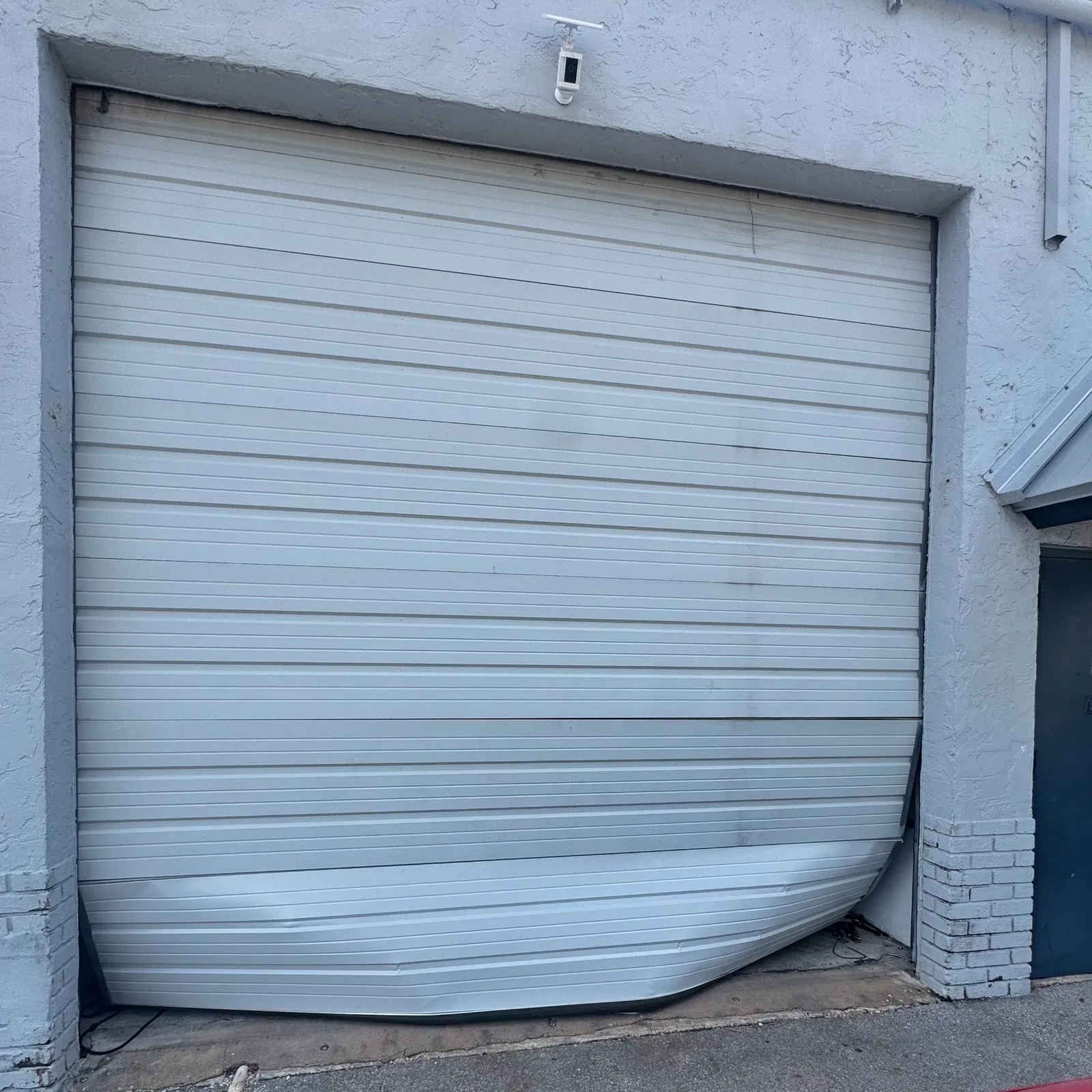
If a door has come off its rail, it may hang crooked, sit jammed partway open or tilt in the opening. Stay out from under it and keep the opener switched off; a derailed door may slump suddenly, and a motor straining against the jam only twists it further. The repair clears the track, straightens or replaces any bent sections, renews flattened or seized rollers, tightens brackets to sound framing and runs the door until it travels true.
Cables that sit in one spot
A door that stays closed for days keeps its cables in the same position the whole time, with the lower ends sitting in the damp air near the floor. Rust forms at the bottom bracket and where the cable bends around the drum. When a corroded cable finally parts, the door drops on that side and wedges itself at an angle.
Spot a slack cable, or a bottom rail sitting on a tilt, and the door should be left alone until it is seen. Both cables are replaced so they match, the drums are checked, and the door is rebalanced to lift evenly.
Power cuts and the emergency release
On a lot surrounded by trees, a storm that brings down limbs can bring down power with them. An opener without power cannot lift the door, and a door that is the main way out for the car becomes a problem quickly.
Hanging from the trolley that rides the opener’s rail is a manual release, usually coloured red. Pulling down on it uncouples door from motor, and from then on muscle is the only thing moving the door. Two cautions apply. Use the release only on a door that is shut all the way, because a door hanging part way up on a failed spring will come straight down once unhooked. And if the door feels far heavier than usual when you try to lift it, stop: the springs may have failed, and lifting a door without its springs is how people get hurt. Ring at any hour if that happens; calls are taken day and night.
Repair or a new door
On a door that has seen little use, the panels are often in good condition even when the hardware has aged, so repair is usually the right answer: new springs, cables, rollers and seals on a sound door. Replacement becomes worth discussing when the door’s panels have been damaged by water or impact, when parts no longer suit the opening, or when the old door simply clashes with the architecture.
That last point matters on mid-century and contemporary architecture, where a garage door can be a large part of the front elevation. New doors are supplied and installed to the existing opening, with a fresh set of springs, cables, rollers and tracks. On a contemporary house, an aluminium-framed full view door in glass is one possibility. When you are weighing a new door for garage doors Lincoln MA houses present to the drive, the visit looks at the opening, the headroom and the house before any choice is made.
What a visit looks like
The order of work is the same each time:
- The door is run through a full cycle so any pause, shudder, scrape or uneven landing can be seen and heard.
- Springs, cables, drums, rollers, hinges and tracks are checked for rust, dried grease and debris, and the opener, remotes and sensors are tested.
- You get a plain account of what has failed, what is on its way, and what is fine.
- With your agreement the work is carried out, moving parts are cleaned and lubricated, the door is balanced and the opener’s safety reversal is proven before anyone leaves.
Testing the reversal on an older opener
Because many doors here run so rarely, a fault in the safety reversal can go unnoticed for a long time. It is worth checking now and then. With the door fully open, lay a roll of paper towels or a flat piece of scrap timber on the floor in the middle of the opening and close the door with the wall control. The door should touch the object and immediately travel back up. Then wave a broom handle through the sensor beam while the door is closing; it should stop and reverse.
If the door presses down on the object and stays there, or ignores the beam, stop using the opener for anything but supervised trips and have it looked at. A reversal that fails is often a force or limit setting that has drifted, a sensor that is out of line, or an opener old enough that its safety system is no longer reliable. Of all the checks on garage doors Lincoln MA families use every week, this is the one that protects people rather than parts.
Small habits for a quiet door
Run the door through a full cycle every week or so, even when the car has not moved, so the grease stays working and any change in sound or speed is noticed early. Keep the bottoms of the tracks and the threshold clear of leaves and needles, especially in autumn. Wipe the sensor lenses. Watch for rust freckling on the spring and the cable ends. If anything looks or sounds different, leave the springs and cables alone and have them looked at.
Your next move
A door that has stood quietly for years can fail suddenly, so it is worth acting on the first odd noise or stiff run. Garage doors Lincoln MA houses depend on tend to give early warnings, and a short conversation is the easiest way to act on them. Next door, Weston and Lexington get pages of their own; the remaining towns sit together on the service areas hub. Dawn, dusk or a sleepy Sunday afternoon, call us or book online.
Questions from Lincoln
My door is hardly used. Why did the spring break?
Springs hold full tension all the time, whether or not the door moves. On a quiet door in a shaded, damp garage, rust slowly roughens the coil until it cracks. Low use slows wear from cycling but does not stop corrosion or age.
Why does the door shudder the first time it opens after a long gap?
The grease on the rollers, hinges and springs dries out and stiffens when the door sits still. The first run has to overcome that stiffness. Cleaning and re-lubricating the moving parts, and replacing any seized roller, usually brings back a smooth run.
The door keeps reversing for no reason. What is wrong?
Very often the photo-eye sensors near the floor are blocked by leaves, needles or a cobweb, or one has been knocked out of line. Gently wipe the lenses and clear the area. If it still reverses, the sensors or their wiring need checking.
The power is out. Can I still get the car out?
Tug the red release on the opener’s trolley, but only with the door fully closed. If the door feels much heavier than usual, stop, because a spring may have broken. Lifting a door without working springs is dangerous; call instead.
Can you fit a modern glass door on a contemporary house?
Yes. Glazed full view doors in aluminium sit among the replacements on offer. The visit checks the opening and headroom so the new door fits the space and the house.