
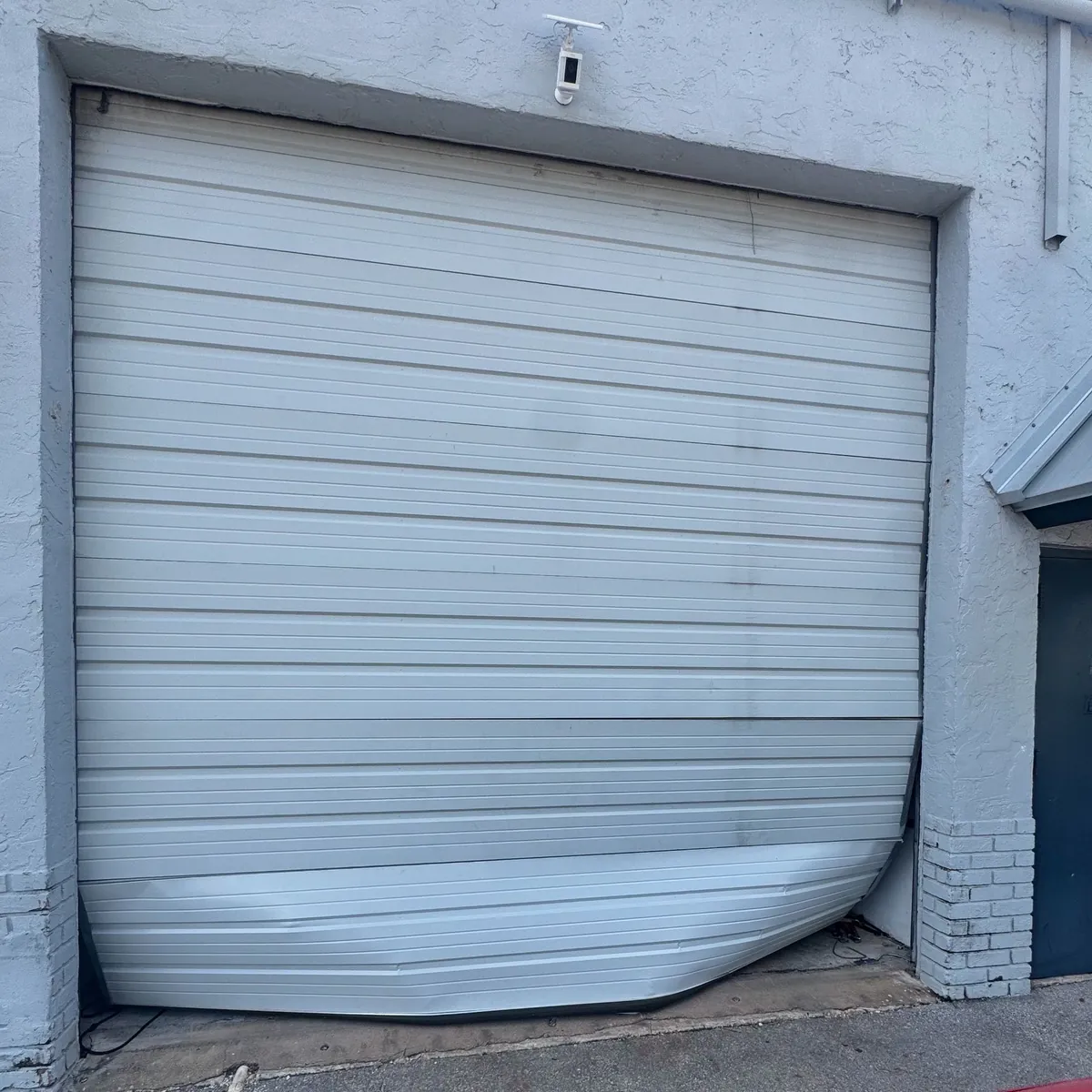
One bay, one door, a few car lengths to the road
Capes and ranches on modest lots make up most of the housing here, and the typical garage is a single bay attached to the house, with a short driveway running out to the street. That simple layout shapes what goes wrong with garage doors Rockland MA owners call about. There is one door, and when it jams, the car has nowhere else to sleep but the drive. The drive is short, so the car usually sits just outside the opening, a few steps from the sidewalk.
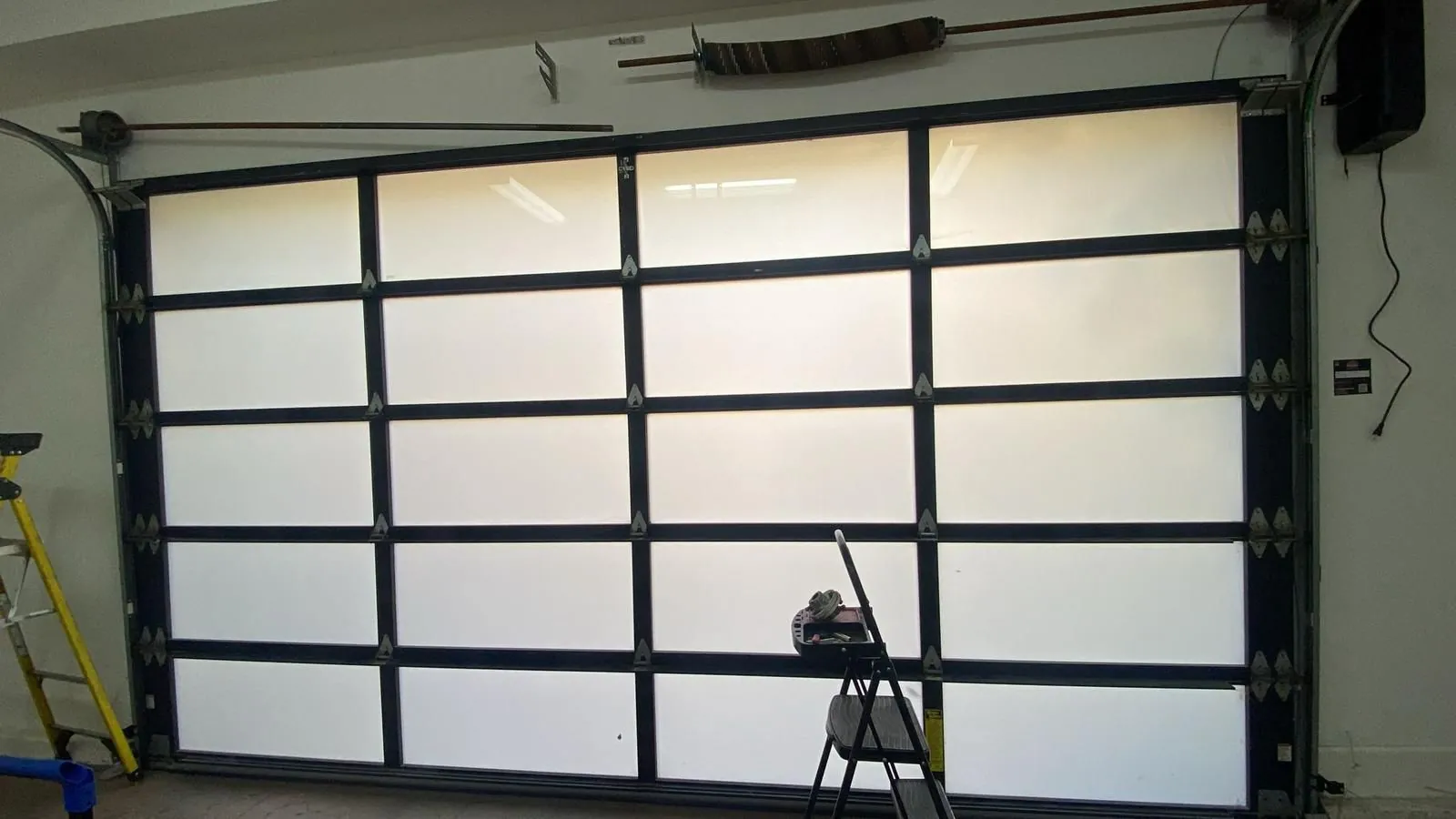
A one-car door weighs less than a two-car one, yet nobody should mistake it for light. It is still a heavy assembly of sections balanced by springs, and on many single doors there is only one torsion spring doing all of that balancing, or a pair of extension springs running alongside the overhead rails. When that spring system fails, the door goes from easy to immovable in a moment.
From the driveway, with your hands in your pockets, notice:
- Whether the door meets the floor flat, or leaves a wedge of light at one end.
- Whether a long spring beside either overhead rail now hangs loose or in two pieces.
- Whether the door shudders, or creeps back down after you let it go halfway.
Garage door services in Rockland
Everyday repairs on a single door
Loose hinges, rollers worn to a rattle, rails shaken out of line, a cracked lowest section. Our garage door repair work handles each of these on the single bays that go with Capes and ranches.
One spring, or a pair
A single door often relies on one torsion coil or two extension springs. When one gives up, the door does too. Both kinds are covered on our garage door springs page, including how each is matched to the door.
Openers and handsets
When there is just one garage, a dead motor shuts the whole bay. Units are fixed or swapped, LiftMaster among them, with handsets and keypads paired again. See opener services.
When the only bay is stuck
The car shut in before a shift starts, or the door frozen open on a bitter night. Whatever time the trouble starts, it can be reported; emergency garage door repair explains what happens next.
Cable work
Even on a single door, one parted cable lets a corner drop and twists the door in its frame. Both cables are changed together. More under cable repair.
Derailed doors and new single doors
A door shunted out of its channels by a bumper is set back in line through off-track repair. Single doors that are past saving make way for new garage doors, sized to the bay.
One door and no spare
Most garage doors Rockland MA houses have are single doors on attached bays, and that one fact changes how a fault should be treated.
In a two-car garage, a broken door on one side is a nuisance; the other bay still works. With a lone attached bay, that door is the car’s sole route in, and often the household’s usual route from the drive into the kitchen or the hall. When it fails shut, the car stays in. When it fails open, the house has an open side until the door is fixed.
That is why small changes are worth noticing on a single door. A new squeal at the top of the travel, a jolt as the door passes the curve of the rail, a motor that hums for a moment before it starts: each is the door telling you something has begun to wear. Catching it then usually means a simpler repair than waiting for it to stop altogether.
Capes and ranches: how the garage sits
The two main house shapes give the garage slightly different settings.
On a Cape, the garage is usually attached to one end, with a roofline that may be lower than the house itself, and sometimes a bonus room or storage space over the top. The ceiling inside can be low, which limits the room above the door for a torsion bar and shapes where an opener can hang. Extension springs are common on these doors for exactly that reason.
On a ranch, the garage generally continues the long, low line of the house. Ceilings tend to be flat, and the door opens into a garage that is often a straight run from the opening to the back wall. There is normally height enough above the header for a coil on a bar and for a motor hung on a rail.
Knowing which shape of house you have helps us guess the spring system and the opener layout before we arrive, and that helps us bring the right parts.
A short driveway and the street beyond it
A short driveway puts the garage door close to the road. Cars park right up to it. Snow cleared from the drive and windrows left at its foot have little room to go anywhere, so heaps end up against the jambs. Meltwater runs back toward the door and freezes along the bottom seal.
The effects on a door are predictable. Bumpers touch the lowest section. Snow heaped against the jambs pushes on the rails. A seal frozen to the floor stops the door from rising, and a motor that keeps pressing against it strains its drive. On a short drive, the door also tends to take more splash and road grit from the street, which wears the bottom seal and the corner brackets faster.
None of these is a reason to worry. A door on a short drive simply has a busier, wetter, grittier patch of ground at its feet than one set far back from the road, and the parts nearest that ground wear first. They are simply the usual suspects when a single door on a short drive starts misbehaving, and they are what we look at first.
When the single bay is also the storeroom
A single garage on a modest lot often does more than hold a car. Bikes, tools, a mower and seasonal gear tend to find their way in, and that changes how the door behaves. Items stored close to the opening can sit in the path of the photo eyes or under the door’s line of travel. Shelving fixed near the rails can foul the rollers. A ladder leaning against a rail can push it slightly out of line.
If the door has started reversing for no reason, or catches at the same height every time, take a look at what is stored near the opening before calling. Moving a bin or a bike a little way sometimes solves it. If not, that is the point to let us look.
Springs on a single door
On a single door with one torsion spring, that spring is doing all of the lifting. There is no second coil to share the load, so when it breaks, the door is suddenly the full weight of its sections. On a door with extension springs, the two springs work as a pair, one along each overhead rail.
Here is the plain safety point: on a Rockland single door, the torsion spring holds dangerous tension, every bit as much in proportion as on a big double. Loading or unloading it takes proper bars and a set routine, because a slipped bar spins with the spring’s whole force. That puts it firmly outside DIY repair, including the little turn people try to make a door stay up. Extension springs need a safety cable through each one so that a broken spring is caught.
A spring failure usually sounds like a heavy bang from the garage. Afterwards the door will not rise, or the motor lifts it a little and stops. Leave the door down, keep away from the bar above the opening, and call us.
On an extension-spring door, the left and right springs have stretched and relaxed together on every trip, so a failure on one side tends to be followed soon by the other. Fitting a new matched pair keeps the door level. We explain the reasoning and you decide.
Cables and corner brackets
The cables on a single door are shorter than on a double, but they carry the full weight of the door between them. They fasten to brackets at the lowest corners, where water, salt and grit from a short drive gather.
A frayed or broken cable lets one corner drop while the other side is still lifted, and the door twists in its rails. An unwound cable does the same. Keep the motor off and stay clear. Both cables are renewed together, wound evenly, and the spring tension is set so the door rises level.
The corner brackets are under spring load. Unbolting one before the spring has been unwound is a quick route to a hospital visit, so leave them to us however rusty they look.
Openers on a single bay
When the only garage has a motor that will not run, the whole bay is shut. We repair and replace openers, LiftMaster among them, and set up handsets, outdoor keypads and the inside button.
The door is always checked before the motor is condemned. A motor dragging a door with a broken spring, a twisted cable or a bent rail will fail again whatever is done to it. Once the door is sound, the usual motor culprits are a stripped gear, a burnt-out circuit board, a handset that has dropped its code, or the photo eyes.
On a single door, those eyes sit very close to whatever is stored near the opening. A bin, a bag of compost or a bike wheel is enough to block or bump them. A door that will only shut while someone keeps a finger on the inside button is the classic sign; make sure the little lamp on each eye glows without flickering.
Doors pushed out of their rails
With only a few car lengths of drive, the most common cause is a car meeting a door still on its way up. A snapped cable or a crumbling roller can also do it, and so can a rail pushed out of line by snow heaped against the jamb.
A door out of its rails is still connected to its springs and can shift without warning. Stay clear, unplug the motor, and do not force rollers back in. We release the spring tension in the right order, straighten or renew bent rail, fit new rollers, check sections and hinges, and hang the door square. The fuller explanation sits under off-track garage door repair.
Out-of-hours calls
A single door that will not open before an early shift, or will not close on a winter night, cannot wait for the morning. The line is staffed overnight and through the weekend. Nobody will name a time of arrival; instead, you get an honest outline of the choices and a couple of simple precautions for the hours before the visit.
Until then, leave it where it is. A door stuck open on a broken spring should not be pulled down by hand, and one shut on a broken spring should not be heaved up. The red release cord is for a door already sitting on the floor.
The visit
We look over the whole door and the space around it, including what is stored close to the opening. If it is safe, we run the door and watch. Then the springs, cables, drums, rollers, hinges, rails, seal, motor and eyes are checked.
You hear the findings in ordinary words, with urgent faults separated from things that can wait, and nothing begins until you agree. When the work is done, the door is balanced so it stays where it is put with the motor unhooked, the motor is set to the door, the auto-reverse is tested, and you see it work.
Fix the old single door or fit a new one
A single door with sound sections is nearly always worth keeping. New springs, cables, rollers, hinges or a new motor can give it many more years.
Replacement is worth considering when the sections are failing: rust through the lowest panel, a crease from a bumper that stops the door sealing, rotten wood, or a door that has been patched repeatedly. A new single door is supplied and hung to the bay’s true measurements, with springs sized to its weight and an opener that suits the ceiling. See new garage doors. For garage doors Rockland MA Capes and ranches carry, a lighter, well-insulated single door can also make the attached garage warmer and quieter.
Choosing a replacement single door
A single door has fewer sections than a double, but the choices are much the same. Foam-filled sections take the edge off the cold that creeps from the bay into the house, which matters on a ranch where the garage shares a long wall with the house, or on a Cape with a room tucked above. A row of windows in the top section lets daylight into a bay that otherwise has none. The style of the face, plain, ribbed or panelled, can be picked to sit with the siding and trim.
Whatever is chosen, the coils are picked for what this particular door weighs and the motor is set to match, so the door balances properly from its first day.
Habits that help a single door
Of all the garage doors Rockland MA garages hold, the single doors on short drives benefit most from a little attention, because there is no second bay to use while one is out of action.
- Keep stored items clear of the photo eyes and the rails.
- Break the ice off the bottom seal before pressing the button on a cold morning.
- Keep snow heaps off the jambs and away from the rails.
- Listen for new noises and note where in the travel they happen.
Springs, cables and the corner brackets stay with us. They are under load and are where home repairs go wrong.
Nearby towns
The towns either side are covered as well. See Weymouth and Hingham, or the whole list on the service areas page.
Your single door, sorted
Give us a quick picture: the noise it made, where it stopped, and which side of it the car is on. Whether it is a broken coil, a slack cable or a motor that has given up, help for garage doors Rockland MA Capes and ranches carry is a phone call away. Whenever it fits your timetable, call us or book online.
Questions from Rockland
Our single door has one spring and it just broke. Can we lift the door ourselves?
Best not. With its lone coil gone, nothing is helping you hold the sections up, and a slipped grip brings them straight down. Leave it shut and phone us.
The door goes down, touches and comes back up. What should we look at first?
Start with anything stored near the opening. In a single garage, a bin or a bike near the photo eyes is a common cause. Check that both eyes show a steady light. If they do, it is time for us to look at the motor’s limits and the springs.
Our Cape’s garage has a low ceiling. Can it take a modern opener?
Usually, yes, though the type of opener and the spring arrangement depend on the room above the door. We look at the space before suggesting anything.
Snow piled against the side of the door and now it catches. Is something bent?
Possibly. Snow heaped against the jamb can push a rail out of line. Clear the snow, and if the door still catches, leave it closed and have the rail checked before it is run again.
Is it worth repairing an older single door?
If the sections are sound, yes. If the lowest panel is rusted through or the door has been patched many times, a new single door is usually the better choice. We show you which applies.