
When the garage door opener runs but nothing moves, the good news is that the motor has power and is hearing the remote. The fault sits somewhere between the motor and the door itself: the link that joins them has come apart, the drive inside the opener has failed, or the door has become too heavy or too jammed for the opener to shift. Each of those looks a little different once you know what to watch for, and one of them is a genuine safety issue that should change what you do next.
Why a garage door opener runs but nothing moves
Picture the opener as a motor on the ceiling that drags a small carriage, called the trolley, along a rail. The trolley is hooked to an arm bolted to the top of the door. The springs do the heavy lifting; the opener just steers a door that should already feel close to weightless. If any link in that chain breaks, the motor can run quite happily without the door following.
The trolley has been released. Every opener has a red cord hanging from the rail. Pull it and the trolley lets go of the drive, which lets someone work the door by hand during a power cut. If somebody tugged it, or it caught on a ladder or a roof box, the chain or belt will travel along the rail and the trolley will stay where it is. Of all the causes, it is the one seen most and the simplest to put right.
The chain or belt is moving but the trolley is not. Look up at the rail while someone presses the button. If the chain or belt is visibly running and the trolley is still hooked on, the trolley itself or its connection may have broken.
Nothing on the rail moves at all. The motor hums or whirs inside the housing, yet the chain, belt or screw stays still. That usually means the drive gear or sprocket inside the opener has stripped. These gears wear over years of use, and they wear faster when the opener has been forced to lift a badly balanced door.
The opener strains, clicks, and gives up. This is the one to take seriously. If the door is suddenly far too heavy, the likeliest reason is a broken spring. The opener tries, senses the load is wrong and stops. Some people heard a sharp bang from the garage earlier; others did not notice it at all.
The door is locked or jammed. A manual slide lock shot across into the track, a door off its track, or a bottom seal frozen to the slab will all hold the door down while the motor tries.
What you can safely check
Work through these in order, keeping clear of the spring and cables.
- Look at the trolley on the rail. If it has come away from the drive, the release cord has been pulled.
- Check the inside of the door for a slide bolt or lock bar pushed into the track. Draw it back.
- With the door fully closed, look at the springs above it. A torsion spring with a visible gap between two coils is broken. Extension springs run along the sides above the horizontal tracks; one that hangs loose or is in two pieces has gone.
- Look at the lift cables at the bottom corners. Both should be tight. Slack or snapped cable means do not run the door again.
- In cold weather, look along the bottom edge for ice holding the seal to the floor.
Where the trolley was the only thing wrong, and the door is down, level and hanging on intact springs and cables, reconnecting it is fine. On most openers you run the opener through one cycle and the trolley catches the drive again as it passes; on others you pull the cord toward the door to reset the latch. If it does not catch, stop there.
When not to touch the release cord
Here is the safety point. If a spring has broken, the door weighs its full weight and only the opener is holding it in place. Pulling the release under those conditions, especially with the door raised, can let the door drop hard. If the door is raised, hangs crooked, or there is any hint that a spring or cable has failed, leave the cord where it is, clear people out from under the door and phone for help.
Never try to adjust or wind a spring, or undo a cable or bottom bracket. All of them are loaded with the door’s weight, and they injure people who tackle them without the training and tools for it.
What Greater Boston weather does to the opener
Winter is hard on openers. When the temperature drops, lubricant on the rail and in the rollers stiffens, the door gets harder to move, and springs are at their most fragile. An opener that has quietly been carrying a weak spring all autumn can strip its gear on the first freezing morning, at which point the garage door opener runs but nothing moves and the car is stuck inside.
Along the harbour, in Winthrop, Revere and Marblehead, the salty air eats at the chain on chain-drive openers and corrodes the trolley and rail fittings. A rusted chain binds, a corroded trolley latch can fail to re-engage, and the cables down at the door can rust at the drums too. If you live close to the shore, it is worth looking at the cables before blaming the opener.
City driveways add urgency. Many garages here sit at the end of a short, narrow drive that is the household’s only off-street parking. When the opener runs and the door stays shut, the car stays in. When it happens with the door open, the garage is open to the street.
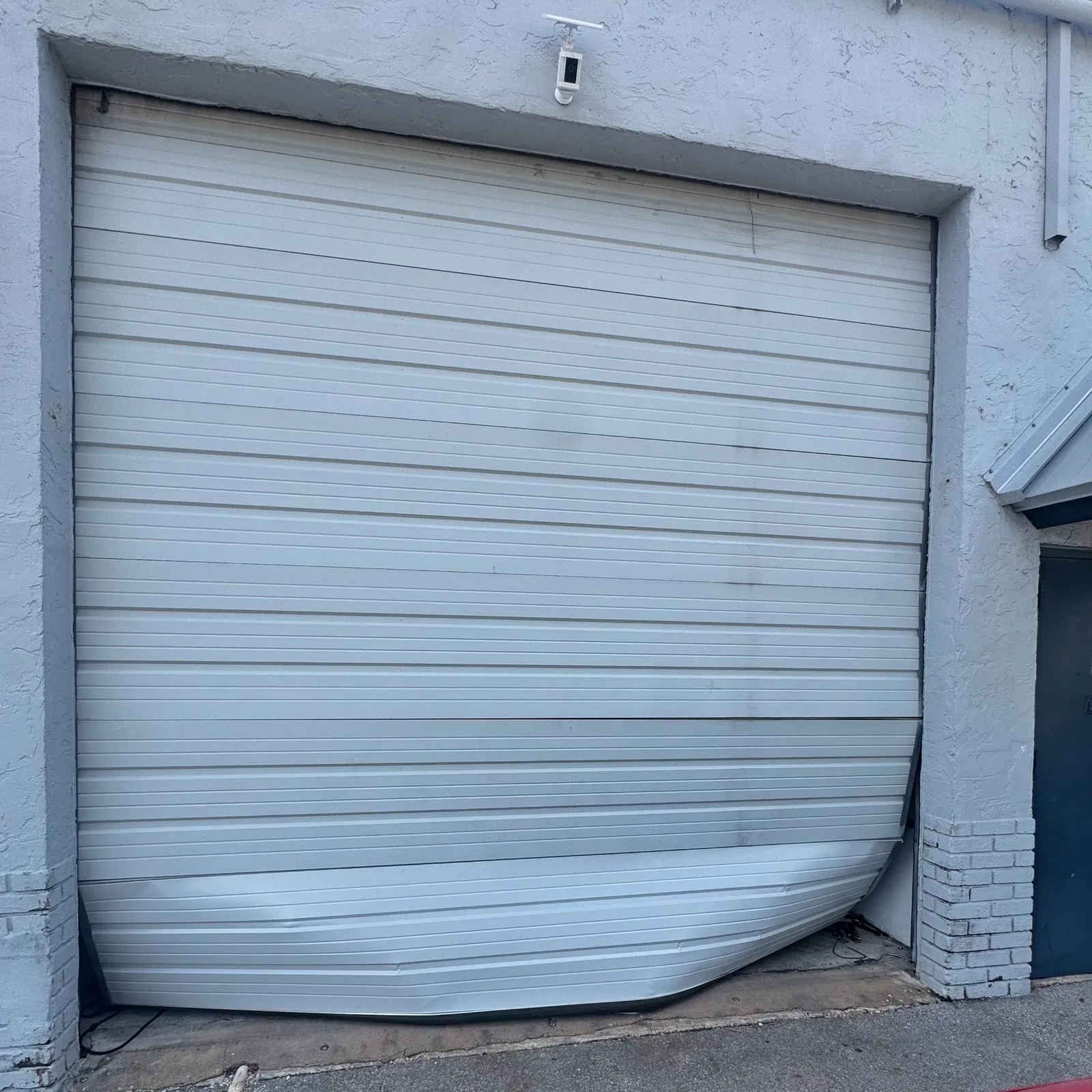
How each cause gets fixed
When a garage door opener runs but nothing moves, the repair depends on which part has let go:
- A stripped gear, a broken trolley, a stretched chain or a worn belt belongs to opener repair and replacement; an opener past saving is swapped for a new one, and LiftMaster units are covered too.
- A snapped spring, whether torsion or extension, needs spring repair, and the broken spring post walks through what to do once one goes.
- Cables that have snapped or gone slack, and worn drums, are a job for cable repair.
- A door jammed off its track is put back and the track straightened under off-track garage door repair.
The technician checks the whole system before fixing anything, because a stripped gear is often a symptom: if a weak spring caused it, a new gear alone would strip again. Before any work begins, you are told which part failed and what caused it. If the problem began with a rumbling sound before it stopped moving, our post on a garage door grinding noise covers the early signs, and the guide to a garage door that won’t open covers doors that do nothing at all. The blog has guides to the other faults a door can throw up.
Signs you should call rather than keep trying
Stop pressing the button and call if the garage door opener runs but nothing moves even after the trolley has been reconnected, if a spring shows a split between its coils or a cable hangs slack, if the door is raised and will not come down, or if the opener smells hot. Each extra attempt puts more strain on a motor that is already working against something it cannot shift.
Questions about an opener that runs but nothing moves
Why would the emergency release have been pulled?
It is easy to catch. Ladders, bikes on wall hooks, roof boxes and tall vehicles all snag the cord, and people sometimes pull it during a power cut and forget to reconnect it. Check the trolley first.
Can I just replace the gear inside the opener myself?
It is safer and quicker to have it done. The opener has to be opened up and taken off its mounting, and a technician will also check whether a weak spring or a binding door caused the gear to strip in the first place.
The motor hums but nothing on the rail moves. Is the opener dead?
Not necessarily. A humming motor with a still chain or belt usually points to a stripped drive gear or sprocket, or a door so heavy the motor stalls. Both are repairable, but a heavy door needs its springs checked before anything else.
Can I lift the door by hand instead?
Only if nothing is broken overhead or at the cables, the bottom edge sits level, and it is fully closed as you pull the release. A door with a broken spring is extremely heavy and can drop. If in doubt, leave it.
Do you repair LiftMaster openers?
Yes. Repairs and replacements on LiftMaster openers are part of the work, including their drive parts, remotes, wall buttons and safety sensors.
Get the door moving again
If the motor runs and the door will not follow, call us or book online. Our phone is staffed after dark too, so a car trapped on an icy morning, or a raised door spotted at midnight, need not sit there till breakfast.