
Whether your door hangs on torsion or extension springs matters more than most homeowners guess. It shapes how the door feels in your hand, how it fails, how loud the failure is and what the fix involves. Both systems do one job, offsetting the weight of the panels, yet they go about it in opposite ways: one twists, the other stretches. A glance at the garage ceiling usually settles which one you have.
Spotting the difference from the floor
Shut the door and look at the wall just above it. One or two fat coils wrapped around a horizontal steel bar, with a round drum at either end of that bar, mean torsion springs.
If the header area is bare, turn your eyes to the sides, where the tracks run back toward the rear wall. Long, slimmer springs hung beside those tracks, finishing in pulleys and cable, are extension springs.
The choice between torsion or extension springs only becomes a real question when one breaks or the door gets replaced, and knowing your setup beforehand makes that talk with a technician much shorter. Our plain explanation of how garage door springs work covers the counterbalance idea behind both.
How torsion springs behave
A torsion coil is loaded with twist while the door sits closed. As the panels climb, the coil relaxes and rotates the shaft, which spins both cable drums and raises the door evenly from its two lower corners.
What you tend to notice:
- Smoother travel. One shaft delivers the force, so left and right rise in step.
- Steadier balance on heavy doors. Wide double doors and insulated doors generally need torsion to carry them properly.
- A contained failure. A snapped torsion coil normally stays put on its shaft. You hear a gunshot-like crack and see a clear gap in the coil.
- Real danger in handling. The stored twist is enormous. Winding or unwinding one calls for proper bars, a fixed sequence and experience, and never a homeowner.
How extension springs behave
Extension springs lengthen as the panels descend and shorten again on the way up. Each side has its own spring, cable and pulleys, so each side lifts on its own.
What you tend to notice:
- Found on lighter, older doors. Plenty of single doors, particularly in old freestanding garages, were set up this way.
- Nothing across the header, so they suit openings with little room above.
- A higher chance of a lopsided lift. If one side’s spring or cable weakens first, the door climbs unevenly.
- A violent break without containment. A snapping extension spring can lash out sideways. A cable threaded through its centre keeps it captive, and older setups sometimes lack that cable.
Comparing torsion or extension springs for your garage
Neither type is wrong everywhere. The better fit depends on the door’s weight and width, the headroom over it and the state of everything else on it.
Heavy or wide door: torsion usually wins. It shares the load evenly and stops a double door from racking as it rises.
Light single door, little room over the opening: extension springs can still serve well, as long as they are sized correctly and fitted with containment cables.
Switching from one to the other: more than the springs changes. Going from extension to torsion means adding a shaft, bearings, drums and fresh cables, and the header has to be sound enough to hold the centre bracket. A technician looks over the whole arrangement before suggesting it.
Matching the spring to Greater Boston garages
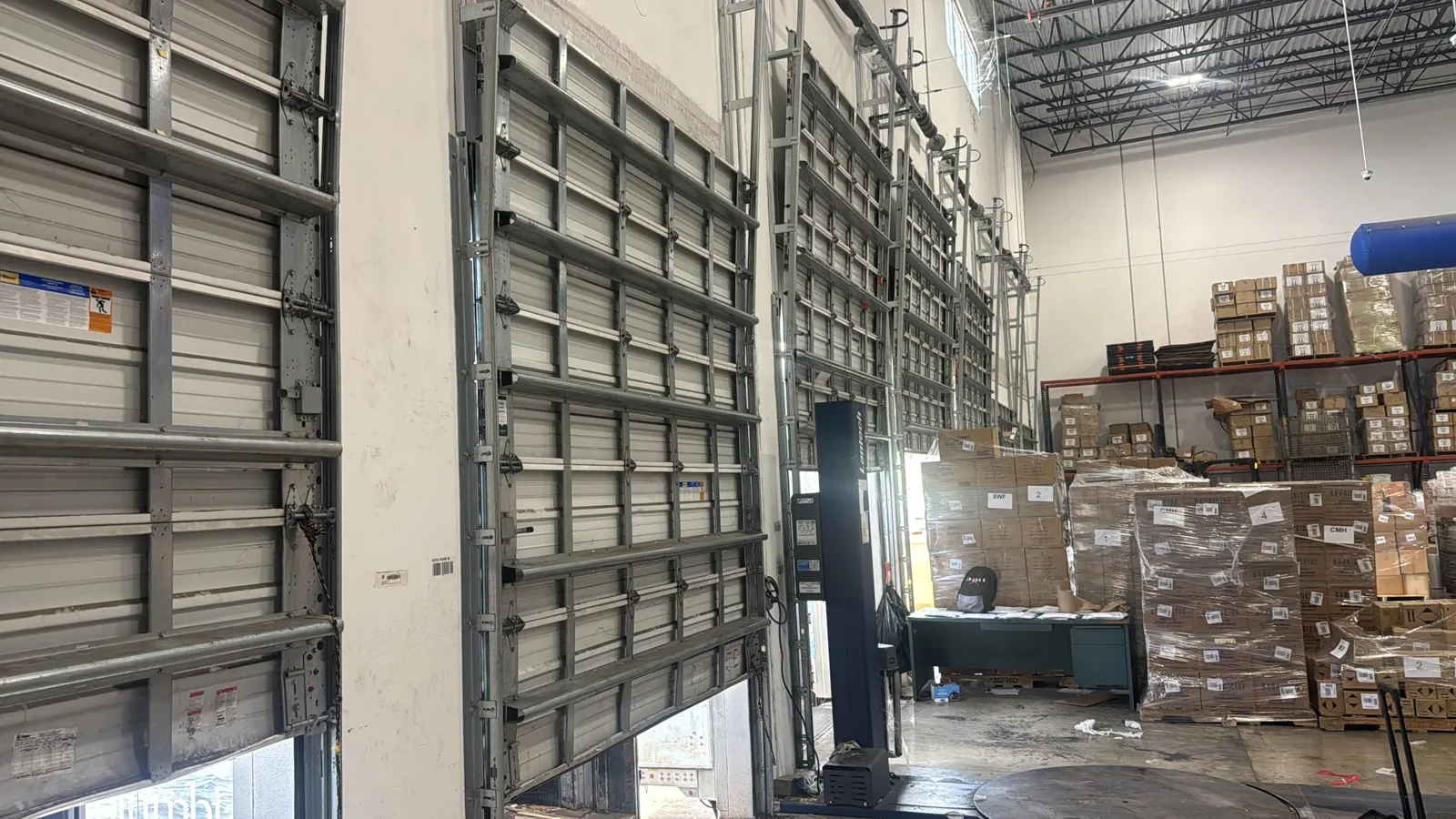
Single freestanding garages behind triple-deckers. Extension springs show up here more than anywhere. Doors on these garages have often been swapped, and you regularly find a newer, heavier slab hanging on springs chosen for something lighter, or springs missing their containment cables. When one of them goes, picking torsion or extension springs for the replacement is a genuine decision, because a tired header and a low roof can limit what fits.
Row houses with no garage. A shared rear garage or old carriage house used by several homes clocks up many more cycles than a private door. Whatever spring type it runs on wears sooner, and torsion usually copes better with that traffic.
Two-car garages built onto suburban houses. Nearly all of these run on torsion, often a matched pair. Lose one and the door turns too heavy to raise, trapping the car inside until it is replaced. Renewing both at once keeps the door level, since the partner spring has aged just as much.
Hands off, eyes on
Inspect without touching. See whether a coil shows a gap or a spring hangs slack. See whether each cable is still seated. See whether the door rests level.
Never adjust, unhook, wind or release either kind of spring. Leave the lift cables, and the anchor plates they hook into down at floor level, alone too, because they carry the same tension. If the door is stuck up, keep everyone clear of the area beneath it instead of trying to drag it down by hand.
Repairs for both spring types
We repair and replace both kinds, and our garage door spring repair page explains what a visit covers. A spring failure often drags a cable or drum down with it, which falls under cable repair. If the panels also jumped the rails, off-track repair sorts that out. When a door is beyond saving, we also supply and fit new garage doors, and weighing a full swap is easier with our door replacement guide.
For the first minutes after a spring snaps, read our post about a broken garage door spring, and browse the blog for other guides. Whichever you own, torsion or extension springs both hold enough energy to hurt someone, so the repair belongs with a technician.
Sounds and sights that hint at a tired spring
Springs rarely snap without some earlier hint, and the hints differ by type. On a torsion setup, listen for a dry creak from the header as the door starts to climb, and watch for the panels feeling sluggish over the first stretch of travel. Rust blooming along the coil, or gaps opening unevenly between its turns, are worth mentioning when you call.
On an extension setup, look along each side track while the door moves. A spring that stretches noticeably further on the left than the right, a pulley that wobbles, or a door that settles down at a slant when you stop it halfway all point to one side carrying less than its share. None of these signs calls for a toolbox. They call for a booking before the coil gives out on a frosty morning with the car still parked inside.
Questions about torsion and extension springs
Which spring type lasts longer?
Usage, garage climate and correct sizing matter far more than type. Both wear out by cycles of opening and closing.
Can extension springs be swapped for torsion springs?
Often, though it is a conversion rather than a straight swap. A shaft, drums, bearings and new cables go in, and the wall over the opening must be able to carry them.
Why does my door rise crooked?
With extension springs, one side may simply be weaker. With either type, a frayed or slipped cable is a frequent cause. Park the door and get it looked at.
Are extension springs more dangerous?
Both are dangerous to handle. Extension springs can fly loose when they break without a containment cable, while torsion coils hold a great deal of twist that releases suddenly if worked on wrongly.
Is it worth renewing both springs together?
Where a door has a pair, yes as a rule, because they have aged side by side and the door only balances properly when they match.
Have your springs looked at
Spring snapped, or the door suddenly feels like a dead weight? Call us or book online. The phones stay staffed overnight and through every weekend, so a spring failure that shuts a car in can be passed on to us as soon as you discover it.