
Springs, cables, rollers, tracks and openers can nearly always be renewed one at a time, so a single failure rarely condemns the whole door. Deciding when to replace a garage door really turns on the panels, the skeleton of the door itself, and how much of its hardware has worn out together. Sound sections with one broken part point to a repair. Cracked, rotten, buckled or unbalanceable sections point to a new door.
Repair first: what can be fixed on its own
Before anyone talks about a new door, it is worth knowing how much of the old one can be renewed piece by piece:
- Springs, torsion and extension, swapped when they snap.
- Cables and drums, changed when they fray, part or slip.
- Rollers, tracks and brackets, replaced or realigned when the door runs rough or leaves its rails.
- Openers, remotes, wall buttons and safety sensors, each repaired or replaced on its own.
- A single panel or section, sometimes renewed when it is the only one damaged.
A door with a snapped spring and healthy panels needs a repair, not a replacement, and keeping that list in mind stops one failed part from rushing the question of when to replace a garage door. Our garage door repair page covers the work that keeps an existing door going.
Signs it is time to think about when to replace a garage door
These conditions tip the scales toward a new door:
- Damage across several sections. One dented panel can be swapped; dents and creases running most of the door’s height are another story.
- Rot or splitting in timber. Wood gone soft along the bottom rail or split with the grain stops holding hinges and fixings firmly.
- Rust eaten right through steel. Surface rust can be treated; holes and flaking edges along the base mean the metal itself is failing.
- A door racked out of square. After a bump from a car, or after running lopsided for months, a door can warp until it no longer tracks or seals against the floor.
- One repair after another. When springs, cables and rollers fail in quick turn, the whole door is usually showing its age at once.
- A door no spring can steady. If added weight, old patching or damage means the springs can no longer hold it level, a new door is the safer path.
No single item here is a verdict. A technician who looks over the entire door will tell you which parts are worth keeping.
What is safe to check yourself
Walk round the closed door in daylight. Press gently on the lower panels to feel for soft timber. Run your eye along the base for rust holes or a crumbling bottom rail. Step back and judge whether the door hangs true in its frame or leans to one side. Then run it with the opener and watch for any section that bows or snags.
Do not haul a heavy door up by hand to test it if a spring or cable has gone, and never slacken a spring, cable or corner fitting to see how it moves. Those parts hold tension that can injure badly. A door that feels unsafe should be parked and reported.
How the type of garage shapes the decision
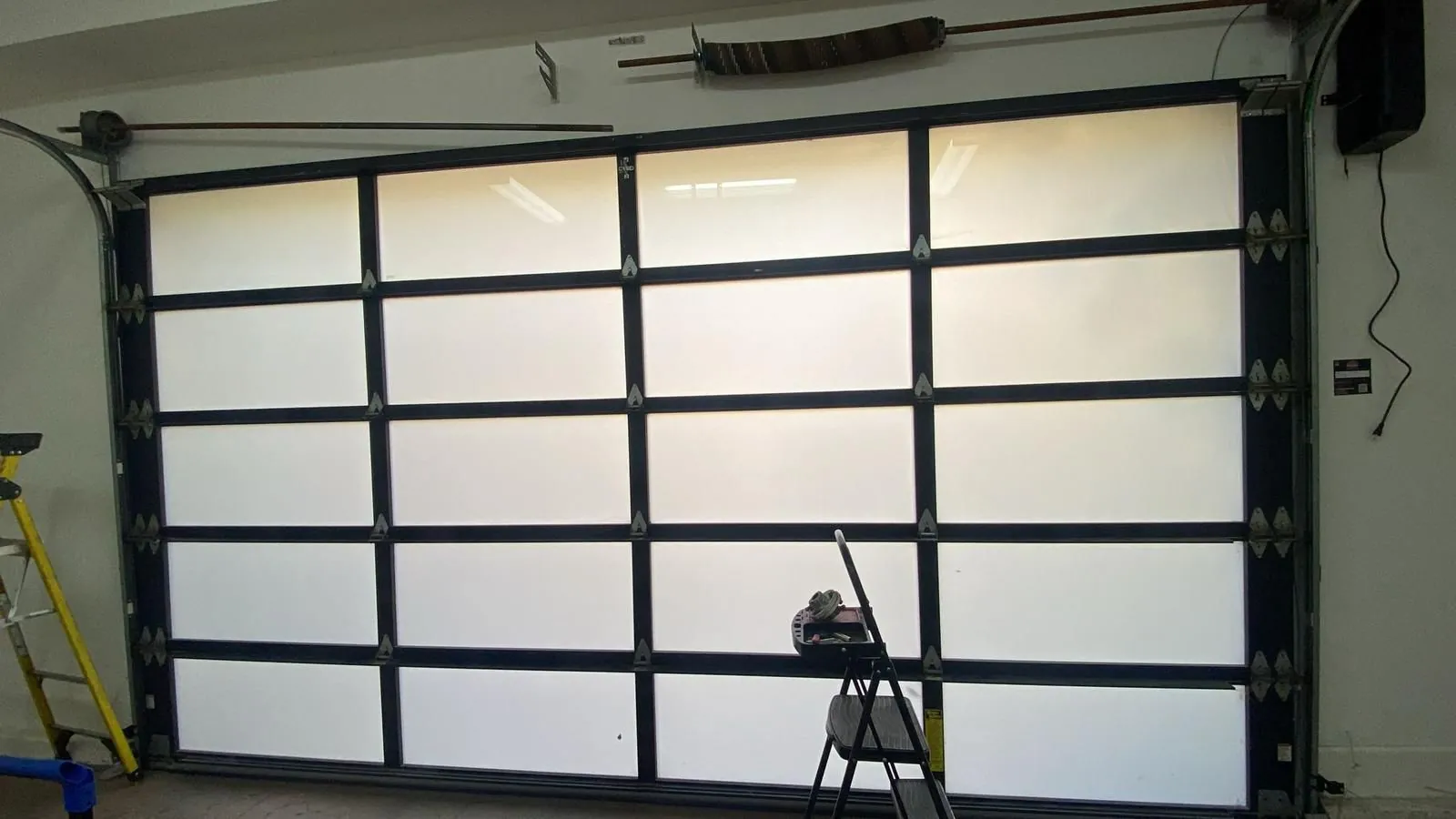
Old single garages behind triple-deckers. Plenty were put up in the twenties, and the doors fitted to them have rarely survived without a string of alterations. Some are timber doors carrying newer, heavier panels or hardware, hung on springs never meant for them. With so many changes stacked up, judging when to replace a garage door here often comes down to whether it can still be balanced and run true in its tracks. A narrow drive or cramped lot matters too, because any new door must suit the existing opening and headroom.
Row houses with nowhere to park inside. Where homes lack a garage, a shared back-lot garage or converted carriage house may serve the whole row. Those doors see heavy daily use and often look it, and a door several neighbours depend on is worth renewing before it fails rather than afterwards.
Suburban garages joined to the house. These openings are broad and the doors heavy, so a door damaged across several sections strains the springs, cables and opener every time it moves. And since an attached garage connects to the house, a door that no longer seals or locks is effectively a weak spot in the home itself.
Choosing a replacement
If the verdict is a fresh door, our new garage doors service covers supplying it, fitting it and retiring the tired one. Glass-and-aluminium designs sit under full view glass garage doors. Our longer article on choosing the perfect new garage door runs through materials and styles, and the blog holds other plain guides.
Fitting a new door is also a natural point to reconsider the opener. If yours is noisy, sluggish or labouring, our comparison of garage door opener types lays out the options, and opener repair and replacement handles the fitting. Businesses swapping a roll-up or sectional door should start at commercial garage doors. Curious how a repair visit compares with a full replacement for time on site? Our piece on repair timings sets the jobs against each other.
A practical rule of thumb
Sound door, failed part: fix the part. Failing door, through rot, rust, warping or damage spread over several sections: replace the door. More often than not, the puzzle of when to replace a garage door solves itself once somebody studies the panels closely instead of the snapped spring that prompted the call. That is also why our technicians look over the whole door on any repair visit, so you learn the state of the sections while it still works.
Small habits that stretch a door’s life
Even a door you plan to keep for years benefits from a little attention. Keep the bottom seal and the floor beneath it clear of grit, ice and leaves so the lowest panel is not dragged or soaked. Hose road salt off the lower sections after winter storms. Listen for new noises and treat a fresh grind or shudder as a reason to book a look, not a sound to turn the radio up over. Watch the door travel now and then from inside the garage, checking that both sides rise together and the rollers stay seated.
These habits do not make a worn-out door young again. They do help a sound door reach its natural end on your schedule instead of failing suddenly on a dark evening, which keeps the replacement decision calm and planned.
Questions about replacing a garage door
Can one damaged panel be swapped out?
Sometimes. If the remaining sections are in good shape and a matching section can be had, a single-section swap is possible. Several damaged sections usually tip it toward a new door.
My spring broke. Is that the end of the door?
Usually not. A snapped spring gets replaced by itself. Only failing panels or a warped frame make a new door necessary.
Must the opener be changed along with the door?
Not always. An opener that runs well and suits the new door can stay. One that is struggling is worth replacing at the same visit.
Is a warped door dangerous?
It can be. A door out of square may bind, jump its tracks, or load the cables and springs unevenly. Stop using it and have it inspected.
How do I decide between repair and replacement?
Book an inspection. Our technician inspects each section plus the hardware, spring by spring and roller by roller, and then says plainly what deserves keeping.
Talk to us about your door
Torn between fixing the old door and fitting a new one? Call us or book online whenever suits you; Sunday mornings and midweek midnights alike, a real voice answers, so a door that gives out unannounced gets logged straight away.