
With a door jammed and a car stuck behind it, the first thing anyone asks is how long a garage door repair takes. The straight answer: it hinges on which part gave out, whether the right replacement is on hand, what else broke in the same moment, and how easy the garage is to work in. Most single-part faults get sorted in one visit. Jobs involving several damaged parts, an unusual door or a complete replacement run longer, occasionally across more than one trip.
What decides the length of a job
Four factors outweigh everything else:
- Which part failed. Changing a remote battery or lining up a sensor is brief work. Renewing a torsion spring, which must be unwound and rewound with care, is a slower, more deliberate job.
- Whether the part is on hand. Everyday parts may be ready straight away. Springs sized for an odd door, or panels for an older design, may have to be ordered.
- Collateral damage. A snapping spring can throw a cable off its drum, and a door that drops lopsided can kink a track. Each extra casualty adds labour.
- Access. An open garage with space around the door is quicker to work in than one crammed with storage, a car that cannot move, or a door tucked down a narrow passage.
Working out how long a garage door repair takes is mostly a matter of answering those four questions for your own door.
Quicker jobs, longer jobs
Rather than quoting times that would not hold for every door, here is how the usual repairs stack up against one another, which gives a fair sense of how long a garage door repair takes compared with its neighbours on the list.
Typically among the shorter jobs
- Sensors at floor level knocked askew or smeared with grime.
- A remote or wall button needing reprogramming or replacement.
- One worn roller or a loose bracket.
Typically a middling job
- A snapped spring, torsion or extension, replaced and the door rebalanced.
- A frayed or parted cable, with its drum inspected or renewed.
- An opener needing a component repaired.
Typically a longer job
- A door that has left its rails, especially with kinked track sections.
- Both springs, both cables and a set of rollers renewed together.
- A new opener put in where the old one hung.
- A complete new door supplied and fitted.
Once the door has been examined, and before any work begins, the technician will tell you which group your repair belongs in.
What you can do while you wait
A few steps speed the visit up and keep everybody safe:
- Clear space around the door and beneath both tracks so there is room to work.
- Move the car out if it can get out, or mention on the phone that it is shut in.
- Jot down what happened. A bang, grinding, the door halting midway or rising lopsided all help narrow down the fault before anyone arrives.
- Leave a stuck door exactly as it sits. With a spring or cable gone, neither lift nor lower it by hand, and stop pressing the opener button.
What to avoid: never slacken springs, cables or the lower anchor brackets they pull on in an attempt to shift a stuck door. They carry the springs’ force and can cause serious injury. A wound torsion spring in particular stores a dangerous load and is no task for a homeowner.
How the garage itself affects the time
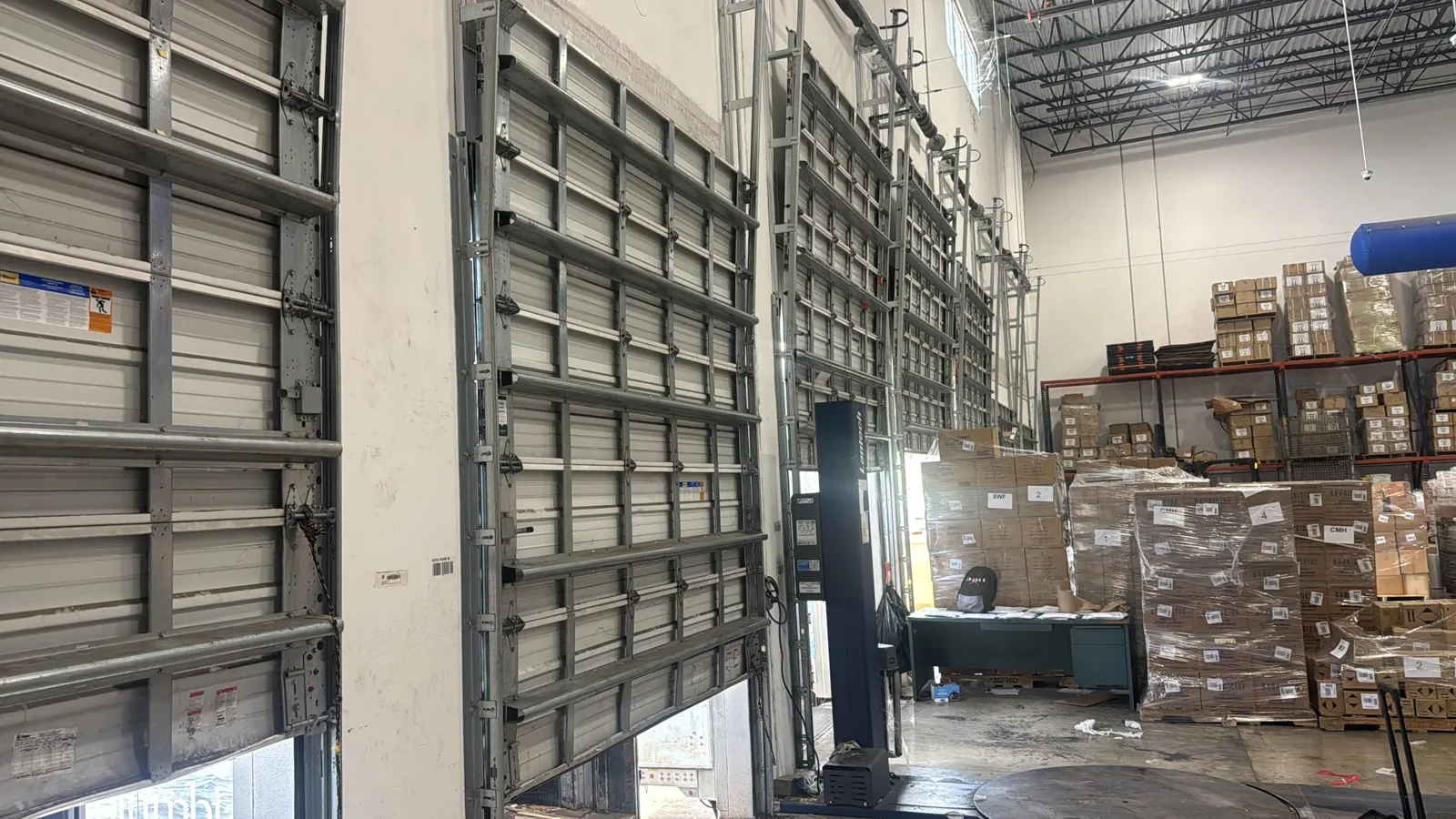
Old freestanding garages behind triple-deckers. A lot of them were framed in the twenties, and hardly any still wear their first door. A repair can bring older alterations to light: mismatched springs, worn tracks, extension springs with no containment cable. Sorting those out adds to how long a garage door repair takes, but it spares you a second call soon afterwards. A narrow shared drive can also mean arranging with neighbours before a van gets close.
Row houses with no garage of their own. Where several homes share one rear garage or old carriage house, the door often takes a beating and may need more than one part at once. Access can be tight, and the work may have to fit around the other people who use it.
Attached two-car garages out in the suburbs. A broad, weighty door generally hangs on a pair of torsion springs, and both are normally renewed together. That takes a little longer than a single spring but keeps the door level. With room to move around the door, these garages tend to be easy to work in.
Matching the fault to the right service
Once you know the fault, the right page follows:
- A snapped spring: garage door spring repair.
- A frayed or parted cable: cable repair.
- A door off its rails: off-track repair.
- An opener, remote, wall button or sensor: opener repair and replacement, LiftMaster units included through LiftMaster opener repair.
- Panels, rollers and the rest: garage door repair.
Trouble at night or over a weekend? Read how such calls run on the emergency garage door repair page. Should the door itself be past saving, the guide to replacing a door helps you decide, and the spring guide shows why spring jobs are handled so carefully. Other plain guides sit on the blog. With the fault identified, how long a garage door repair takes becomes much simpler to answer.
Why rushing a repair backfires
It is tempting to want the fastest fix possible, especially with a car trapped inside. Yet the jobs that come back soonest are usually the ones where only the visible symptom was treated. Swap one snapped spring on a paired door and leave its twin, and the twin may go within weeks. Rehang a door on its rails without straightening a kinked track section, and it will jump again.
That is why a technician on your job looks beyond the broken piece: rollers, hinges, cables, drums, the opener’s force settings and the safety reverse all get checked before the door is handed back. It adds a little to the visit, and it is the part that keeps you from booking a second one. If the inspection turns up something that can wait, you will hear so plainly, and you can choose to leave it for another day.
Questions about garage door repair times
Can you give me a repair time over the phone?
A rough idea, sometimes, if the fault is obvious from your description. A firm answer comes after the door has been seen, because hidden damage can change the job.
Why would a repair need a second visit?
Usually because a part must be ordered, such as springs for an unusual door or a matching panel for an older design. You will hear about that before any work starts.
Is replacing a spring a long job?
It is a careful job more than a long one. The old spring has to be released safely, the new one wound, and the door balanced and tested.
Can I use the door while a part is on order?
That depends on the fault. A door with a snapped spring or cable should stay out of use. Some opener faults let you run the door by hand meanwhile. The technician will tell you what is safe.
Does a new door take longer than a repair?
Yes. A replacement door is supplied and installed, which means taking down the old door and fitting new tracks, springs and hardware, so it is a bigger undertaking than any single repair.
Get your door looked at
Want to know how much work your door needs? Call us or book online. Staff answer through the night and across Saturday and Sunday, so a fault spotted at an odd hour still reaches us straight off.