
People picture the opener as the muscle of a garage door. It is closer to the steering wheel. Spring steel bears the load; the motor merely supplies the nudge that sends a balanced door along its tracks and then holds it shut. Even so, the garage door opener types you can buy differ a good deal in how they drive the door, how much racket they make and how much room they claim. The right pick depends on the door, the garage, and whether someone sleeps above the ceiling.
The main garage door opener types
Most home openers fall into five families. Four hang from the ceiling with a rail reaching out to the top edge of the door; the fifth bolts to the wall beside it.
Chain drive
A steel chain, much like a bicycle chain, runs the length of the rail and drags a trolley hooked to the door. Chain drives are tough and shift heavy doors without complaint. Their drawback is sound: the links rattle and clank, and the vibration travels into the joists. In a freestanding garage where nobody sleeps nearby, that barely matters.
Belt drive
Picture the chain layout again, only now a toothed, fibre-reinforced belt does the pulling. A belt drive runs noticeably quieter and smoother, which suits attached garages with bedrooms or living space over or beside them. The belt does wear and can stretch with age, so it wants occasional tensioning.
Screw drive
A long threaded rod spins inside the rail and walks the trolley along. With fewer moving parts than a chain or belt, there is less to adjust. Screw drives can be touchy about wide temperature swings, and in an unheated garage through a hard Massachusetts winter they may run slower or noisier.
Direct drive
Here the motor itself rides along a fixed chain inside the rail, so only one part moves. Direct drives are quiet and simple, with very little to wear out between service visits.
Wall-mounted
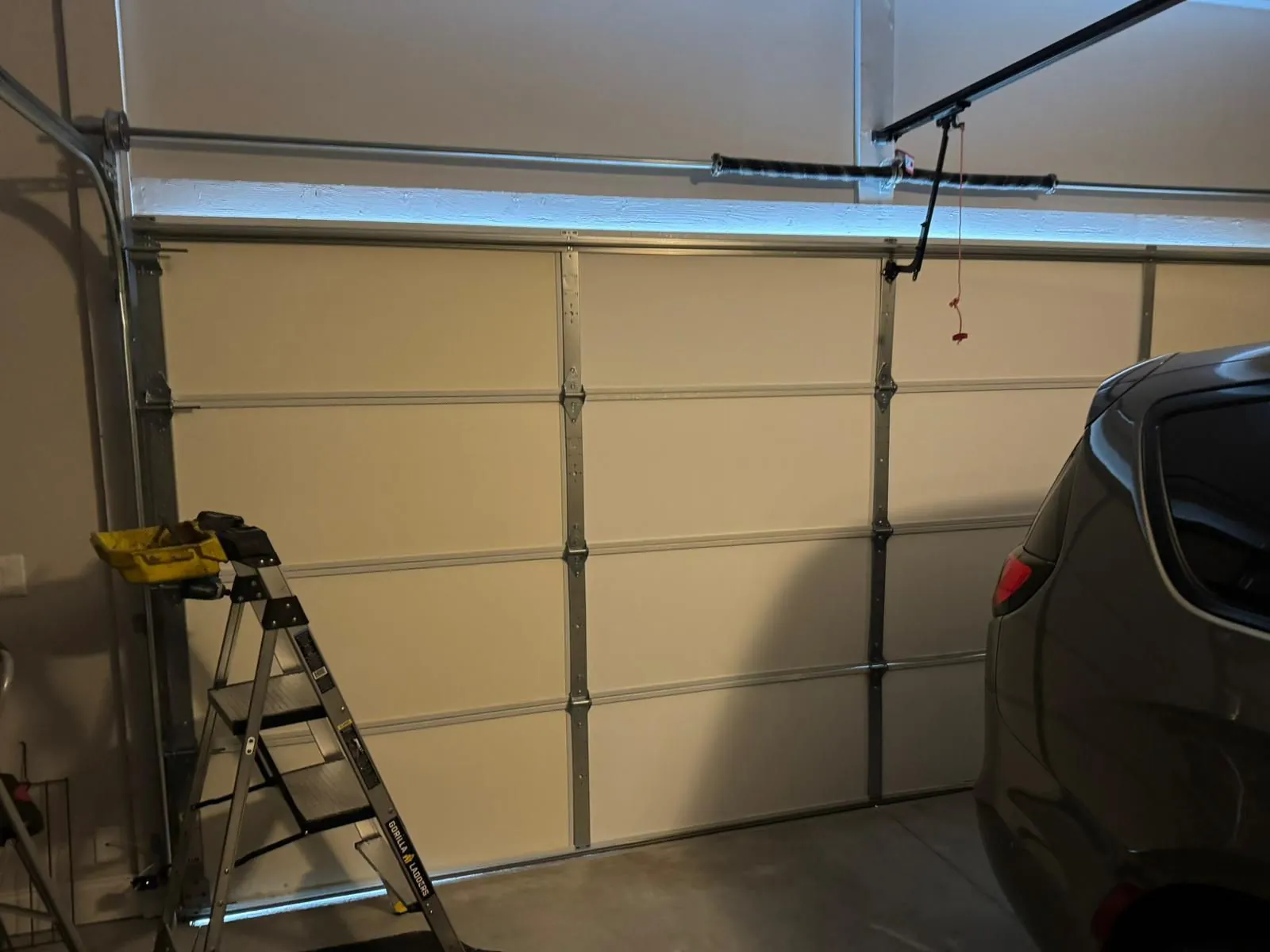
Sometimes called jackshaft openers, these sit on the side wall and turn the torsion spring shaft directly. With no rail across the ceiling, they leave the overhead space open, which helps in garages with low or sloping roofs, or where storage racks hang from the joists. They only work on doors running torsion springs.
Comparing garage door opener types side by side
Rather than ranking them, match each one to a situation:
- Very heavy door, noise no concern: chain drive.
- Bedroom or living room over or beside the garage: belt drive or direct drive.
- Fewest parts to look after: screw drive or direct drive.
- Low ceiling or overhead storage: wall-mounted, provided the door uses torsion springs.
Whatever the drive, every opener must reverse when something blocks the door’s path, and must pair with the two safety eyes fixed low on either side of the opening. Remotes and wall buttons come with every type.
How the garage shapes the choice
Freestanding single garages behind triple-deckers. Many went up in the twenties, often with low rafters and doors running on extension springs. A ceiling-hung chain or screw drive tends to suit them, since noise rarely bothers anyone and a wall-mounted unit needs a torsion shaft these doors may lack. The wiring out to an old freestanding garage deserves a look before a new opener goes in.
Row houses with no private garage. A back-lot garage or converted carriage house shared by several homes sees a steady stream of cycles every day. Among garage door opener types, the ones with fewer moving parts tend to shrug off that much use, and a separate remote per household keeps life simple.
Suburban two-car garages attached to the house. A wide, weighty door beside a bedroom or family room is the textbook case for belt or direct drive. Where the garage doubles as workshop or storage, a wall-mounted unit clears the ceiling, so long as the door hangs on torsion springs.
What you can check before calling
Plenty of opener complaints have simple causes. Confirm the unit is getting power by watching for its courtesy light. Try the button by the house door too, not only the handset, and give the handset a new battery. Then crouch down by the two safety eyes near the floor: one nudged out of alignment, or a lens filmed with dust, will make the door bounce back up or refuse to shut. Our posts on a garage door remote not working and a door that reverses when closing go further into both.
Keep away from the springs and cables. If the motor hums yet nothing moves, or the door feels like a dead weight once the release cord is pulled, a spring may have failed, and the opener should not be run again until someone has checked. Never slacken spring, cable or corner fitting hardware to release a stuck door.
Repairing or replacing an opener
We repair and install openers, plus remotes, wall buttons and safety sensors, through our opener repair and replacement service. LiftMaster units come under the same roof of work, described on the LiftMaster opener repair page. When an opener labours because the door underneath it is badly balanced, the cure often starts with spring repair rather than a new motor.
Replacing the door as well? Our replace-or-repair guide helps with that call, and putting in a new opener during that visit avoids a return trip. Knowing the garage door opener types before the conversation makes it far quicker to land on one that suits the door, the ceiling and the household. More guides live on the blog.
Noise, power cuts and everyday use
Two practical points often decide the matter once the drive type is narrowed down. The first is noise reaching the house. Rattle travels through joists and walls, so a unit hung from joists directly below a nursery will be heard in a way the same unit in a backyard garage never is. Rubber isolation mounts help, and a belt or direct drive helps more.
The second is what happens when the power goes out. Each opener carries an emergency release, typically a red cord dangling off the trolley. A tug uncouples the motor and lets you guide the panels yourself, which works safely only on a door whose springs are whole and whose balance is right. If you pull the cord and the door slams or refuses to rise, stop there and call, because a spring is likely broken. Some units also accept a battery backup; ask about it when choosing a replacement.
Questions about garage door openers
Which opener runs quietest?
Belt and direct drives are generally the quietest ceiling-hung designs. Wall-mounted units are also gentle on the room above, since nothing runs across the joists.
Will any opener suit any door?
Not quite. Wall-mounted units need a torsion spring door. A heavy door calls for an opener with enough power, and the springs must balance it properly first.
The motor runs but the door stays put. Has the opener failed?
Not necessarily. A broken spring, an uncoupled trolley or a stripped gear can each produce that symptom. Stop pressing the button and let a technician check door and opener together.
Do I need new sensors with a new opener?
Usually the sensors arrive with the opener and are fitted at the same visit, so the safety reverse works as designed with the new unit.
Is LiftMaster opener repair something you handle?
Yes. We repair LiftMaster openers, and replace them when a repair no longer makes sense.
Get help with your opener
Opener dead, labouring, or ready to be retired? Call us or book online; nights and weekends are covered by real people on the phones, so an opener that quits with the door stuck up does not have to wait for Monday to be reported.