
A garage door reverses when closing because the opener has decided its path is blocked. Every modern opener has a safety system that sends the door back up if a beam across the opening is broken or if the door pushes back harder than it should. That reflex is what keeps a descending door off toddlers, dogs and the hood of a car, so it should never be switched off. The job is to find out what is triggering it. Sometimes it is a dirty lens that takes a minute to clean; sometimes it is a door that has become hard to move, which is a mechanical fault that needs a technician.
The two ways a door decides to turn back
The beam is broken. Just above the floor, one small sensor is fixed to each side of the opening. The first fires an invisible beam to its partner opposite. If the beam is interrupted while the door is travelling down, the opener reverses. Anything that blocks or misaims that beam has the same effect as a person walking through: a trash barrel parked half in the opening, a sensor nudged by a bike or a shovel, a spider web over a lens, a film of dust or road salt, or a loose wire behind one of the brackets.
The door meets resistance. Openers also watch how hard they are working. If the door pushes back more than expected on the way down, the opener treats it as a collision and turns around. That can be a real obstruction, but just as often the door itself is binding: a roller dragging in a bent track, a section rubbing the frame, a spring that has weakened so the door’s weight is uneven, or a build-up of ice and snow on the slab that the bottom seal hits before it should.
The pattern tells you which one you are dealing with. When a garage door reverses when closing before it has travelled far and the opener light flashes, the sensors are the likely culprit. When it comes almost all the way down, kisses the slab and climbs again, the opener’s travel or force setting, a raised threshold of ice, or a binding door is more likely.
Checks you can make yourself
These are safe for anyone and solve a large share of calls.
- Look at the sensor lights. Most sensors have a small indicator light. On the usual setup one stays lit steadily when the pair is lined up, and it blinks or goes out when the beam is not getting across.
- Clean both lenses. A gentle wipe with a clean cloth does it. Dust, cobwebs, condensation and salt spray all scatter the beam.
- Check the aim. The two sensors should face each other directly at the same height. If one bracket has been knocked, bend it gently back by hand until the light steadies.
- Clear the doorway. Move anything sitting near the line of the beam, including things that only just poke into it.
- Look at the wires. Follow the thin wires from each sensor back to the opener. A staple through a wire, a chewed section or a loose connection at a sensor can make the beam drop out at random.
- Check the floor. In winter, a ridge of ice or packed snow where the door lands makes the door touch down early.
- Watch for low sun. A bright low sun shining straight into the receiving sensor can dazzle it while the sun sits at that angle.
If the door goes down normally after one of these, that was the cause.
What not to do
Do not tape the sensors together, join their wires, or move them out of the way to make the door close. Do not turn the opener’s force setting up to push past whatever is resisting, because that also removes the protection against crushing someone. And if the resistance is coming from the door itself, do not go near the springs, the cables or the bottom brackets, all of which carry the door’s weight under a great deal of tension, and adjusting them without proper tools and training is how people get badly hurt.
If a garage door reverses when closing and you need it shut tonight, many openers will close the door if you press and hold the wall button until it reaches the floor. Watch the whole way down, keep the opening clear and let go if anything looks wrong. That is a way to secure the garage, not a fix.
Winter, salt and narrow driveways
Greater Boston conditions make this fault more common at certain times of year. In winter, snow and grit get tracked into the garage and freeze at the threshold. The bottom seal lands on that ridge, the opener feels the door stop early and reverses. Cold also stiffens lubricant in the rollers and hinges, and springs are under the most strain on frosty mornings, so a door that was borderline in autumn starts to fight the opener.
In Winthrop, Revere and Marblehead, salt air settles on sensor lenses and corrodes the small terminals where the sensor wires connect, which gives the intermittent reversing that comes and goes with the weather. The same salt rusts roller bearings and cables, which adds drag to the door and can trip the opener’s force limit.
On tight city lots the sensors take knocks. Where a narrow driveway leads into a garage with little room each side, trash barrels, bikes and bumpers are forever nudging the brackets out of line. Since that garage is often the only parking a household has, a door that refuses to close is not something to live with for long.
The repairs that settle it
When a garage door reverses when closing because of a fault rather than a dirty lens, the work falls under one of these:
- Sensors that will not align, damaged sensor wiring, or opener settings that need resetting are put right by our opener repair and replacement service, which also takes in LiftMaster opener repair.
- A door binding on bent tracks or worn rollers is corrected under off-track garage door repair.
- A weakened spring that has left the door heavy or uneven is replaced under garage door spring repair.
- Dragging sections, loose hinges and worn seals come under general garage door repair.
A technician runs the door, checks the sensors and wiring, then works through the springs, cables, rollers and tracks to find where any resistance is coming from. Settings on the opener are only adjusted once the door itself moves smoothly. If your door will not go down at all, our post on a garage door that won’t close picks up from there, and the article on a garage door stuck open covers a door left raised overnight. Further troubleshooting guides sit on our blog.
When to call
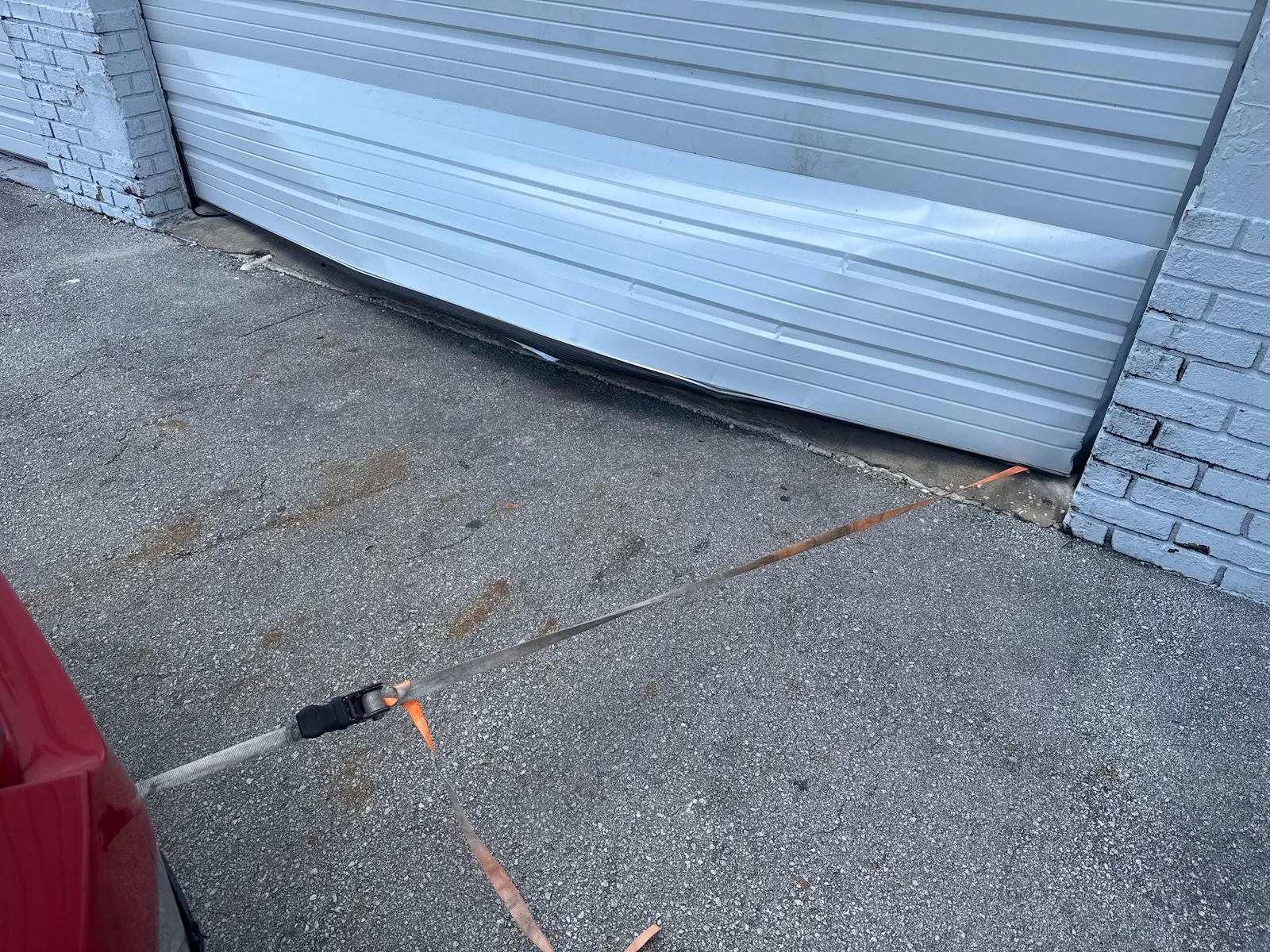
Call if the sensors are clean, lined up and showing a steady light but the garage door reverses when closing anyway, if it bounces back only after touching the floor, if one side looks lower than the other, or if a bang came from the garage just before the trouble began. Those point to the door or the opener rather than the beam.
Questions about a garage door that reverses
Why does my door only reverse on sunny days?
Low sun shining directly into the receiving sensor can swamp the beam. It is most noticeable in winter and early spring when the sun sits low. A sensor shade or swapping the two sensors’ sides often cures it.
My door goes all the way down and then back up. Why?
The opener thinks the door hit something before it expected to reach the floor. Ice at the threshold, a door that binds in its tracks, or a travel setting that needs resetting are the usual reasons.
Can I bypass the sensors so the door closes?
No. The sensors stop the door from closing on people, pets and cars, and bypassing them removes that protection. If you need the door shut urgently, holding the wall button down often closes it while you watch.
The sensor light keeps flickering. What does that mean?
The beam is dropping in and out. A loose bracket, a dirty lens, a damaged wire or corrosion at a terminal is the usual cause. If cleaning and realigning do not hold, the wiring or sensors need attention.
Could a broken spring make the door reverse?
Yes. A spring that has weakened or broken leaves the door heavier and uneven, and the opener can read that extra effort as an obstruction. Leave the spring alone and call.
Get it closing properly
If your door keeps turning back, call us or book online. Someone answers the phone at whatever hour you ring, so a garage that will not shut late in the evening can be reported right then.